


jüdisch
Jewish
Relates to the religion, culture, history, or origin of Jews.
EXAMPLE
Die Familie feiert die traditionellen jüdischen Feiertage.
The family celebrates the traditional Jewish holidays.
Jewish
Loading your saved state.
Jewish
Relates to the religion, culture, history, or origin of Jews.
Die Familie feiert die traditionellen jüdischen Feiertage.
The family celebrates the traditional Jewish holidays.
The adjective 'jüdisch' (Jewish) is derived from the noun 'der Jude' (the Jew). The ending '-isch' is a typical way in German to form adjectives that express belonging or affiliation.
Er interessiert sich sehr für die jüdische Geschichte.
He is very interested in Jewish history.
Like most adjectives, 'jüdisch' (Jewish) is written in lowercase, except at the beginning of a sentence. It does not follow the special rule for adjectives derived from city names ending in '-er' (like 'Berliner').
Das jüdische Neujahrsfest heißt Rosch ha-Schana.
The Jewish New Year is called Rosh Hashanah.
'Jüdisch' (Jewish) is often used in fixed combinations to describe cultural or religious aspects. Common collocations are 'jüdische Gemeinde' (Jewish community), 'jüdische Kultur' (Jewish culture), 'jüdischer Glaube' (Jewish faith), or 'jüdischer Friedhof' (Jewish cemetery).
In unserer Stadt gibt es eine aktive jüdische Gemeinde.
There is an active Jewish community in our city.
Israeli
Both words can describe a person or community, but they refer to different forms of belonging. „Jüdisch“ refers to religion, culture, history, or origin, while „israelisch“ concerns the modern state of Israel and its population. Choose according to whether religious and cultural or national affiliation is meant.
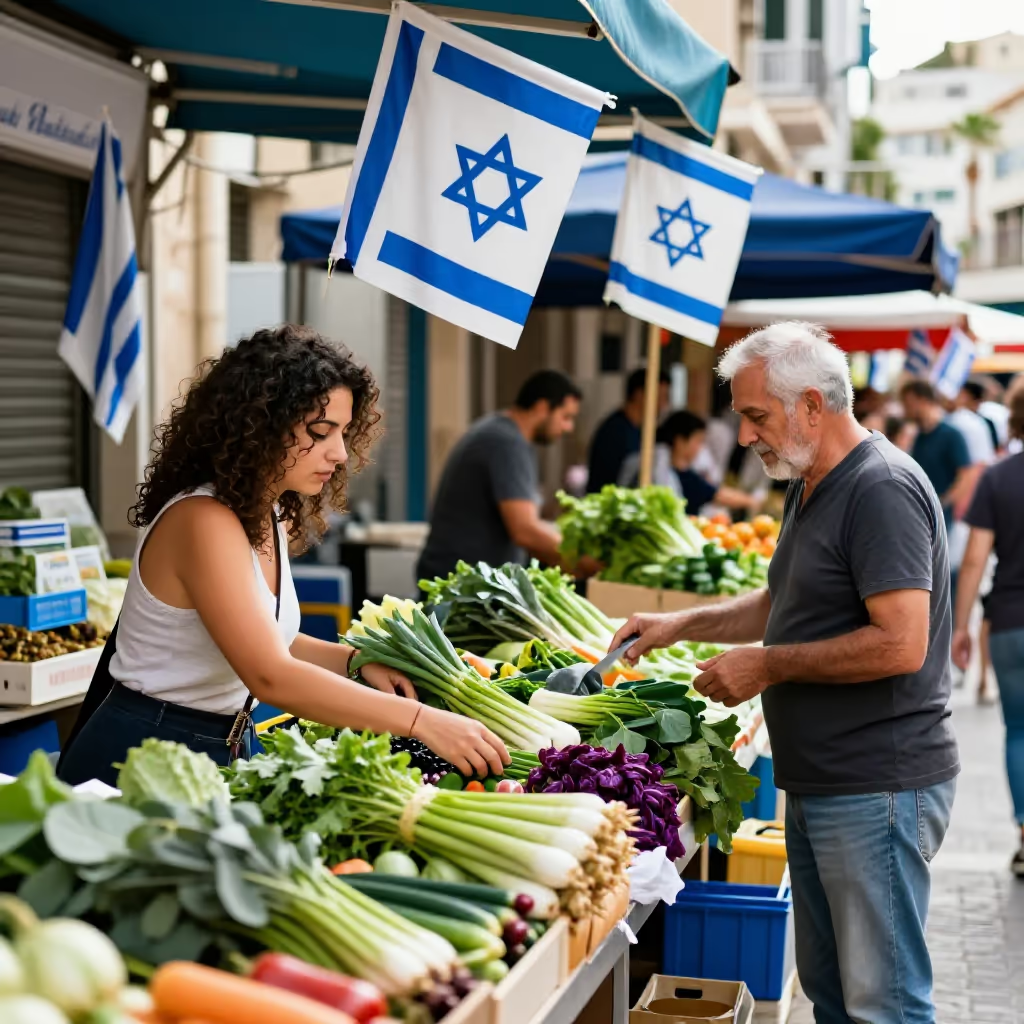
Die jüdische Autorin schreibt über die Geschichte ihrer Familie.
The Jewish author writes about her family’s history.
Die israelische Autorin schreibt über das Leben in ihrem Staat.
The Israeli author writes about life in her country.