

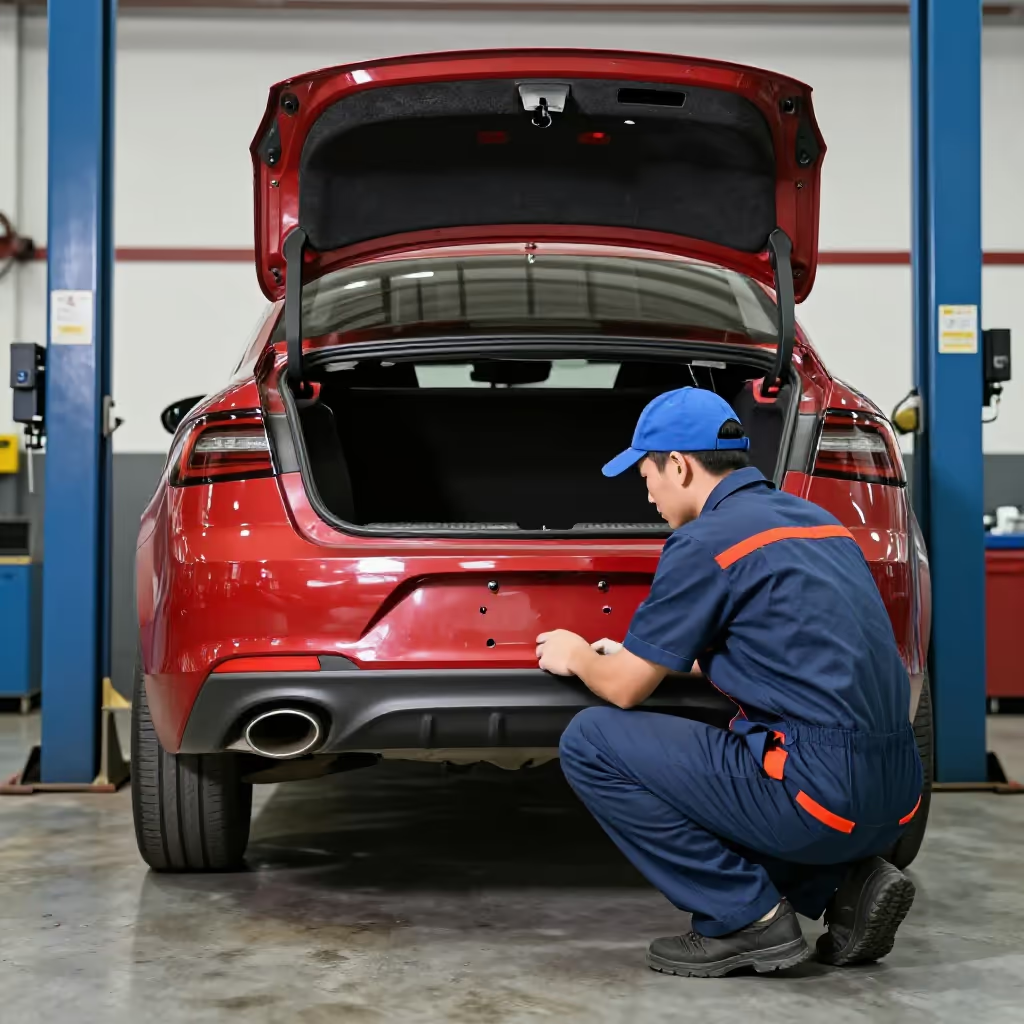
das Heck
rear / stern
The rear part of a vehicle, especially a car, airplane, or ship.
EXAMPLE
Am Heck des Autos war ein Fahrradträger montiert.
A bike rack was mounted on the rear of the car.
rear / stern
Loading your saved state.
rear / stern
The rear part of a vehicle, especially a car, airplane, or ship.
Am Heck des Autos war ein Fahrradträger montiert.
A bike rack was mounted on the rear of the car.
'Heck' sounds like the English expletive 'heck', but it simply means 'the rear part' of a vehicle. The similarity is purely coincidental.
Die Rückleuchten befinden sich am Heck des Wagens.
The taillights are located at the rear of the car.
To describe a position at the rear part of a vehicle, German usually uses the preposition 'am' (on/at the outside) or 'im' (inside).
Der Firmenname stand groß am Heck des Busses.
The company name was written in large letters on the rear of the bus.
The word 'Heck' (rear/stern) is not limited to cars. It is also used for the rear part of ships and airplanes.
Vom Heck des Schiffes aus hatten wir eine tolle Aussicht auf das Meer.
From the stern of the ship, we had a great view of the sea.
tail / dick
When referring to an airplane, Schwanz and Heck can mean the same rear section. Heck is the usual factual term for the rear part of a vehicle; Schwanz sounds figurative because of the similar shape. Heck is therefore appropriate in factual descriptions, while Schwanz can be used in a vivid description.

Der Mechaniker zeigt auf das Heck des Flugzeugs.
The mechanic points to the rear of the airplane.
Das Kind zeigt auf den Schwanz des Flugzeugs.
The child points to the tail of the airplane.