

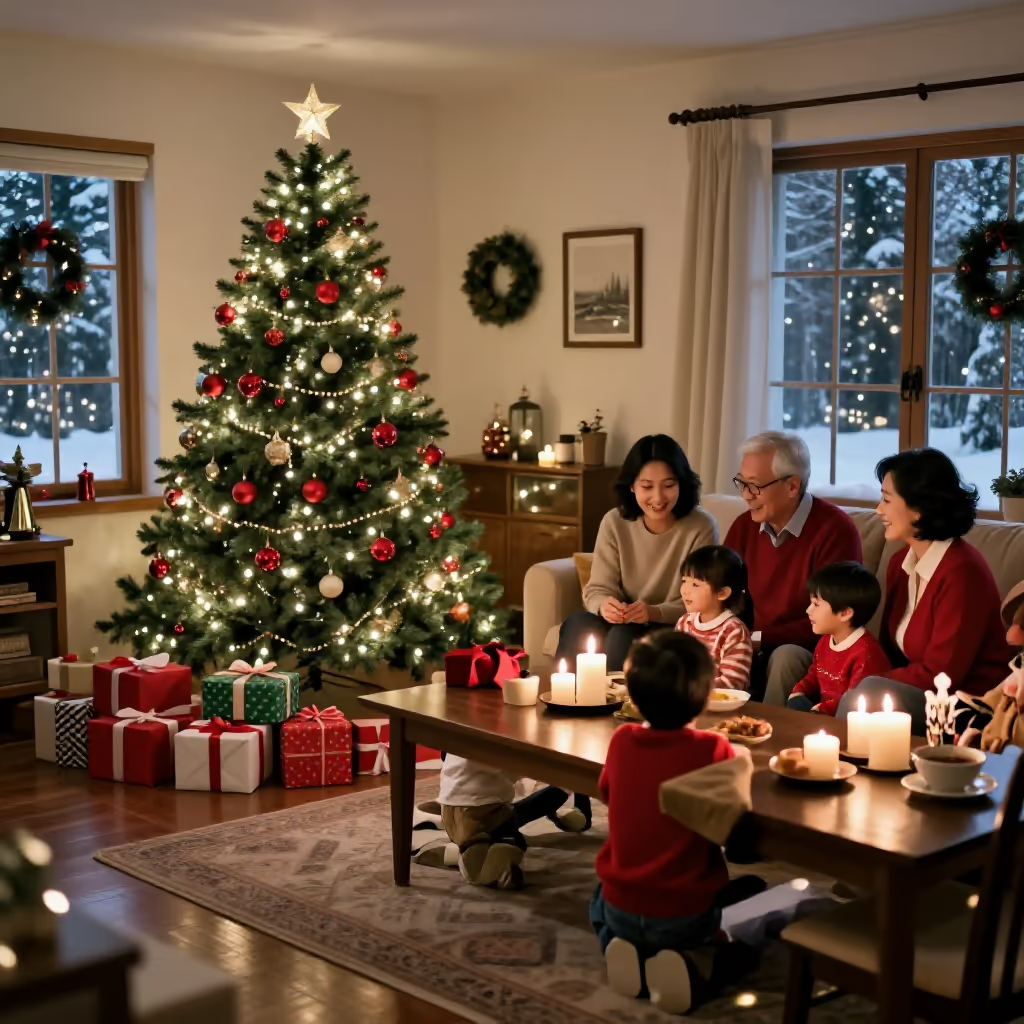
The evening of December 24, when the birth of Jesus is celebrated in many Christian cultures. It is the eve of Christmas Day.
example
An Heiligabend packen die Kinder aufgeregt ihre Geschenke aus.
On Christmas Eve, the children excitedly unwrap their presents.
Usage tips
Compound word
The word is made up of 'heilig' (holy) and 'Abend' (evening). So it literally means 'der heilige Abend' (the holy evening) and refers to the evening before Christmas Day.
EXAMPLE
Wir schmücken den Weihnachtsbaum immer am Vormittag des Heiligabends.
We always decorate the Christmas tree on the morning of Christmas Eve.
Fixed preposition
When talking about events on this day, the preposition 'an' is almost always used. The correct form is 'an Heiligabend' (on Christmas Eve).
EXAMPLE
An Heiligabend gehen viele Familien in die Kirche.
On Christmas Eve, many families go to church.
Typical collocations
Common verbs used with 'Heiligabend' (Christmas Eve) are 'feiern' (to celebrate) and 'verbringen' (to spend). People often celebrate or spend this evening with their family.
EXAMPLE
Wir verbringen Heiligabend traditionell bei meinen Großeltern.
We traditionally spend Christmas Eve at my grandparents' house.
Compare with
confusable
Heiligabend vs Weihnachten
Christmas
'Weihnachten' and 'der Heiligabend' are closely connected, but they are not the same. 'Weihnachten' means the whole holiday and often also several holidays at the end of December. 'Heiligabend' is only the evening of December 24, that is, the evening before Christmas Day. Many families celebrate especially on Heiligabend, so it is easy to confuse the words. If you mean exactly the evening of December 24, 'Heiligabend' is correct. If you are talking about the holiday in general, 'Weihnachten' is more natural.
Heiligabend
Am Heiligabend essen wir mit der ganzen Familie zusammen.
On Christmas Eve, we eat together with the whole family.
Weihnachten
An Weihnachten bleibt unser Geschäft drei Tage geschlossen.
At Christmas, our store stays closed for three days.