

das Heilkraut
medicinal herb
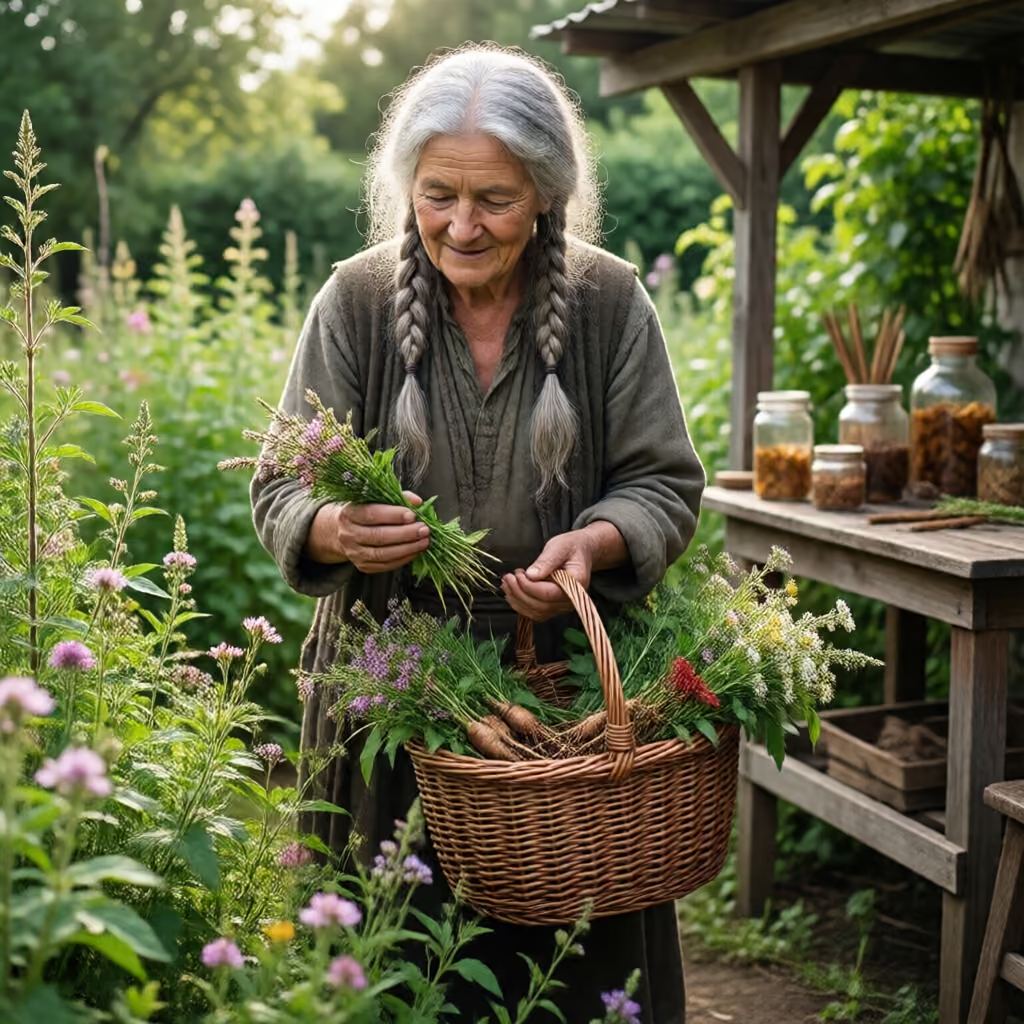
A plant whose leaves, flowers, roots, or other parts are used to prevent or treat illnesses.
Die alte Kräuterfrau sammelte Heilkraut für ihre Salben.
The old herbalist gathered medicinal herbs for her ointments.
medicinal herb
das Heilkraut, die Heilkräuter
Loading your saved state.

medicinal herb
A plant whose leaves, flowers, roots, or other parts are used to prevent or treat illnesses.
Die alte Kräuterfrau sammelte Heilkraut für ihre Salben.
The old herbalist gathered medicinal herbs for her ointments.
| gender | neuter das |
|---|---|
| plural | die Heilkräuter |
| genitive | des Heilkrautes |
| singular | plural | |
|---|---|---|
| nominative | das Heilkraut | die Heilkräuter |
| accusative | das Heilkraut | die Heilkräuter |
| dative | dem Heilkraut | den Heilkräutern |
| genitive | des Heilkrautes des Heilkrauts | der Heilkräuter |
The article changes with the case; it is shown in colour.
'Heilkraut' (medicinal herb) is made up of 'Heil' (healing) and 'Kraut' (herb). 'Heil' refers to its use for health, while 'Kraut' means a herbaceous plant here.
Dieses Heilkraut wächst vor allem an feuchten Waldrändern.
This medicinal herb grows mainly along damp forest edges.
'Heilkraut' (medicinal herb) is often associated with activities such as 'sammeln' (to collect), 'trocknen' (to dry), 'aufbewahren' (to store), and 'verwenden' (to use). 'Getrocknetes Heilkraut' (dried medicinal herb) and 'Heilkraut für einen Tee' (medicinal herb for tea) are also typical collocations.
Die Bewohner sammelten Heilkraut und trockneten es auf dem Dachboden.
The residents collected medicinal herbs and dried them in the attic.
'Heilkraut' (medicinal herb) is often used with information about what the plant is used for or how it is used. Prepositions such as 'für' (for) and 'zu' (for) are especially common for this purpose.
Sie verwendete das Heilkraut für eine Salbe gegen Hautreizungen.
She used the medicinal herb for an ointment against skin irritation.