

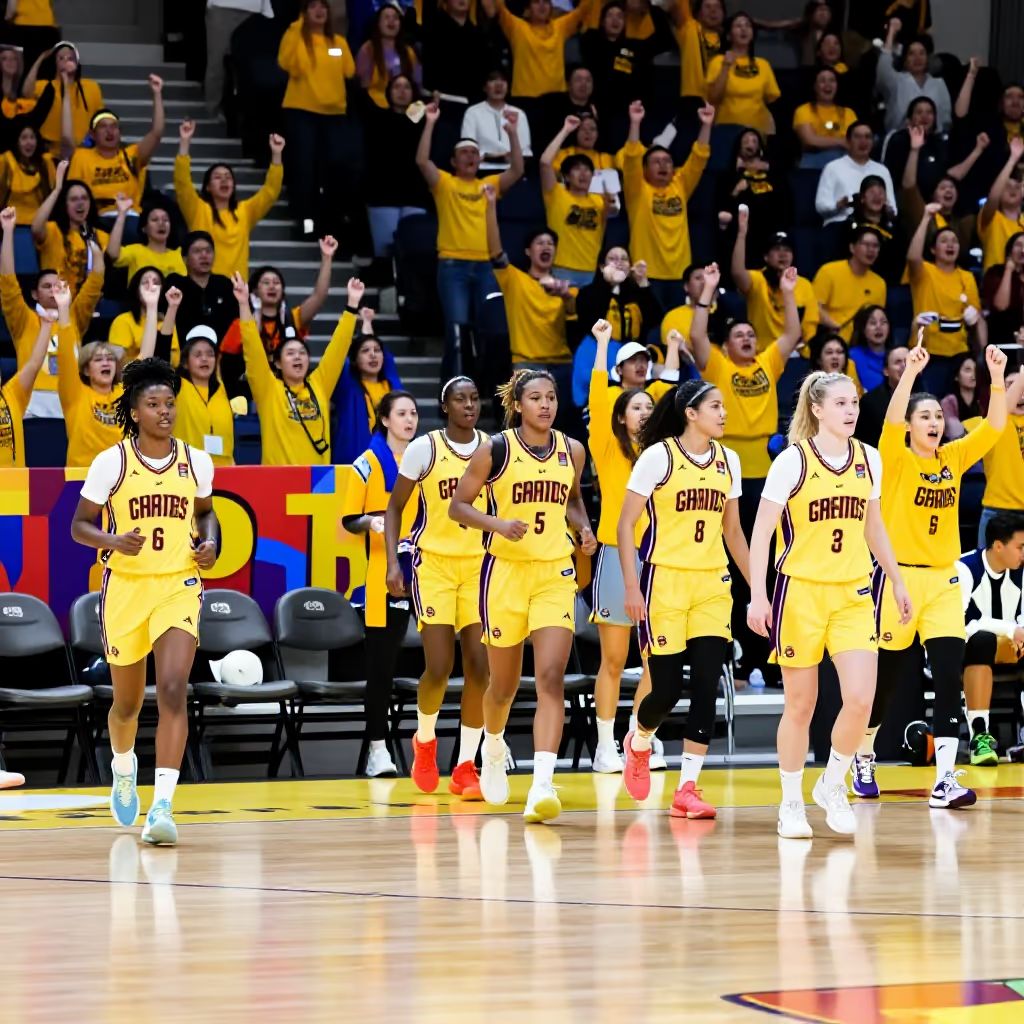
die Heimmannschaft
home team
In sports, the team that plays a game on its own field or in its own arena.
EXAMPLE
Die Heimmannschaft wurde von den eigenen Fans lautstark angefeuert.
The home team was loudly cheered on by its own fans.
home team
Loading your saved state.
home team
In sports, the team that plays a game on its own field or in its own arena.
Die Heimmannschaft wurde von den eigenen Fans lautstark angefeuert.
The home team was loudly cheered on by its own fans.
The word is made up of 'Heim' (home) and 'Mannschaft' (team). So it literally refers to the team that plays at home.
Die Heimmannschaft trägt heute die blauen Trikots.
The home team is wearing the blue jerseys today.
This word is used exclusively in sports. The team that plays on its own sports field often has a 'Heimvorteil' (home advantage) because its own fans support it.
Dank des Heimvorteils konnte die Heimmannschaft das Spiel noch drehen.
Thanks to the home advantage, the home team was still able to turn the game around.
Typical prepositions are 'für' (for, when you support the team) and 'gegen' (against, when you are the opponent).
Alle Zuschauer im Stadion waren für die Heimmannschaft.
All the spectators in the stadium were for the home team.
host
In sports, both Gastgeber and Heimmannschaft can refer to the side playing at its own venue. However, Heimmannschaft specifically refers to the team playing there, while Gastgeber emphasizes the hosting role of the club or side and is more general. Use Heimmannschaft for the sporting classification and Gastgeber for the hosting role.

Die Heimmannschaft spielte auf ihrem eigenen Platz und gewann das Spiel.
The home team played on its own field and won the game.
Der Gastgeber empfing den Gegner im eigenen Stadion und gewann das Spiel.
The host welcomed the opposing team at its own stadium and won the game.