

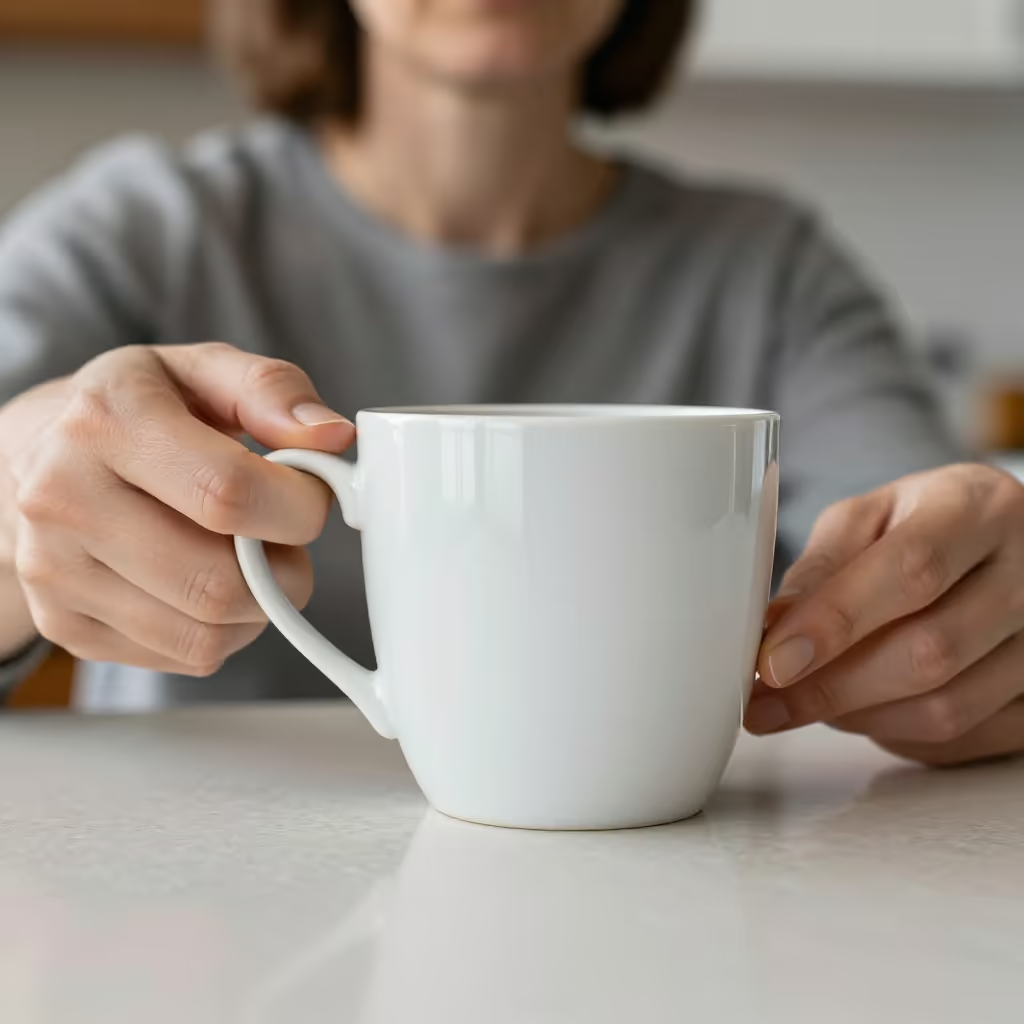
der Henkel
handle
A usually curved handle on a container such as a cup, pot, or bag, used for gripping and carrying it.
EXAMPLE
Vorsicht, der Henkel der Kanne ist heiß!
Careful, the handle of the pot is hot!
handle
Loading your saved state.
handle
A usually curved handle on a container such as a cup, pot, or bag, used for gripping and carrying it.
Vorsicht, der Henkel der Kanne ist heiß!
Careful, the handle of the pot is hot!
The word 'Henkel' (handle) is related to the verb 'hängen' (to hang). A 'Henkel' is a handle by which you can hold or hang up a container.
Er hängte den Eimer am Henkel über den Brunnenrand.
He hung the bucket by its handle over the edge of the well.
To describe holding a container by the handle, the preposition 'an' is used with the dative. A typical phrase is 'etwas am Henkel fassen' (to grasp something by the handle).
Bitte fasse die heiße Tasse nur am Henkel an.
Please only hold the hot cup by the handle.
A 'Henkel' (handle) is typical of certain objects. People often talk about the handle of a cup, a basket, a bucket, or a bag.
Der Henkel meiner Lieblingstasse ist leider abgebrochen.
Unfortunately, the handle of my favorite cup broke off.
handle / grip
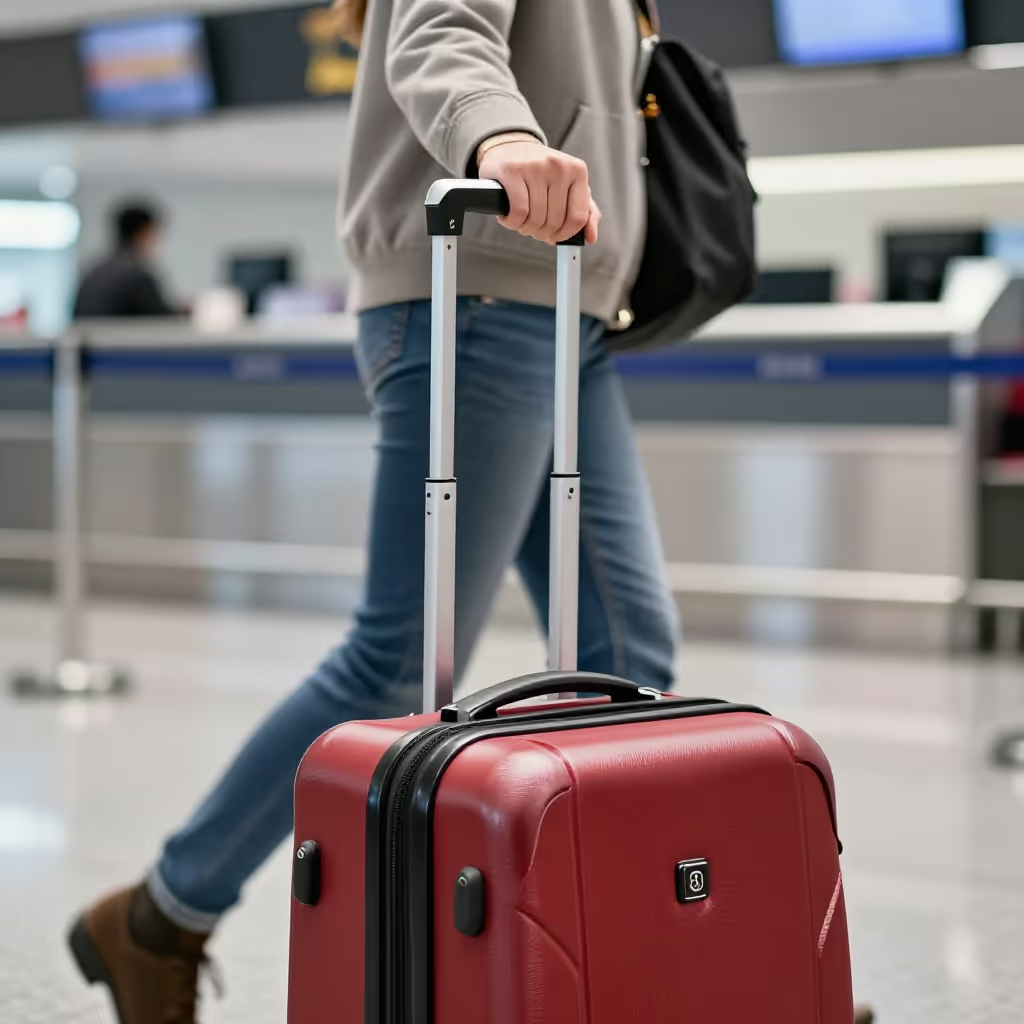
Griff and Henkel are parts of an object that you hold with your hand or use for carrying it. Griff is the general term, while Henkel refers to a usually curved or ring-shaped handle, for example on a cup, pot, or bag. The shape therefore often determines which term is more appropriate.
Der Henkel der Tasse ist abgebrochen.
The handle of the cup has broken off.
Der Griff des Koffers ist stabil und liegt gut in der Hand.
The handle of the suitcase is sturdy and fits comfortably in your hand.