

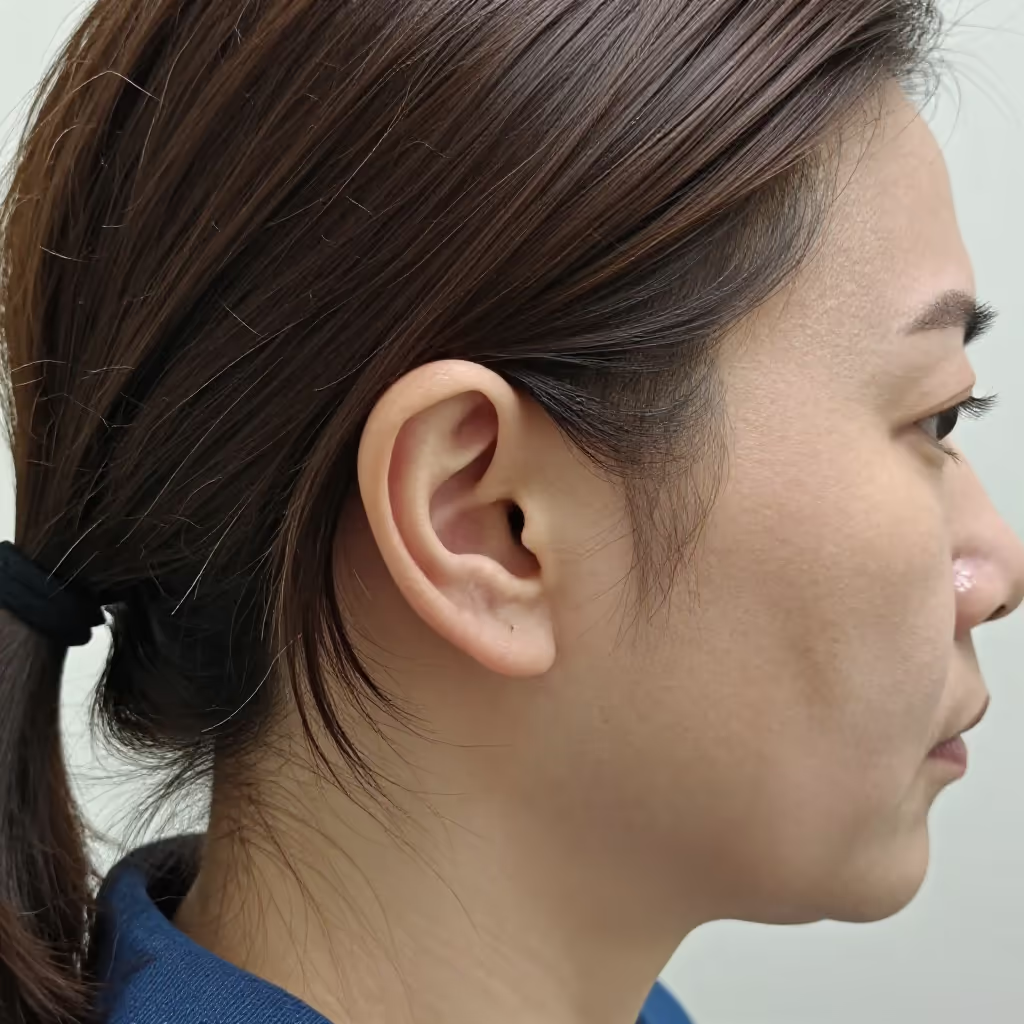
das Ohr
ear
The body organ with which humans and animals can hear and maintain balance.
EXAMPLE
Mein linkes Ohr tut seit gestern weh.
My left ear has been hurting since yesterday.
ear
Loading your saved state.
ear
The body organ with which humans and animals can hear and maintain balance.
Mein linkes Ohr tut seit gestern weh.
My left ear has been hurting since yesterday.
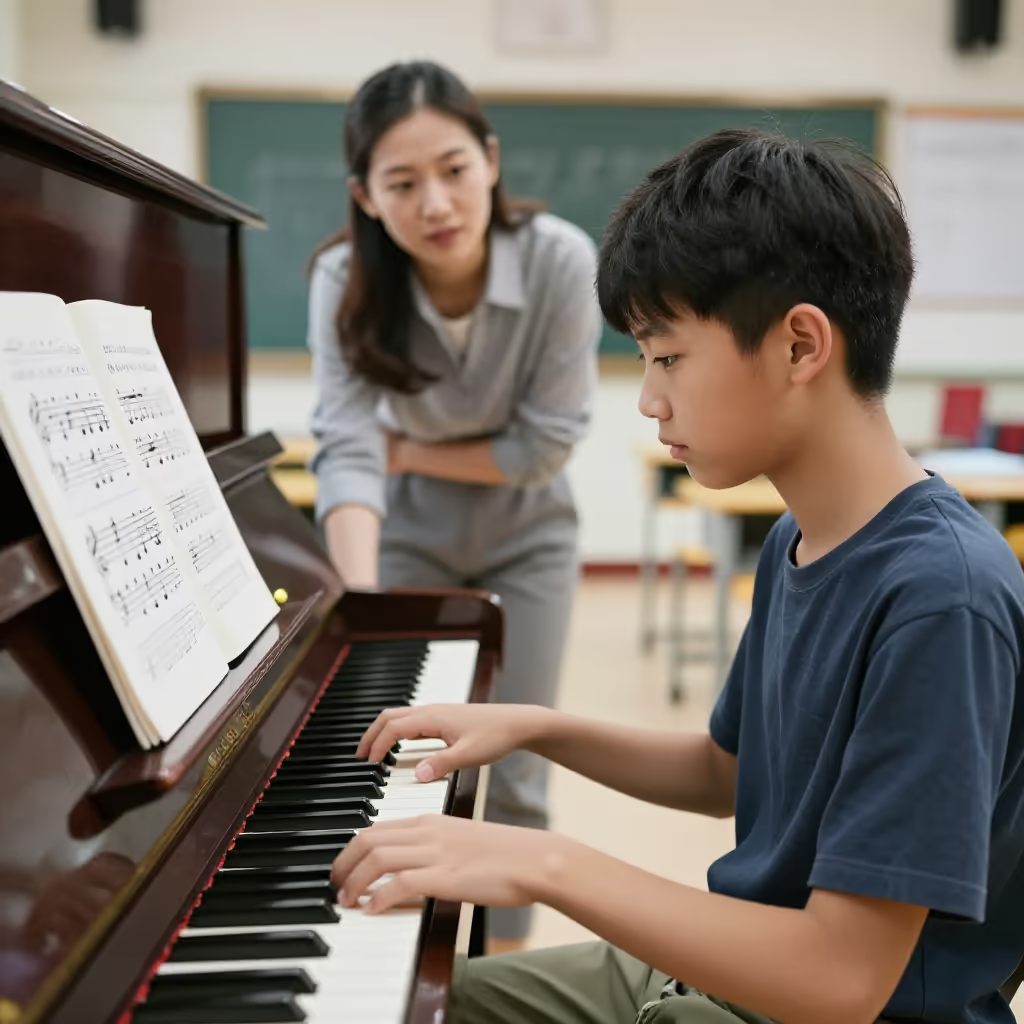
ear for music
The ability to perceive and understand sounds, melodies, and rhythms well; musical talent.
Sie hat ein gutes Ohr für Musik und kann jedes Lied nach einmaligem Hören nachspielen.
She has a good ear for music and can play any song after hearing it once.

to have an open ear for
To be willing to listen to someone, especially when the person has worries or problems.
Wenn du reden möchtest, ich habe immer ein offenes Ohr für dich.
If you want to talk, I always have an open ear for you.

to be all ears
To listen very attentively and with full concentration.
Erzähl, was passiert ist, ich bin ganz Ohr!
Tell me what happened; I'm all ears!
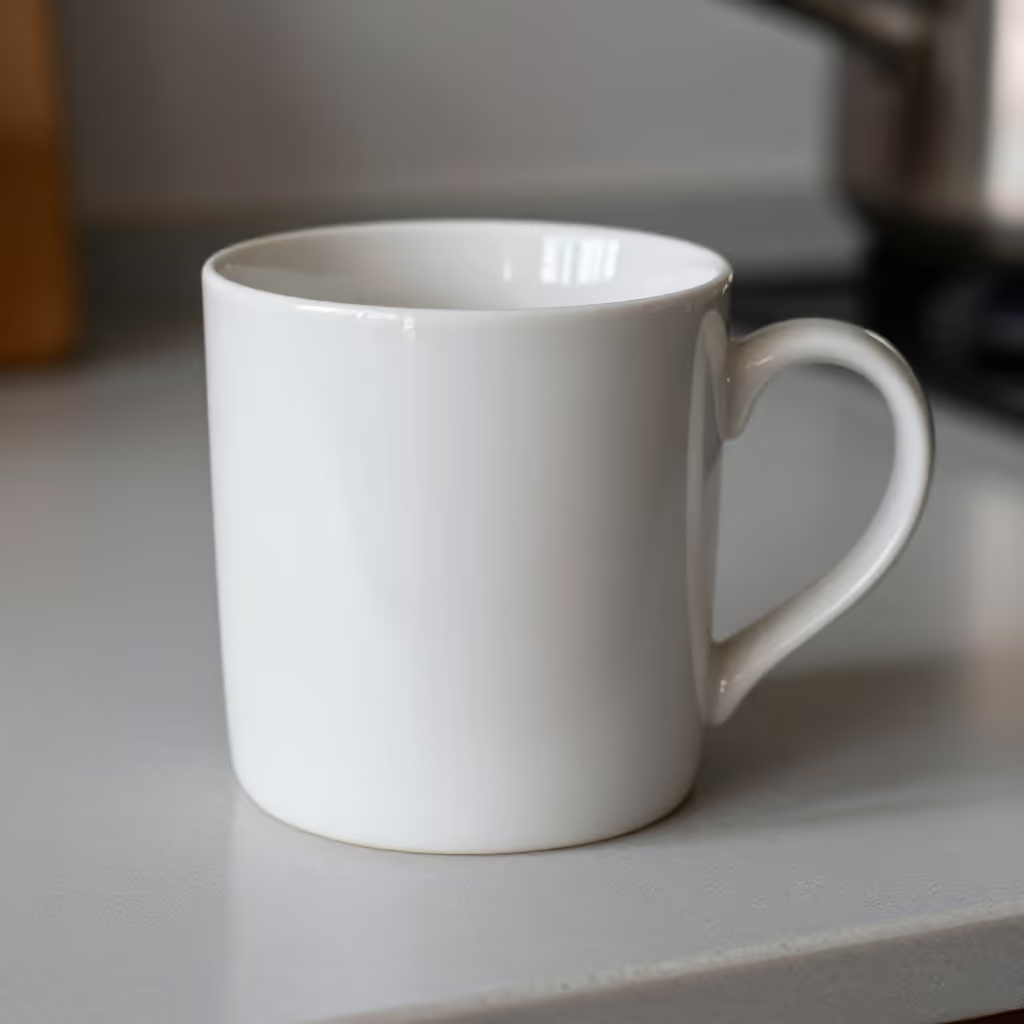
handle / loop
A handle or loop on an object, for example on a cup or bag, whose shape resembles an ear.
Die Tasse ist mir heruntergefallen und jetzt ist das Ohr abgebrochen.
I dropped the cup, and now the handle has broken off.
In connection with the body part, 'Ohr' (ear) is often used in fixed expressions. Typical examples are 'jemandem ins Ohr flüstern' (to whisper in someone's ear), 'sich die Ohren zuhalten' (to cover one's ears), or 'auf einem Ohr taub sein' (to be deaf in one ear).
Er flüsterte ihr ein Geheimnis ins Ohr.
He whispered a secret in her ear.
When 'Ohr' (ear) describes musical talent, it is almost always used with the preposition 'für' (for) and an accusative object. The structure is: 'ein (gutes) Ohr für etwas haben' (to have a good ear for something).
Ein guter Lektor braucht ein Ohr für die Sprache.
A good editor needs an ear for language.
The idiom 'ein offenes Ohr für jemanden/etwas haben' (to have an open ear for someone/something) is a fixed unit. It means that you are willing to listen to another person's worries or problems.
Meine Lehrerin hatte immer ein offenes Ohr für die Probleme der Schüler.
My teacher always had an open ear for the students' problems.
The expression 'ganz Ohr sein' (to be all ears) is a fixed expression that means you are giving someone your full attention. It is often used as a direct invitation to speak.
Du hattest Neuigkeiten? Ich bin ganz Ohr!
You had news? I'm all ears!
You can always recognize the meaning 'Henkel' (handle) or 'Griff' (grip/handle) from the context. When objects like a cup, jug, or bag are being discussed, this part is meant.
Kannst du mir den Korb mit den großen Ohren geben?
Can you give me the basket with the large handles?
hearing
Here, Ohr refers to a musical sense for tones, melodies, and rhythms. Gehör, on the other hand, means the general ability to perceive sound. Ohr is therefore appropriate for musical talent, while Gehör refers to the physical ability to hear.

Mara hat ein gutes Ohr für Melodien und erkennt sofort jeden falschen Ton.
Mara has a good ear for melodies and immediately recognizes every wrong note.
Mara hat ein gutes Gehör und hört auch sehr leise Töne deutlich.
Mara has good hearing and can clearly hear even very quiet sounds.