

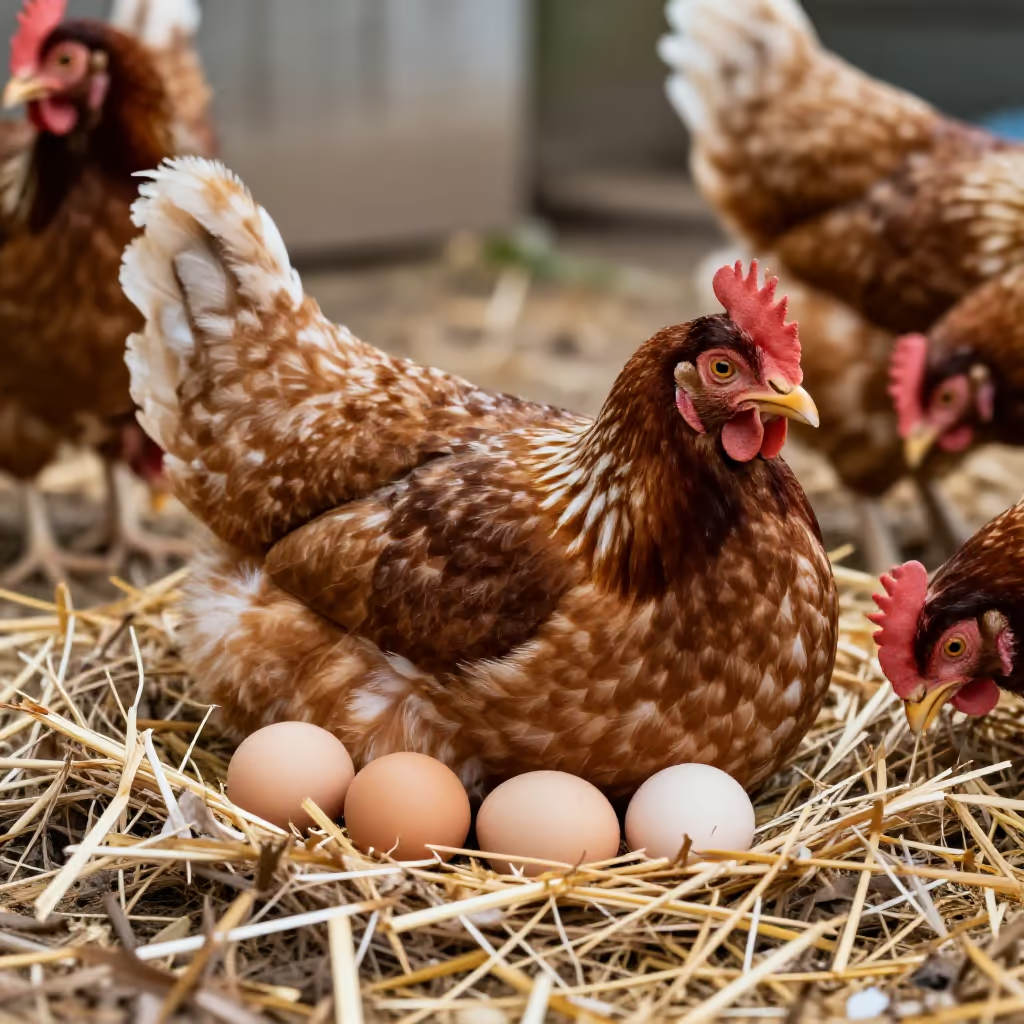
die Henne
hen
A female chicken.
EXAMPLE
Die Henne hat heute Morgen ein Ei gelegt.
The hen laid an egg this morning.
hen
Loading your saved state.
hen
A female chicken.
Die Henne hat heute Morgen ein Ei gelegt.
The hen laid an egg this morning.
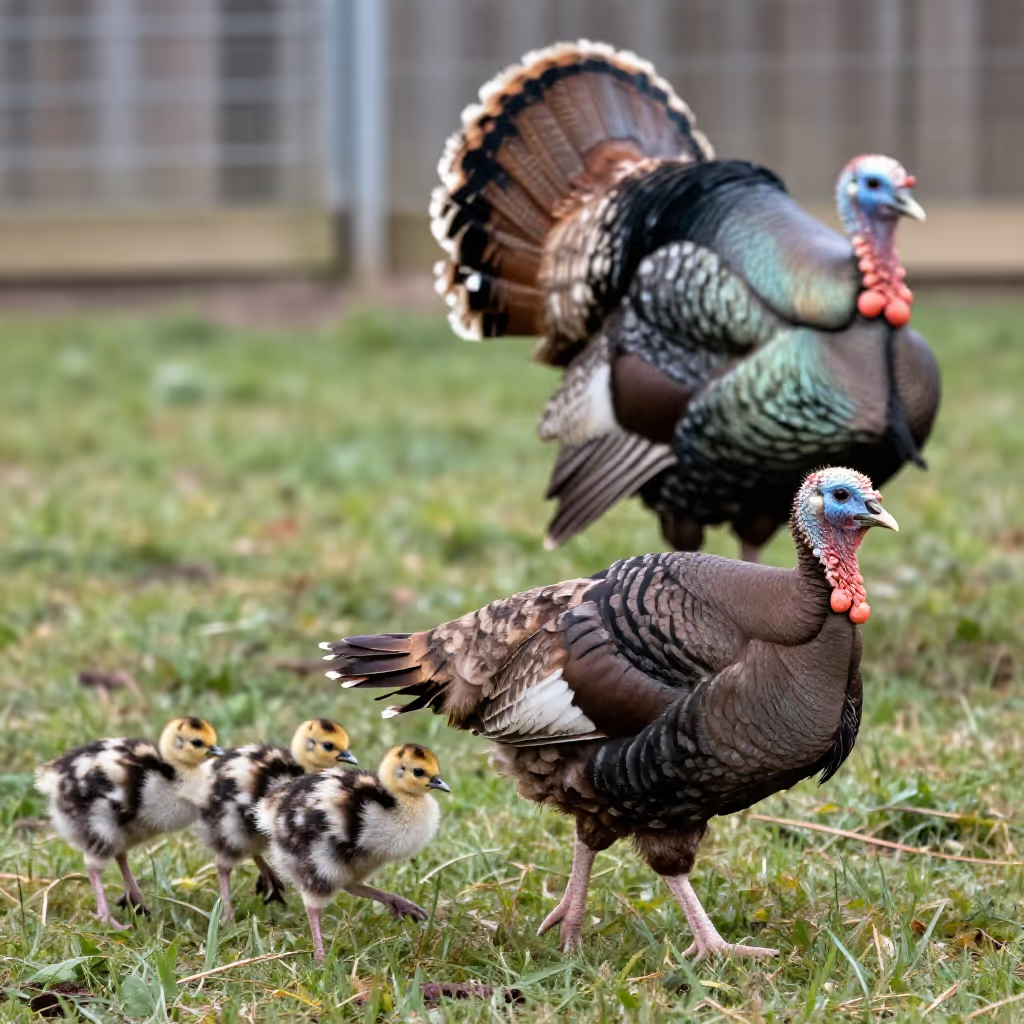
female bird
The female animal in various other bird species, for example pheasants or turkeys.
Der Jäger konnte die Fasanen-Henne vom Hahn unterscheiden.
The hunter was able to distinguish the pheasant hen from the cock.
The question 'Was war zuerst da, die Henne oder das Ei?' (Which came first, the hen or the egg?) is a well-known saying. It is used to describe a problem where cause and effect cannot be clearly separated.
Bei der Diskussion über Arbeitslosigkeit und Wirtschaftskrise ist es wie mit der Henne und dem Ei.
In the discussion about unemployment and the economic crisis, it's like the hen and the egg.
In connection with a female chicken, 'Henne' (hen) is often used with the verbs 'Eier legen' (to lay eggs), 'brüten' (to brood/sit on eggs), and 'gackern' (to cluck, make the typical sound).
Unsere Hennen legen jeden Tag frische Eier.
Our hens lay fresh eggs every day.
When 'Henne' (female bird) refers to the female animal of another bird species, the species is usually named directly before it. It often forms a compound word such as 'Fasanenhenne' (pheasant hen) or 'Truthuhnhenne' (turkey hen).
Im Zoo kann man eine Straußen-Henne mit ihren Küken beobachten.
At the zoo, you can watch an ostrich hen with her chicks.
chicken
Both Huhn and Henne can refer to a bird on a farm. Huhn is often used generally or without specifying sex, while Henne explicitly means a female animal. Use Henne when the sex is important and Huhn in a general statement.
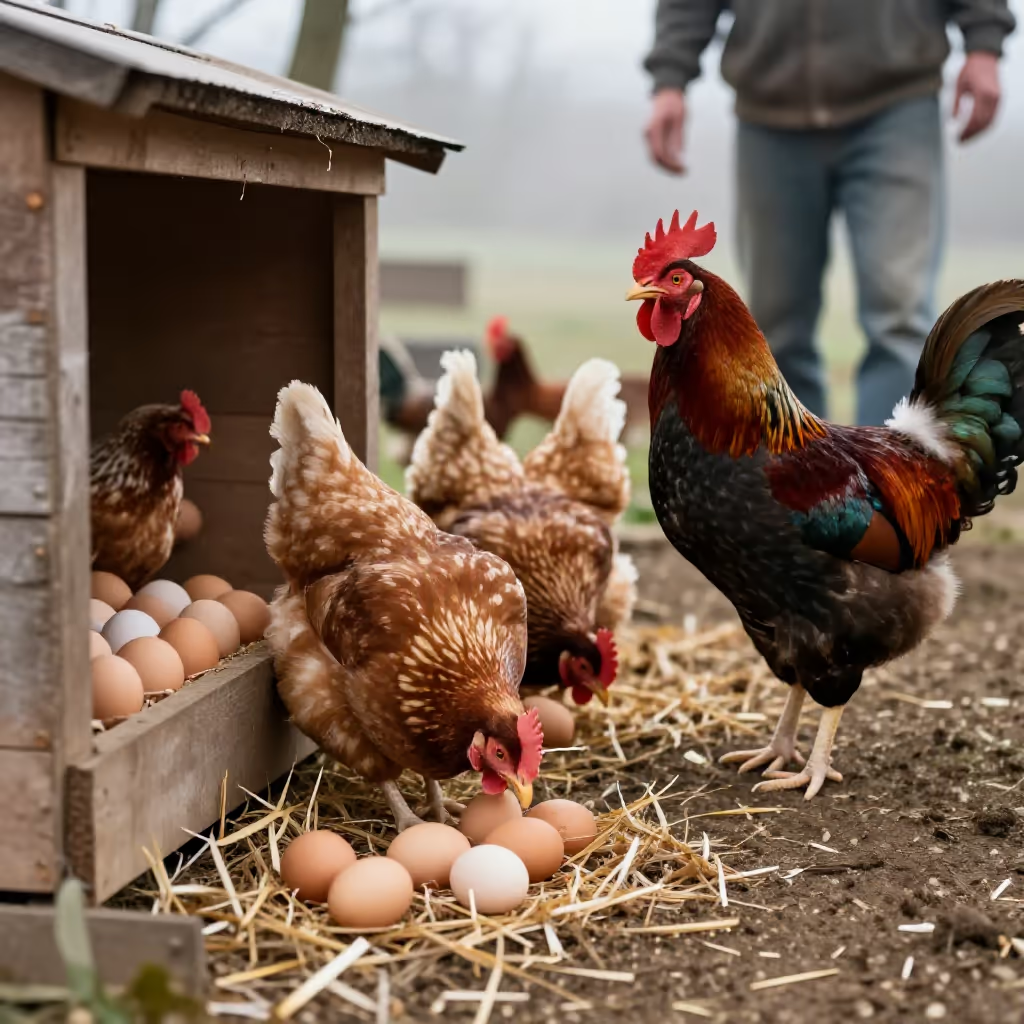
Die Henne führt ihre Küken vorsichtig über den Hof.
The hen carefully leads her chicks across the farmyard.
Auf dem Hof laufen viele Hühner frei zwischen den Bäumen herum.
Many chickens are running freely among the trees on the farm.