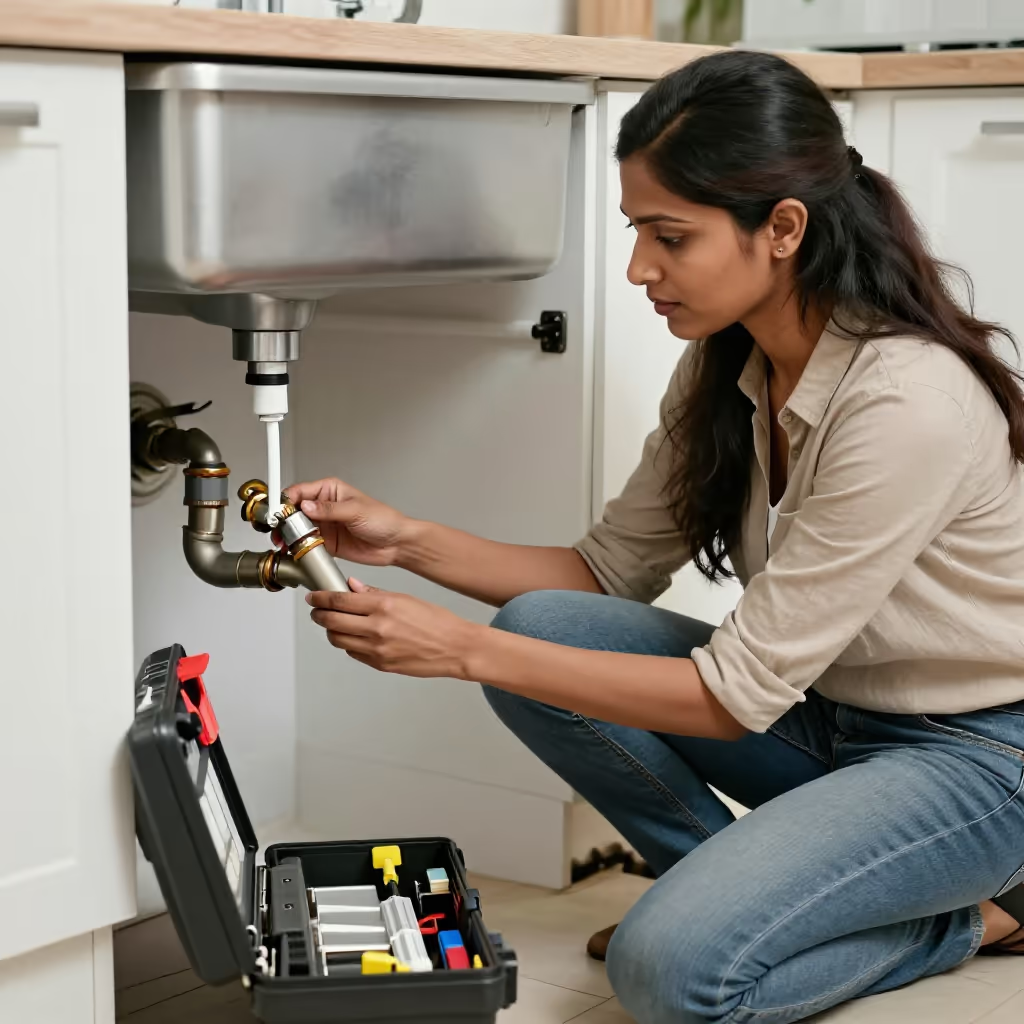
To begin dealing with a task, problem, or topic; to choose a particular approach.
example
Wir müssen strategisch an dieses komplexe Projekt herangehen, um erfolgreich zu sein.
We need to approach this complex project strategically in order to be successful.

Usage tips
Separable verb
'Herangehen' (to approach) is a separable verb. The prefix 'heran-' comes at the end in a main clause. In subordinate clauses and in the infinitive with 'zu', the verb stays together.
EXAMPLE
Sie geht die neue Aufgabe sehr motiviert an.
She approaches the new task with a lot of motivation.
Fixed preposition
The verb 'herangehen' (to approach) is almost always used with the preposition 'an' and the accusative. You approach 'an etwas' (something) or 'an jemanden' (someone).
EXAMPLE
Wie sollen wir an dieses Problem herangehen?
How should we approach this problem?
Typical collocations
In the figurative meaning, 'herangehen' (to approach) is often combined with adverbs that describe the manner. Typical phrases are 'systematisch herangehen' (to approach systematically), 'vorsichtig herangehen' (to approach carefully), or 'optimistisch herangehen' (to approach optimistically).
EXAMPLE
Lass uns logisch an die Lösung des Rätsels herangehen.
Let's approach the solution to the puzzle logically.
Context clue
You can tell whether the physical or figurative meaning is intended from the object. If it refers to a task or problem, it is figurative. If it refers to a place or a person, it is meant literally.
EXAMPLE
Man muss an die Aufgabe mit Geduld herangehen.
You have to approach the task with patience.
Compare with
near_synonym
herangehen vs beginnen
to begin
'beginnen' and 'herangehen' can both have to do with starting a task. 'beginnen' simply says that you start. 'herangehen' is more about how you deal with a task, a problem, or a topic. So it is not only about the start, but also about the manner or approach. 'beginnen' is generally suitable. 'an etwas herangehen' sounds more precise when you are talking about a method, attitude, or strategy.
herangehen
Ich gehe heute ruhig an das Problem heran und prüfe zuerst die einfachen Punkte.
I am approaching the problem calmly today and first checking the simple points.
beginnen
Jonas beginnt mit der Arbeit, sobald seine Kollegin die Unterlagen bringt.
Jonas begins the work as soon as his colleague brings the documents.