


angehen
to concern
To affect someone or be of importance to someone. Often used in questions or negations.
EXAMPLE
Deine privaten Probleme gehen mich nichts an.
Your private problems don't concern me.
to concern / turn on / tackle
Loading your saved state.
to concern
To affect someone or be of importance to someone. Often used in questions or negations.
Deine privaten Probleme gehen mich nichts an.
Your private problems don't concern me.
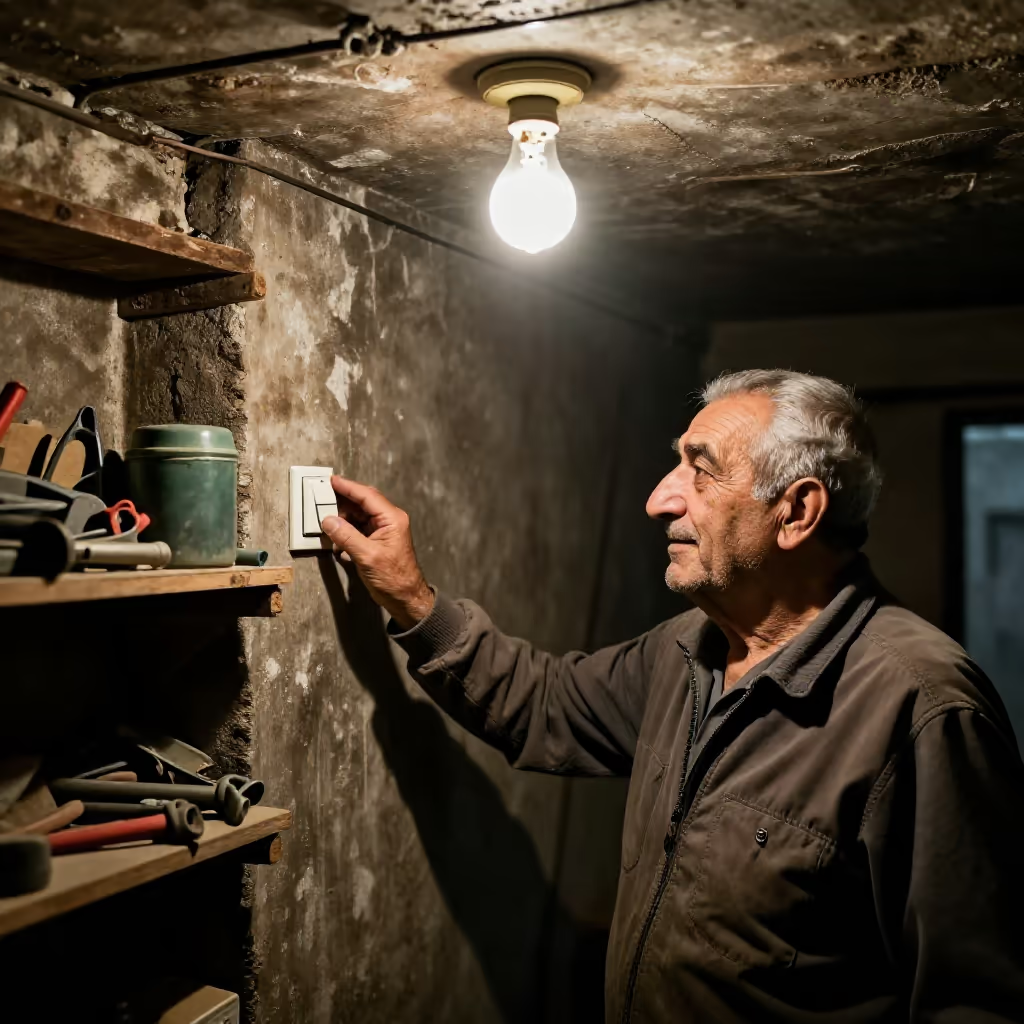
to turn on
To begin to function, light up, or burn. Usually refers to technical devices, lights, or fire.
Als ich den Raum betrat, ging automatisch das Licht an.
When I entered the room, the light turned on automatically.
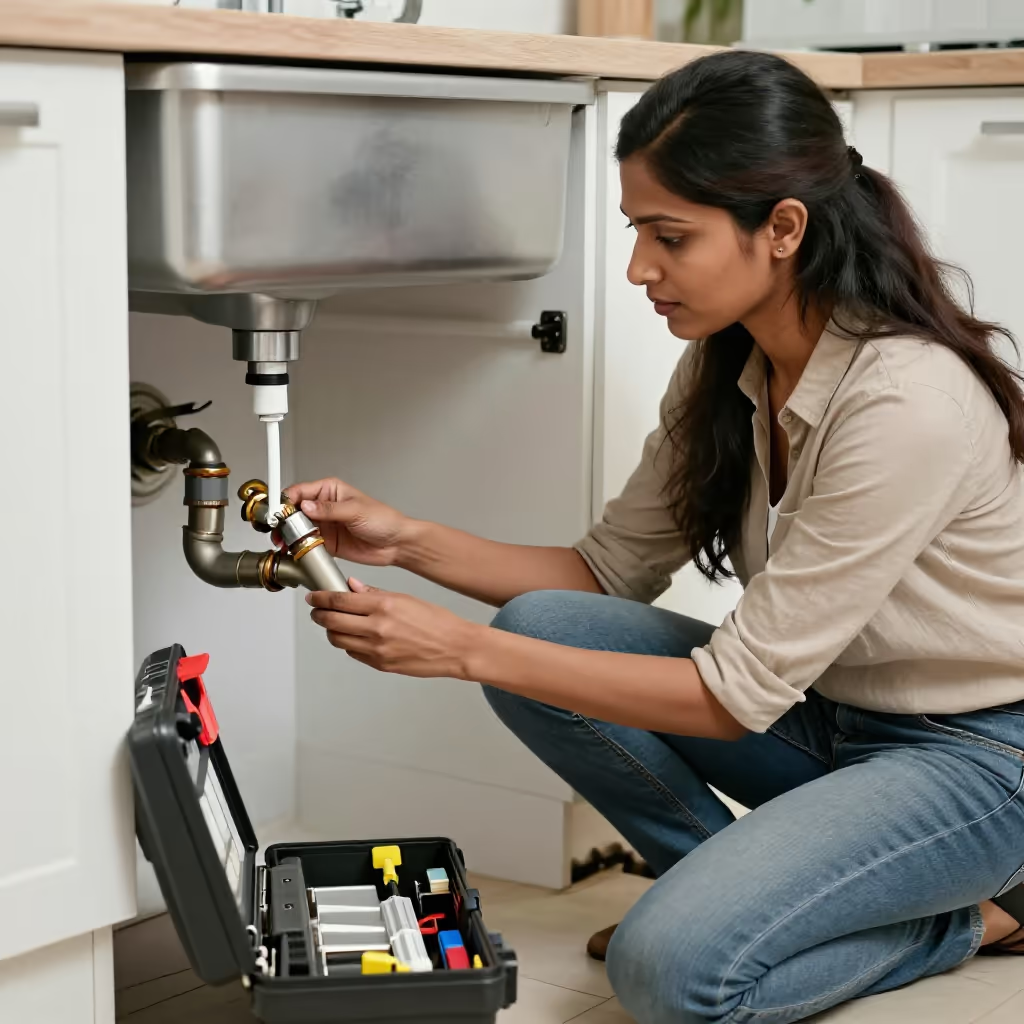
to tackle
To begin a task, problem, or project and deal with it.
Wir müssen dieses Problem so schnell wie möglich angehen.
We have to tackle this problem as quickly as possible.

as for
A fixed expression used to introduce a topic; means 'regarding' or 'with respect to.'
Was die Kosten angeht, müssen wir noch eine Lösung finden.
As for the costs, we still need to find a solution.

to take action against
To actively oppose something or someone; to fight something.
Die Bürgerinitiative will gegen den Bau der neuen Autobahn angehen.
The citizens' initiative wants to take action against the construction of the new highway.
'Angehen' is a separable verb with the prefix 'an-'. In main clauses, the prefix stands at the end of the sentence. In subordinate clauses and infinitive constructions, the verb stays together.
Die Heizung geht bei Kälte automatisch an.
The heating turns on automatically when it is cold.
In the meaning 'betreffen' (to concern), 'angehen' (to concern) is always used with a person in the accusative. The most common form is the negation: 'Das geht dich/mich/uns nichts an.' (That doesn't concern you/me/us.)
Was ich in meiner Freizeit tue, geht niemanden etwas an.
What I do in my free time doesn't concern anyone.
When 'angehen' (to turn on) means that something begins to function, the subject of the sentence is usually a technical device, a light, or a fire. In this meaning, the verb is often used without an object.
Mein alter Laptop geht nur noch sehr langsam an.
My old laptop only turns on very slowly now.
In the meaning 'begin to deal with something,' 'angehen' (to tackle) is often combined with abstract nouns such as 'Problem' (problem), 'Aufgabe' (task), 'Projekt' (project), or 'Thema' (topic). The noun is in the accusative.
Die Firma muss das Thema Nachhaltigkeit strategisch angehen.
The company has to tackle the topic of sustainability strategically.
The expression 'was ... angeht' (as for/regarding ...) introduces a topic. The verb 'angeht' stands at the end of this subordinate clause. The following main clause can then begin normally.
Was die Planung für das Wochenende angeht, bin ich für alles offen.
As for the planning for the weekend, I am open to anything.
When 'angehen' (to take action against) is used in the sense of 'kämpfen' (to fight) or 'protestieren' (to protest), it always appears with the preposition 'gegen' (against) followed by an accusative object.
Die Organisation geht seit Jahren gegen die Umweltverschmutzung an.
The organization has been taking action against environmental pollution for years.
to put / to set
Sich einem Problem stellen and ein Problem angehen both describe actively dealing with a problem. Sich stellen emphasizes consciously accepting the problem and not avoiding it; angehen highlights beginning the practical work of dealing with it. Use stellen for the attitude and angehen for the concrete work on the problem.

Ich gehe das Problem an und spreche offen mit meinem Team.
I am tackling the problem and talking openly with my team.
Ich stelle mich dem Problem und spreche offen mit meinem Team.
I am facing the problem and talking openly with my team.