


der Herd
stove
A kitchen appliance with burners and often an oven, used for cooking, frying, and baking food.
EXAMPLE
Stell den Topf mit der Suppe bitte auf den Herd.
Please put the pot of soup on the stove.
stove / source
Loading your saved state.
stove
A kitchen appliance with burners and often an oven, used for cooking, frying, and baking food.
Stell den Topf mit der Suppe bitte auf den Herd.
Please put the pot of soup on the stove.
source
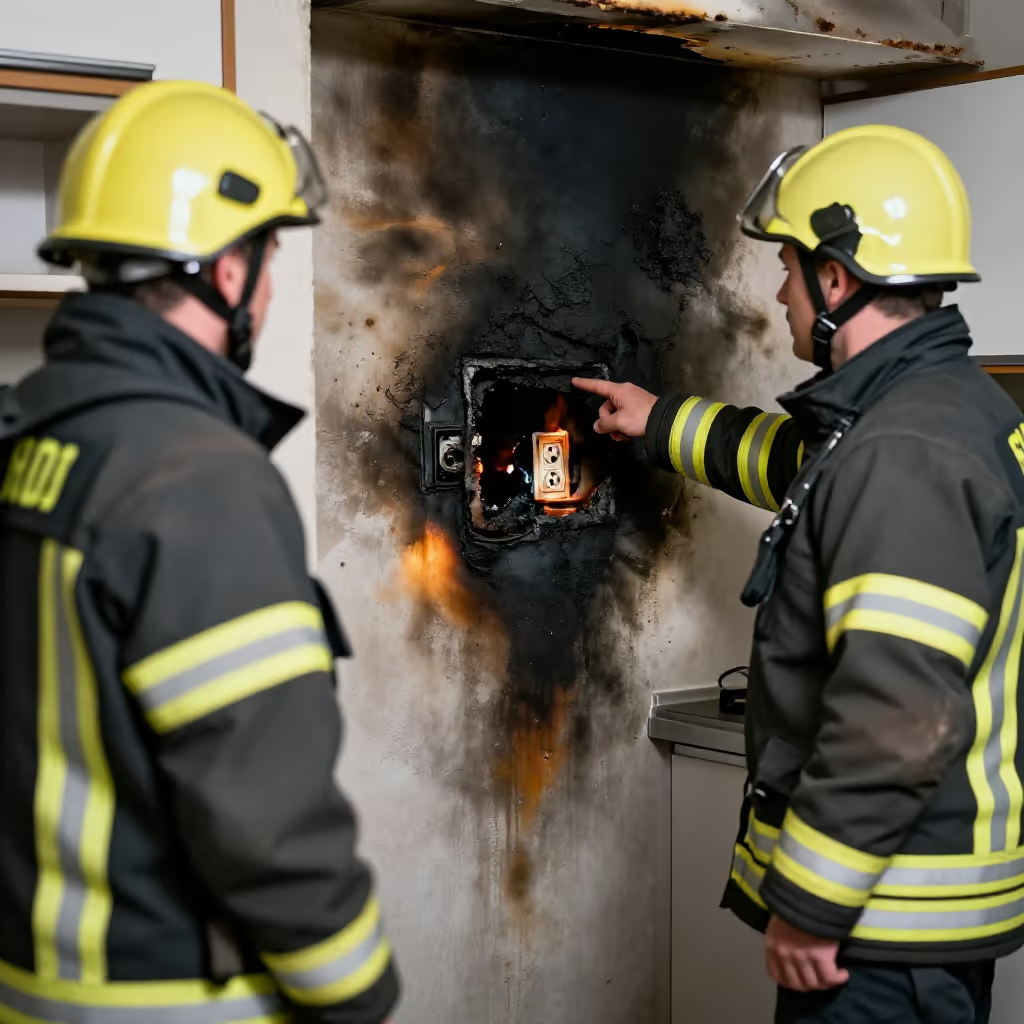
The starting point or center of something, usually something negative such as a disease, fire, or conflict.
Die Ermittler vermuten den Herd des Feuers im Keller des Gebäudes.
The investigators suspect the source of the fire was in the building's basement.
hearth
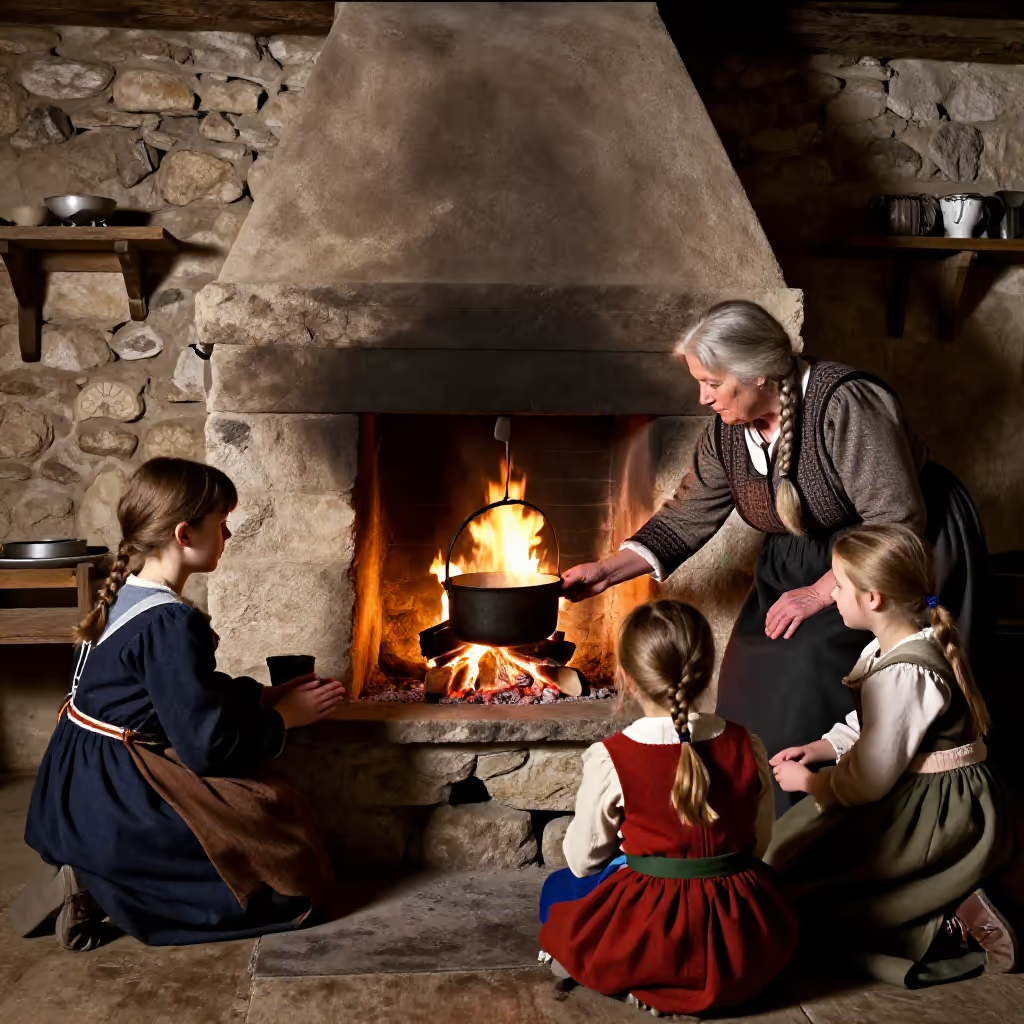
An open fireplace in the house that used to serve as the center of family life; today a more literary or historical meaning.
In alten Geschichten versammelte sich die Familie abends am wärmenden Herd.
In old stories, the family would gather in the evening by the warming hearth.
'Der Herd' means the kitchen appliance in German. The English word 'herd' (a group of animals) is a common source of confusion.
Pass auf, die Herdplatte ist noch heiß.
Be careful, the burner is still hot.
For the kitchen appliance, the preposition 'auf' (on) is key. Movement is expressed with the accusative ('auf den Herd' — onto the stove), while location is expressed with the dative ('auf dem Herd' — on the stove).
Ich stelle den Topf auf den Herd.
I put the pot on the stove.
In connection with the kitchen appliance, the verbs 'anmachen' (to turn on), 'ausschalten' (to turn off), or 'einstellen' (to set/adjust) are often used to operate the burners or the oven.
Kannst du bitte den Herd anmachen?
Can you please turn on the stove?
You can recognize the figurative meaning 'Ausgangspunkt' (starting point/source) by the fact that 'Herd' (source) is combined with negative events such as 'Brand' (fire), 'Krankheit' (disease), 'Konflikt' (conflict), or 'Unruhe' (unrest).
Die Polizei sucht nach dem Herd der Unruhen in der Stadt.
The police are looking for the source of the unrest in the city.
center
Both words can refer to the place where a negative process is concentrated. Zentrum describes this place neutrally as a central area, while Herd also emphasizes the starting point or focal point of the problem. Use Zentrum for a purely locational reference; Herd is more suitable for a source or focal point.

Die Hauptstadt ist ein Herd des Konflikts.
The capital is a source of conflict.
Das Zentrum des Konflikts liegt in der Hauptstadt.
The center of the conflict is in the capital.