

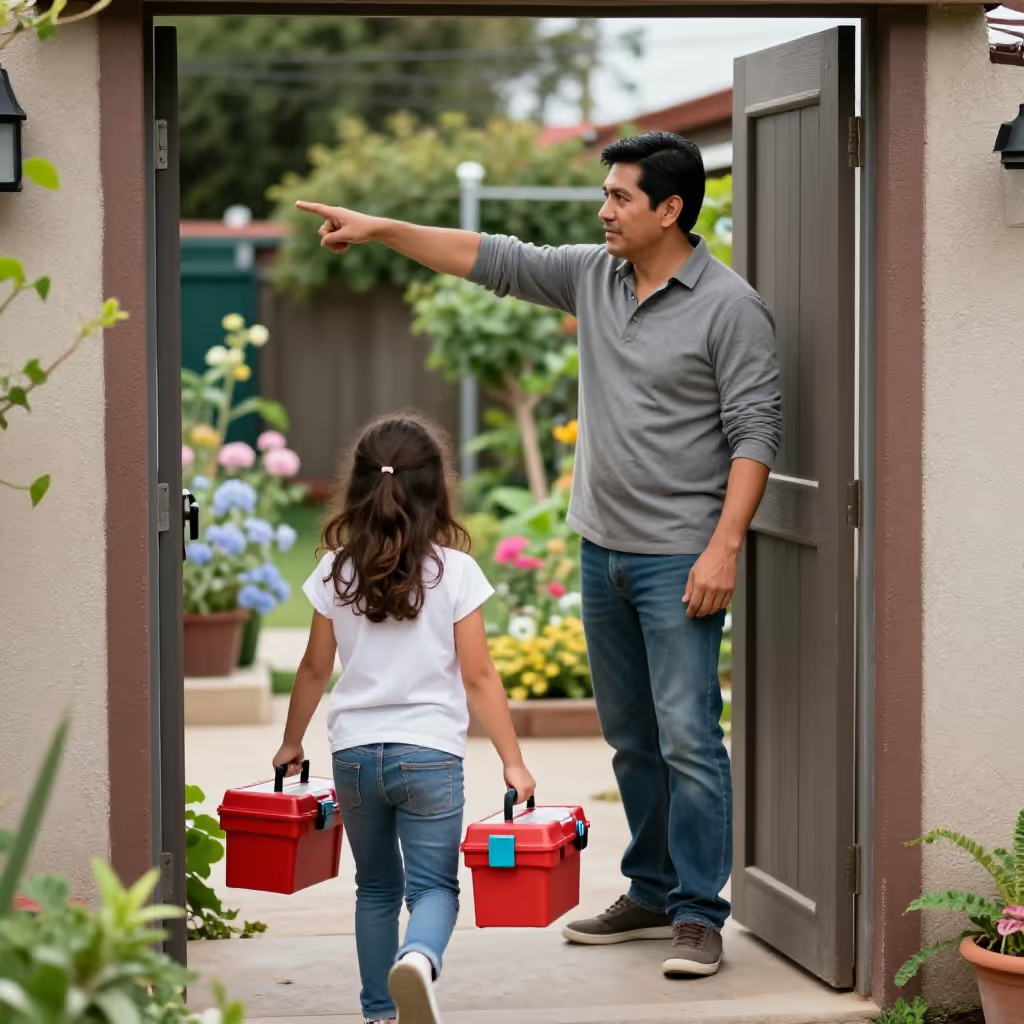
herholen
to fetch
To get something or someone from another place and bring them here to the speaker.
EXAMPLE
Kannst du mir bitte mal den Hammer aus dem Keller herholen?
Could you please fetch me the hammer from the basement?
to fetch
Loading your saved state.
to fetch
To get something or someone from another place and bring them here to the speaker.
Kannst du mir bitte mal den Hammer aus dem Keller herholen?
Could you please fetch me the hammer from the basement?
'Herholen' (to fetch/bring here) is a separable verb. In a main clause, the prefix 'her' stands at the end of the sentence. It separates from the stem verb 'holen' (to get/fetch).
Holst du mir bitte die Zeitung aus dem Briefkasten her?
Could you please fetch me the newspaper from the mailbox?
The prefix 'her-' always expresses movement toward the speaker. 'Herholen' (to fetch/bring here) therefore means to get something from another place and bring it to the speaker.
Ich bin oben im Büro, kannst du mir meinen Kaffee herholen?
I'm upstairs in the office; can you fetch me my coffee?
Very often with this verb, a person in the dative is added to say for whom something is being fetched. The structure is: jemandem (dative) etwas (accusative) herholen.
Kannst du mir die Leiter aus dem Garten herholen?
Can you fetch me the ladder from the garden?
The verb 'herholen' (to fetch/bring here) is typical of spoken language and informal everyday situations. It sounds very natural in everyday requests.
Warte kurz, ich hole nur schnell meine Jacke her.
Wait a second, I'll just quickly fetch my jacket.
to fetch / get
Holen and herholen both refer to bringing something from another place. With holen, the destination usually becomes clear from the context. Herholen explicitly makes it clear that the person or thing is to be brought here to the speaker.

Kannst du noch einen Stuhl aus dem Nebenraum herholen?
Can you fetch another chair from the next room?
Ich hole noch einen Stuhl aus dem Nebenraum.
I’ll get another chair from the next room.