

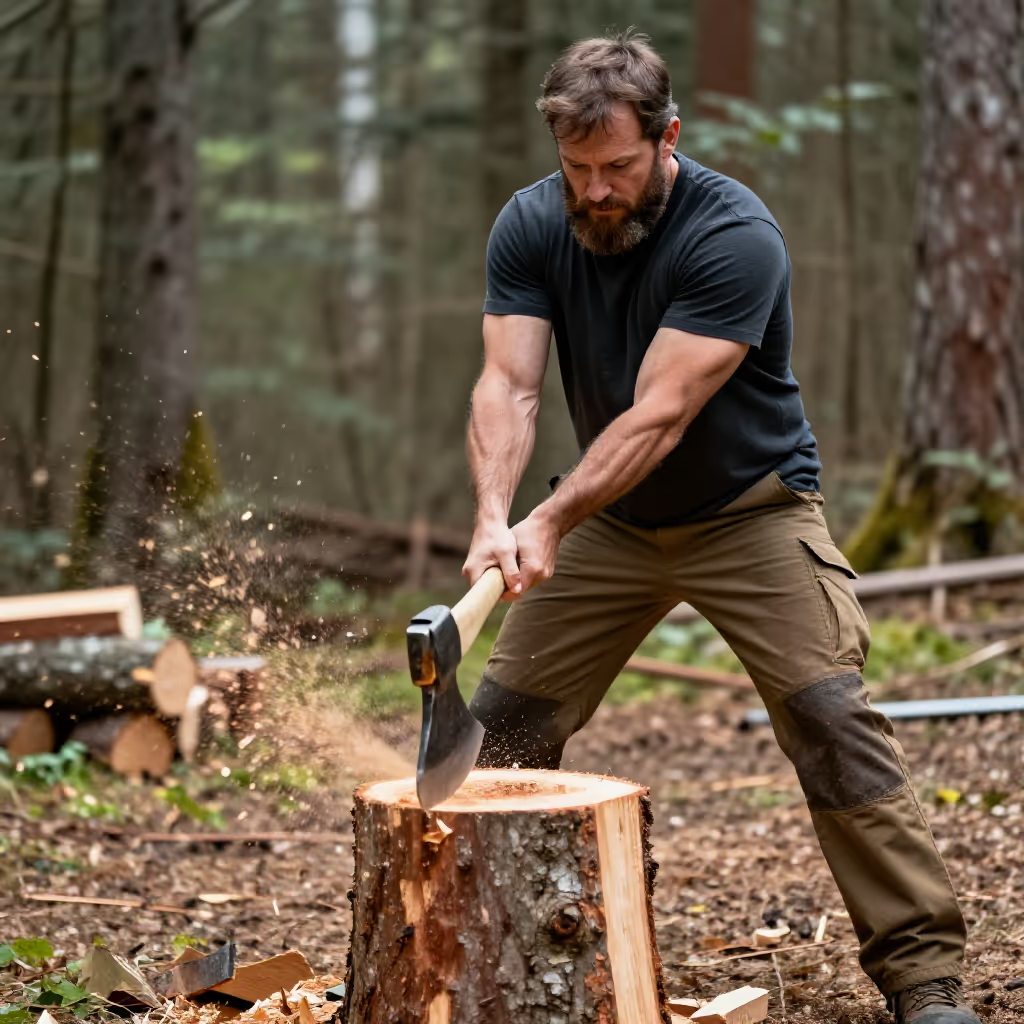
der Hieb
blow / strike
A forceful blow, usually with a weapon such as a sword or a tool such as an axe.
EXAMPLE
Mit einem gezielten Hieb spaltete er den Holzklotz.
With a well-aimed blow, he split the block of wood.
blow / cut
Loading your saved state.
blow / strike
A forceful blow, usually with a weapon such as a sword or a tool such as an axe.
Mit einem gezielten Hieb spaltete er den Holzklotz.
With a well-aimed blow, he split the block of wood.

jab / dig
A sharp, hurtful, or mocking remark directed at someone.
Sein letzter Kommentar war ein direkter Hieb gegen seine Konkurrenten.
His last comment was a direct jab at his competitors.
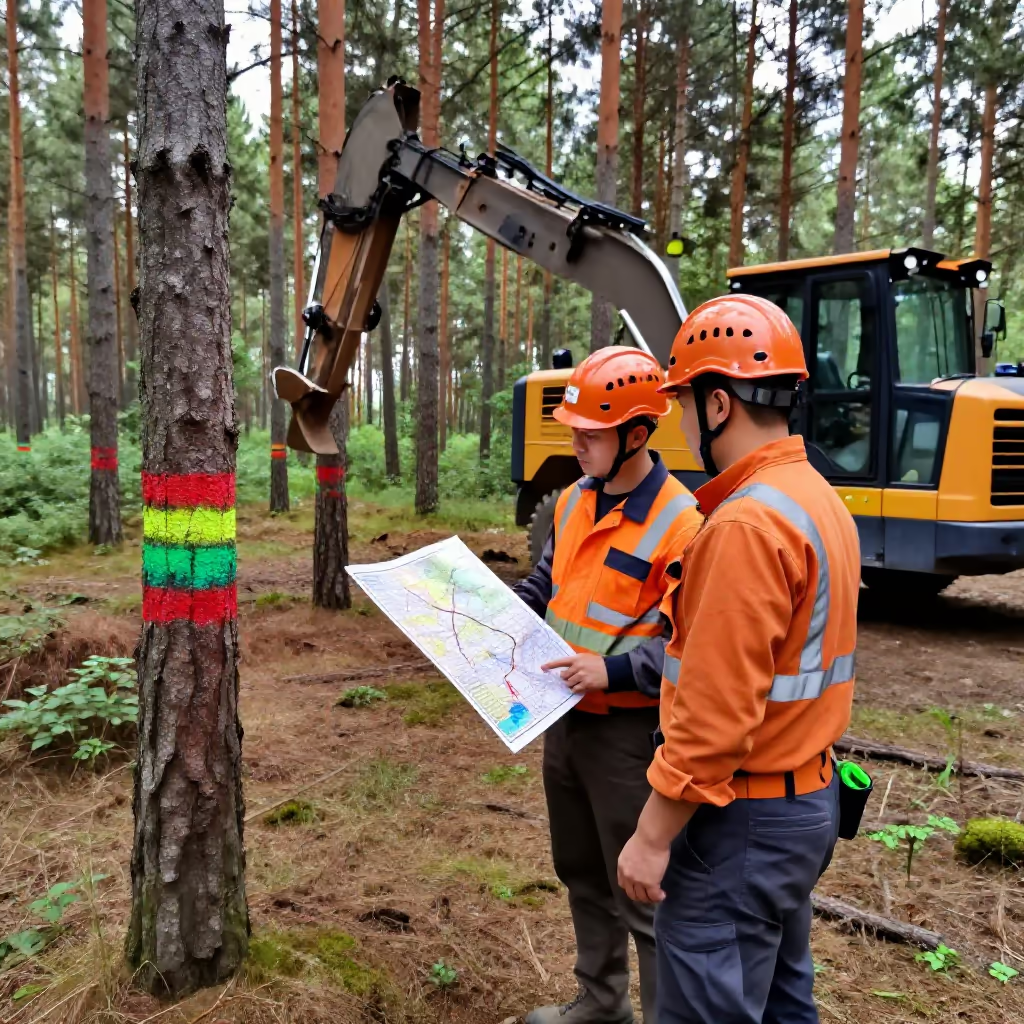
cutting
In forestry, the planned felling of trees in a specific section of forest.
Der für dieses Jahr geplante Hieb musste wegen des schlechten Wetters verschoben werden.
The cutting planned for this year had to be postponed because of the bad weather.
The noun 'der Hieb' (blow/strike) is derived directly from the verb 'hauen' (to hit, to chop). A 'Hieb' is therefore the result of a chopping or striking movement.
Er hat mit der Axt auf das Holz gehauen.
He chopped at the wood with the axe.
Whether a physical blow or a verbal attack is meant is revealed by the context. A physical 'Hieb' (blow/strike) often involves tools or weapons, while a verbal 'Hieb' (jab/dig) involves words, comments, or criticism.
Der Ritter parierte den Hieb mit seinem Schild.
The knight parried the blow with his shield.
In the sense of a blow, 'Hieb' is often used with verbs such as 'austeilen' (to deliver), 'versetzen' (to give/land), or 'parieren' (to parry/deflect).
Der Boxer versetzte seinem Gegner einen schnellen Hieb.
The boxer landed a quick blow on his opponent.
A common idiom is 'ein Hieb unter die Gürtellinie' (a blow below the belt). It refers to a very unfair, personally hurtful remark or action.
Ihm vorzuwerfen, er sei ein schlechter Vater, war ein Hieb unter die Gürtellinie.
Accusing him of being a bad father was a blow below the belt.
In the meaning of 'Fällen von Bäumen' (felling trees), 'Hieb' is a technical term from forestry. You will hardly ever hear this meaning in everyday life.
Der Förster plant den nächsten Hieb für den kommenden Winter.
The forester is planning the next cutting for the coming winter.
tip / top / lace
Spitze and Hieb can both refer to a critical remark. Spitze usually sounds brief, pointed, or ironic, whereas Hieb comes across more as a sharp and hurtful attack. Spitze is more suitable for subtle criticism, while Hieb is more suitable for a forceful attack.

Im Interview reagierte die Schauspielerin mit einem verletzenden Hieb auf die Kritik.
In the interview, the actress responded to the criticism with a hurtful jab.
Im Interview reagierte die Schauspielerin mit einer ironischen Spitze auf die Kritik.
In the interview, the actress responded to the criticism with an ironic barb.