

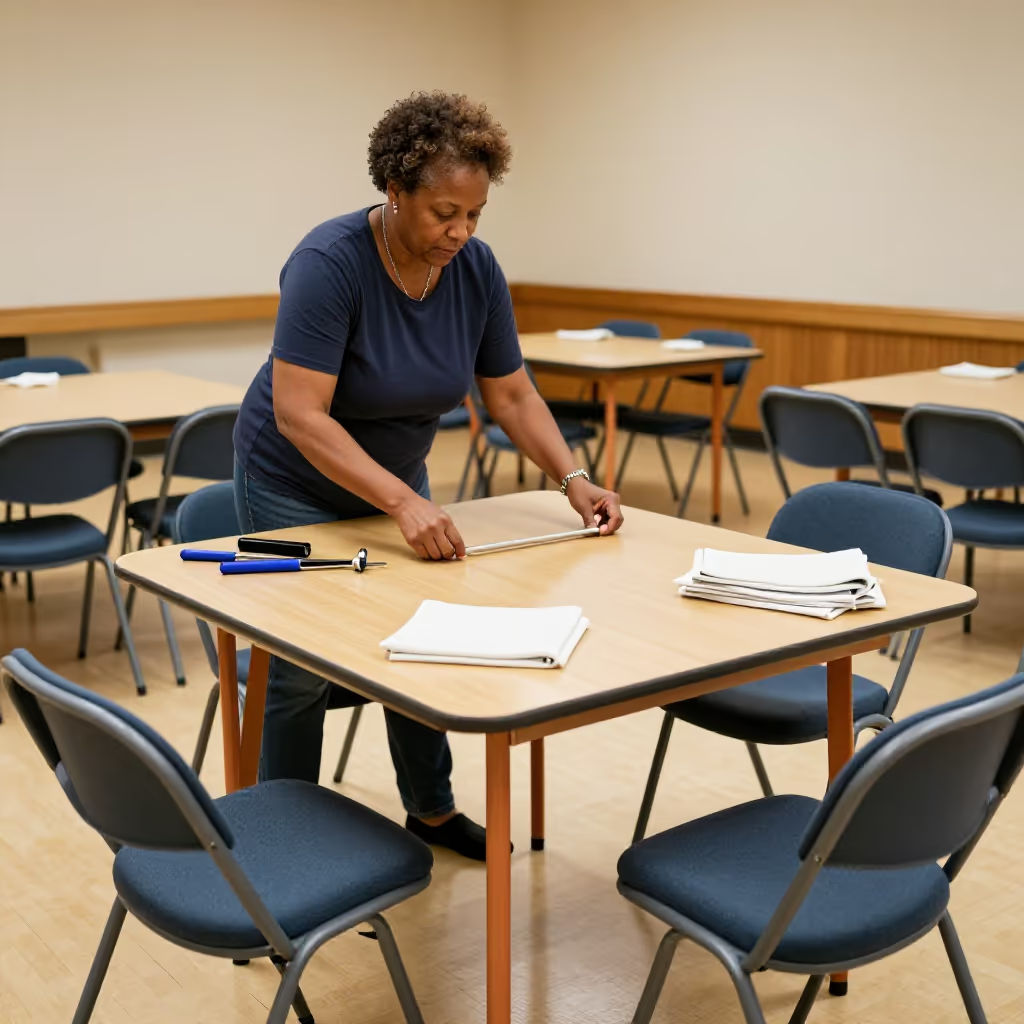
herrichten
to prepare
To prepare something for a specific purpose, put it in order, or repair it.
EXAMPLE
Wir müssen das Gästezimmer für unseren Besuch noch herrichten.
We still have to prepare the guest room for our visitors.
to prepare / to get ready
Loading your saved state.
to prepare
To prepare something for a specific purpose, put it in order, or repair it.
Wir müssen das Gästezimmer für unseren Besuch noch herrichten.
We still have to prepare the guest room for our visitors.

to get ready
To get oneself ready for an occasion through clothing, hairstyle, and makeup; to dress up.
Sie hat sich für die Party besonders schön hergerichtet.
She got herself especially nicely ready for the party.

to tear into someone
To sharply criticize someone, verbally attack them, or speak badly about them. Often in the phrase 'jemanden übel herrichten' (to really tear into someone).
In der Teamsitzung wurde der Kollege für seinen Fehler übel hergerichtet.
In the team meeting, the colleague was really torn into for his mistake.
'Herrichten' (to prepare/to get ready) is a separable verb. The prefix 'her-' goes to the end in a main clause. In subordinate clauses and in the infinitive with 'zu' (to), the verb stays together.
Sie richtet die Wohnung für die Feier her.
She prepares the apartment for the celebration.
You can recognize the meaning from the object: If it is about a thing (e.g., a room), it means 'vorbereiten' (to prepare). If it is reflexive ('sich herrichten'), it means 'to get ready/dress up'. If a person is the object, it is usually about criticism.
Kannst du bitte den Tisch für das Abendessen herrichten?
Could you please prepare the table for dinner?
In the meaning 'vorbereiten' (to prepare), 'herrichten' is often used for rooms, meals, or places. Typical objects are 'das Zimmer' (the room), 'das Essen' (the food/meal), 'den Garten' (the garden), or 'die Wohnung' (the apartment).
Für die Geburtstagsfeier haben wir das ganze Wohnzimmer hergerichtet.
For the birthday party, we prepared the entire living room.
The reflexive form 'sich herrichten' (to get ready) always means that a person takes care of their appearance and prepares for an occasion. The reflexive pronoun changes according to the person (ich richte mich her, du richtest dich her).
Warum hast du dich so schick hergerichtet? Gehst du aus?
Why did you get so dressed up? Are you going out?
In the meaning 'kritisieren' (to criticize), the verb is often intensified by an adverb like 'übel' (badly/harshly), 'schlimm' (terribly), or 'ordentlich' (properly/really). The phrase 'jemanden übel herrichten' (to really tear into someone) is very common.
Die Presse hat den Politiker nach seiner Rede übel hergerichtet.
The press tore into the politician after his speech.
to prepare / preserve / rig
Both verbs can mean preparing something for a specific purpose. „Herrichten“ is more general and can be used for getting something into shape, while „präparieren“ emphasizes targeted, more specialized treatment. For a ski slope, „präparieren“ is the usual choice, while „herrichten“ remains possible as a more general description.

Die Helfer richteten die Skipiste vor dem Training her.
The helpers prepared the ski slope before training.
Das Team präparierte die Skipiste für den Wettkampf.
The team prepared the ski slope for the competition.