

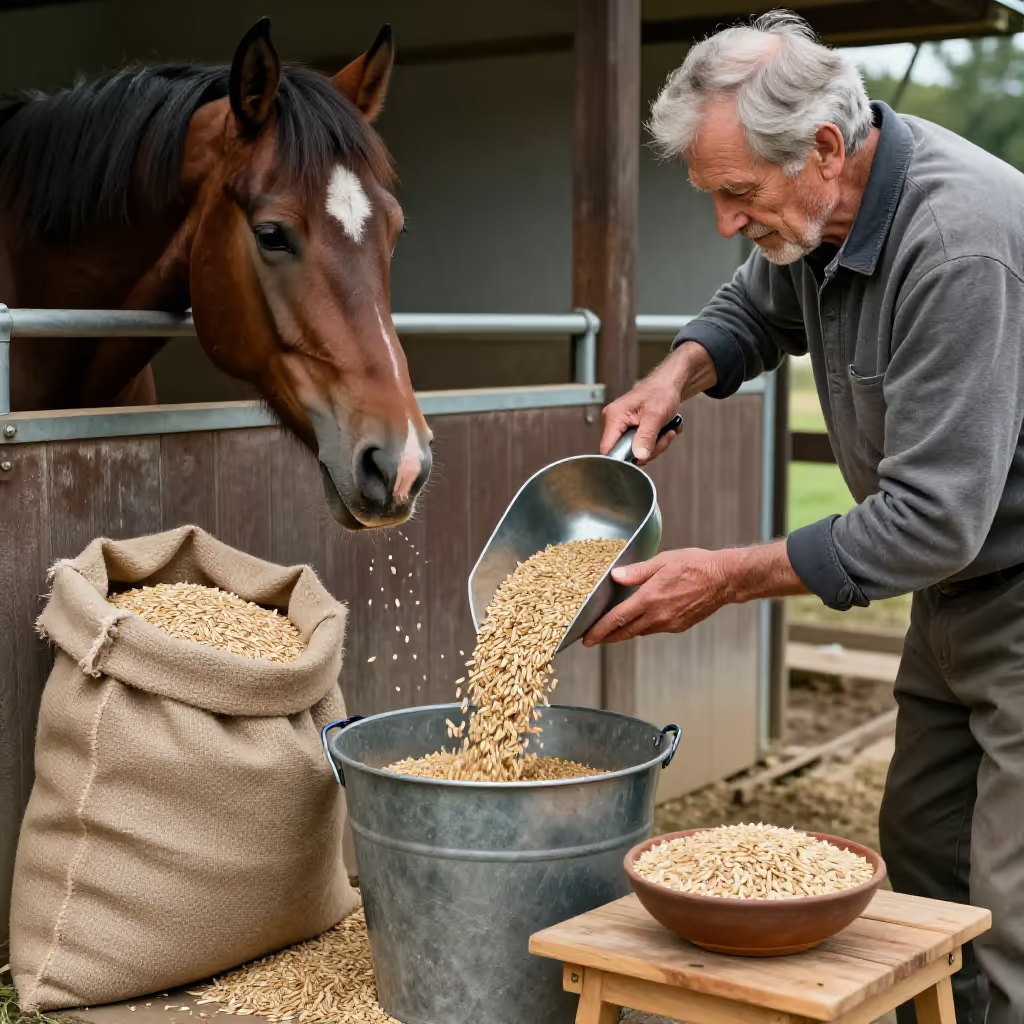
der Hafer
oats
A type of grain whose kernels are used as food for humans (e.g., rolled oats) and as feed for animals, especially horses.
EXAMPLE
Das Pferd bekommt jeden Morgen eine Portion Hafer.
The horse gets a portion of oats every morning.
oats
Loading your saved state.
oats
A type of grain whose kernels are used as food for humans (e.g., rolled oats) and as feed for animals, especially horses.
Das Pferd bekommt jeden Morgen eine Portion Hafer.
The horse gets a portion of oats every morning.

to be full of beans
An idiom meaning that someone is high-spirited, boisterous, or full of energy.
Die Kinder rennen wie wild durch den Garten, sie sticht heute wohl der Hafer.
The children are running wildly through the garden; they must be full of beans today.
In its main meaning as a grain, 'Hafer' (oats) is an uncountable noun (mass noun). It is therefore normally used in the singular without an article or with 'der' and has no plural form in German.
Für mein Müsli kaufe ich immer Hafer aus biologischem Anbau.
For my muesli, I always buy organically grown oats.
The idiom 'jemanden sticht der Hafer' (someone is full of beans / someone is feeling frisky) has a fixed structure. The person who is being overexcited is in the accusative. The subject of the sentence is 'der Hafer' (the oats).
Was ist denn mit dir los? Sticht dich der Hafer?
What's gotten into you? Are you full of beans?
This idiom comes from the observation that horses often become very energetic and high-spirited after eating oats. This image helps you remember the meaning.
Nach dem Sieg feierten die Spieler so laut, als ob sie der Hafer stechen würde.
After the victory, the players celebrated so loudly as if they were full of beans.
In everyday life, you often encounter Hafer (oats) in processed form. Well-known products are 'Haferflocken' (rolled oats), 'Hafermilch' (oat milk), or 'Haferbrot' (oat bread).
Ich trinke meinen Kaffee am liebsten mit Hafermilch.
I like my coffee best with oat milk.