

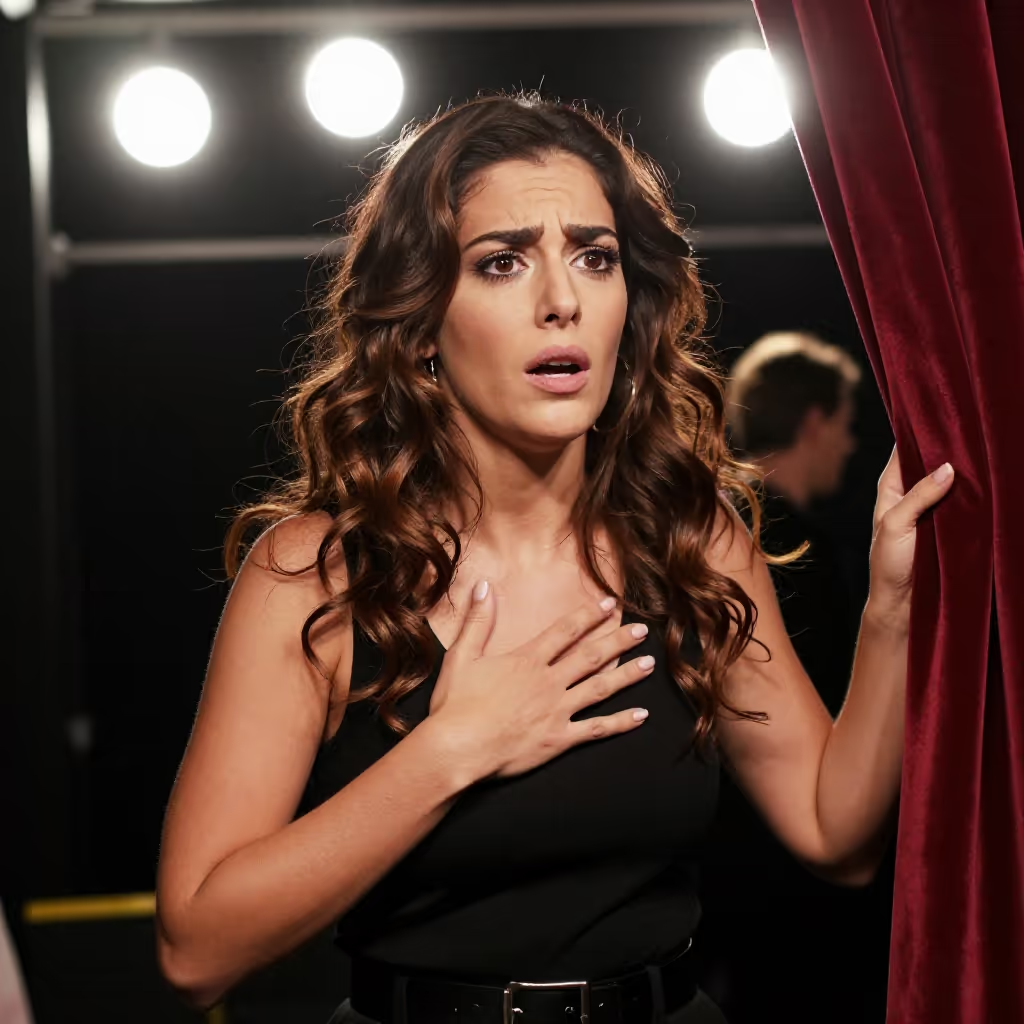
A noticeably strong, fast, or irregular heartbeat that can be triggered by excitement, fear, exertion, or being in love.
example
Vor dem Vorstellungsgespräch hatte sie vor Aufregung starkes Herzklopfen.
Before the job interview, her heart was pounding hard with excitement.
Usage tips
Word composition
The word is made up of 'Herz' (heart) and the verb 'klopfen' (to knock/beat). So it very vividly describes the feeling when the heart is beating strongly and noticeably.
EXAMPLE
Nach dem schnellen Lauf spürte er sein Herzklopfen.
After the fast run, he could feel his heart pounding.
Typical verbs
'Herzklopfen' (heart pounding) is mostly used with the verbs 'haben' (to have) or 'bekommen' (to get). So you say 'Ich habe Herzklopfen' (My heart is pounding) or 'Ich bekomme Herzklopfen' (My heart starts pounding).
EXAMPLE
Jedes Mal, wenn er sie sieht, bekommt er Herzklopfen.
Every time he sees her, his heart starts pounding.
Naming the reason
To state the reason for the heart pounding, you often use the preposition 'vor' with the dative, especially with emotions such as excitement, joy, or fear.
EXAMPLE
Das Kind hatte vor Freude Herzklopfen, als es das Geschenk sah.
The child's heart was pounding with joy when they saw the present.
Compare with
confusable
Herzklopfen vs Puls
pulse
'der Puls' and 'das Herzklopfen' are both connected to the heartbeat. 'Puls' means the measurable or perceptible movement of blood caused by the heartbeat, for example at the wrist. People often speak of a high, low, or fast pulse. 'Herzklopfen' refers more to the personal feeling that the heart is beating strongly, quickly, or restlessly. This happens, for example, with fear, excitement, or after exertion. Learners may confuse the words because both can feel similar in the body. When you measure it, you tend to say 'Puls'; when you describe the strong feeling, you tend to say 'Herzklopfen'.
Herzklopfen
Vor der Prüfung hat Tom starkes Herzklopfen.
Before the exam, Tom's heart is pounding hard.
Puls
Nach dem Joggen misst Lisa ihren Puls am Handgelenk.
After jogging, Lisa measures her pulse at her wrist.