

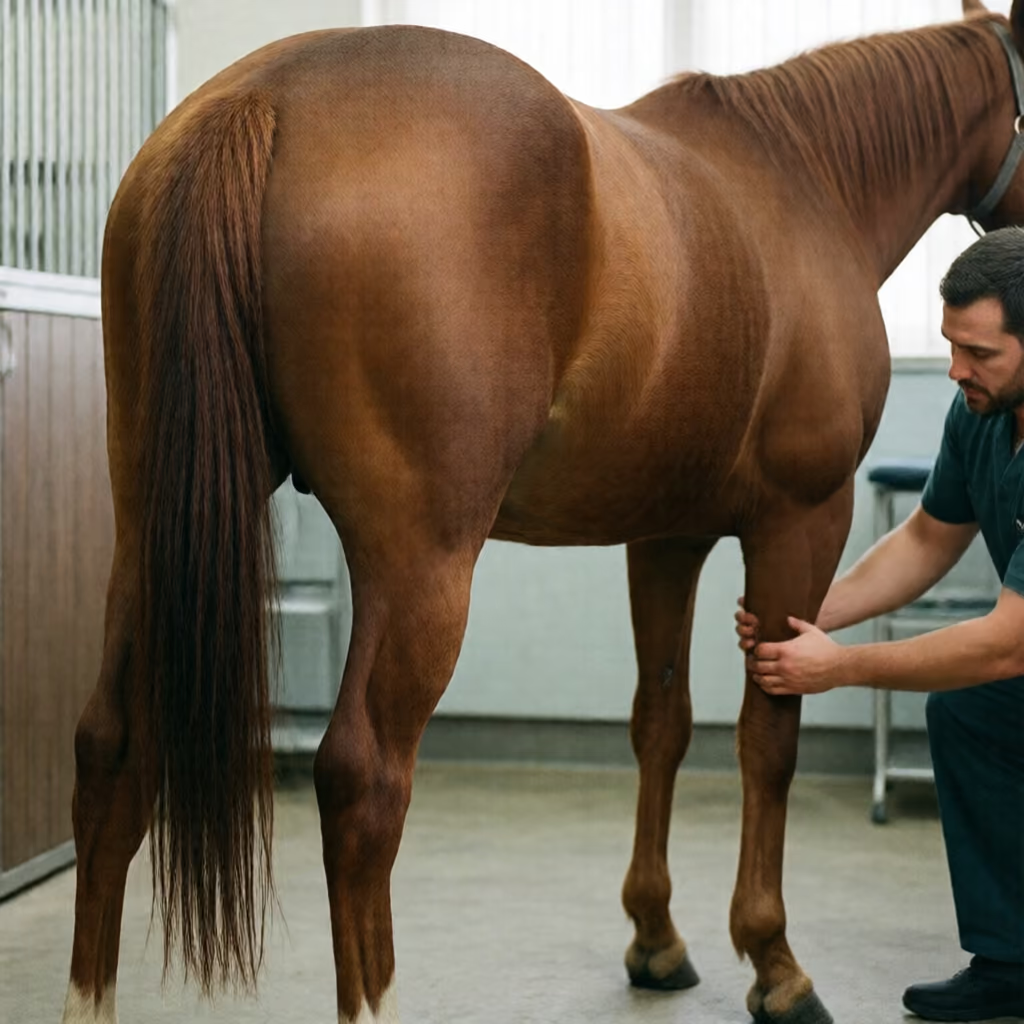
das Hinterbein
hind leg
One of the rear legs of a four-legged animal, especially a horse or dog.
EXAMPLE
Das Pferd lahmt am linken Hinterbein.
The horse is lame in its left hind leg.
hind leg
das Hinterbein, die Hinterbeine
Loading your saved state.
hind leg
One of the rear legs of a four-legged animal, especially a horse or dog.
Das Pferd lahmt am linken Hinterbein.
The horse is lame in its left hind leg.
| gender | neuter das |
|---|---|
| plural | die Hinterbeine |
| genitive | des Hinterbeines |
| singular | plural | |
|---|---|---|
| nominative | das Hinterbein | die Hinterbeine |
| accusative | das Hinterbein | die Hinterbeine |
| dative | dem Hinterbein | den Hinterbeinen |
| genitive | des Hinterbeines des Hinterbeins | der Hinterbeine |
The article changes with the case; it is shown in colour.
'Hinterbein' is made up of 'hinter' (behind) and 'Bein' (leg). The word therefore refers to a leg on the rear part of an animal's body.
Das Pferd hebt beim Laufen manchmal das rechte Hinterbein an.
The horse sometimes lifts its right hind leg while running.
'Hinterbein' often occurs with information about the side or with verbs describing strain or injury. Typical collocations include 'das linke Hinterbein' (the left hind leg), 'das Hinterbein belasten' (to put weight on the hind leg), and 'sich am Hinterbein verletzen' (to injure one's hind leg).
Der Hund belastet sein verletztes Hinterbein nur vorsichtig.
The dog puts weight on its injured hind leg only cautiously.
When referring to problems or injuries, 'an' is often used with the dative: 'am Hinterbein' (on the hind leg). 'Am Hinterbein' is also frequently used for movements or actions involving this body part.
Die Tierärztin untersuchte die Schwellung am Hinterbein.
The veterinarian examined the swelling on the hind leg.