

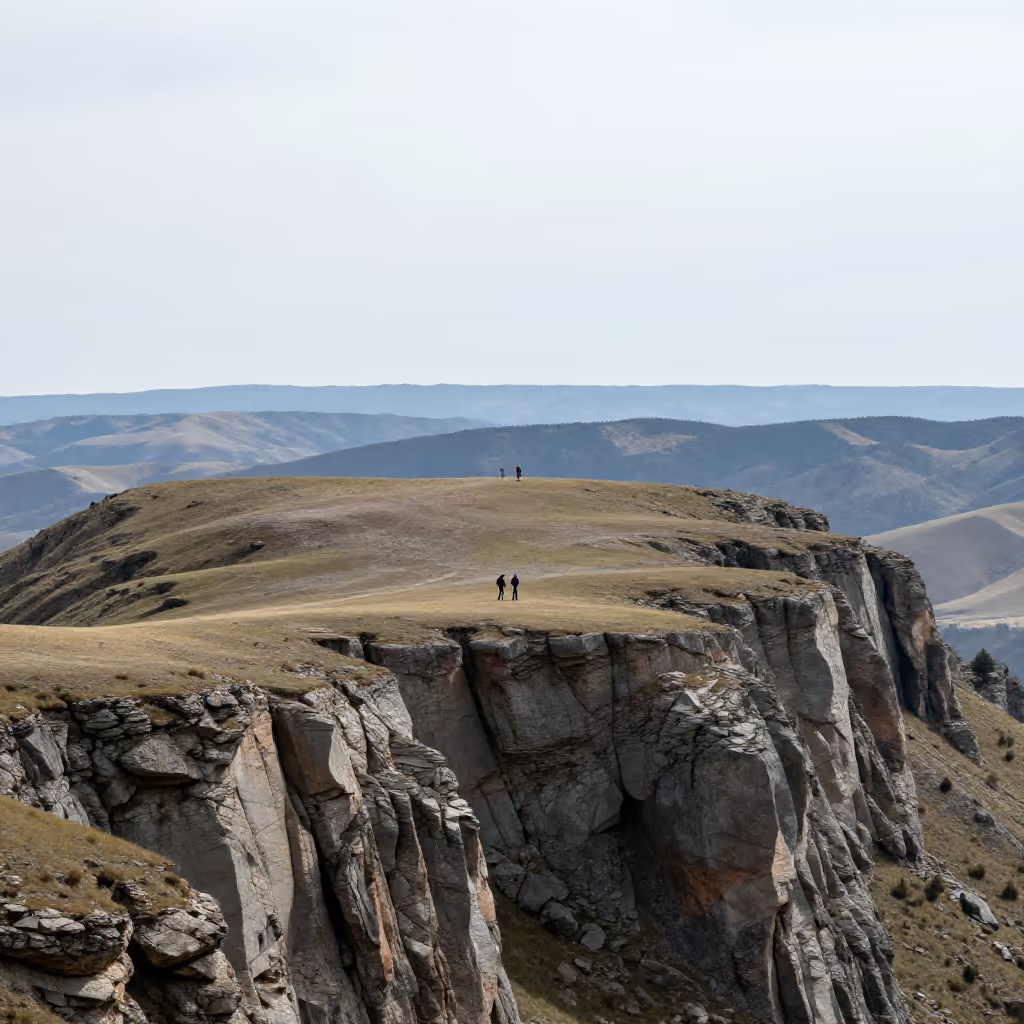
A large, relatively flat area that lies significantly above sea level or above the surrounding landscape. It is also referred to as a high plain.
example
Tibet ist die größte und höchstgelegene Hochebene der Welt.
Tibet is the largest and highest plateau in the world.
Usage tips
Compound word
The word is a simple compound of 'hoch' (high) and 'die Ebene' (plain). So it literally describes a plain that lies high up.
EXAMPLE
Eine Ebene ist flach, eine Hochebene ist flach und gleichzeitig hoch gelegen.
A plain is flat; a plateau is flat and at the same time located high up.
Correct preposition
To describe a place on a plateau, you use the preposition 'auf' (on). When describing movement across the surface, 'über' (over/across) is common.
EXAMPLE
Viele Tiere leben auf der weiten Hochebene.
Many animals live on the wide plateau.
Geographical context
As a geographical term, 'Hochebene' (plateau) is often combined with adjectives such as 'weit' (wide), 'karg' (barren), or 'hochgelegen' (high-lying). It is also part of proper names.
EXAMPLE
Die bolivianische Hochebene ist für ihre einzigartige Landschaft bekannt.
The Bolivian plateau is known for its unique landscape.
Compare with
near_synonym · confusable
Hochebene vs Ebene
plain / level
'die Ebene' and 'die Hochebene' both describe a large, rather flat area. The important difference is the elevation. An 'Ebene' is simply flat and does not have to be high up. A 'Hochebene' lies significantly higher than the surrounding area or high above sea level. The words can be confused because both landscapes appear flat. If the elevation does not matter, people usually say 'Ebene'. If the flat area is high up, 'Hochebene' is more precise.
Hochebene
Auf der Hochebene war die Luft kühler als unten im Tal.
On the plateau, the air was cooler than down in the valley.
Ebene
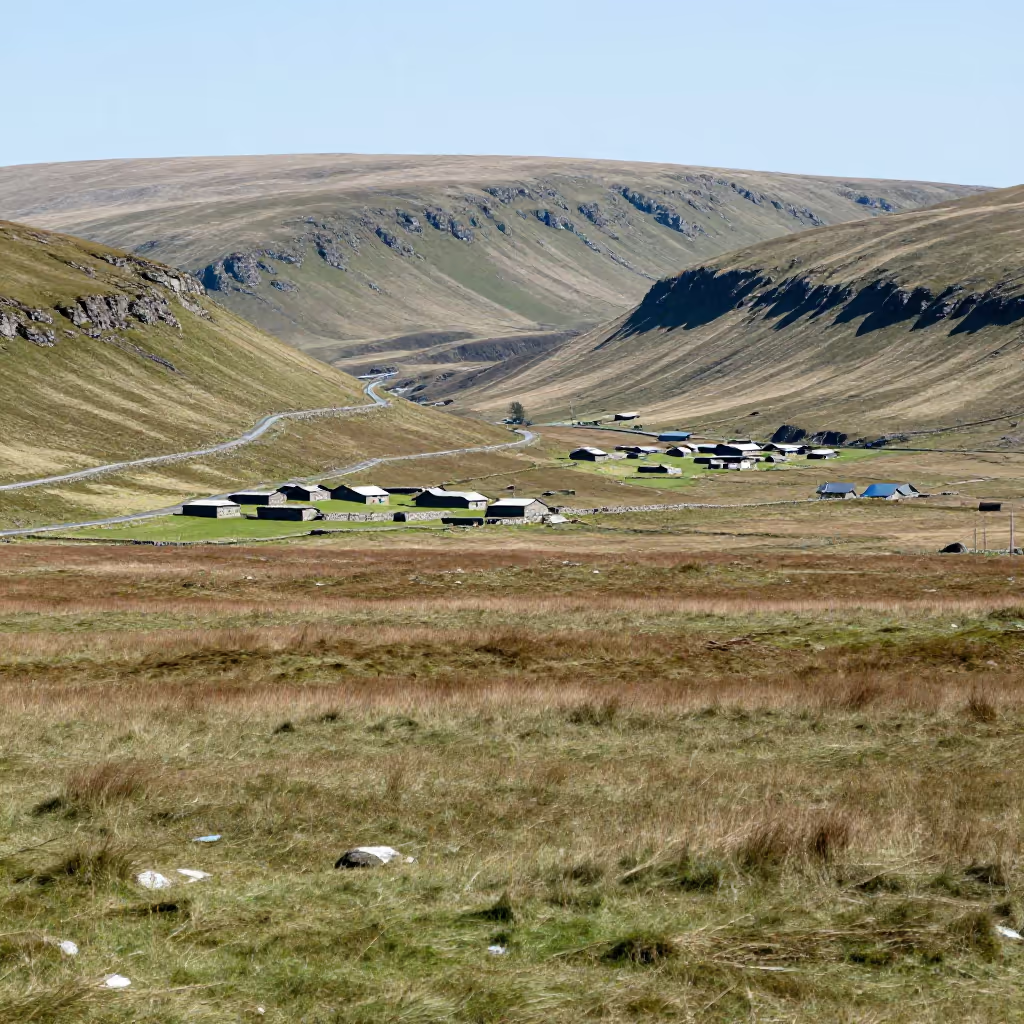
In der Ebene sieht man schon von weitem die kleinen Dörfer.
On the plain, you can see the small villages from far away.