

hölzern
wooden
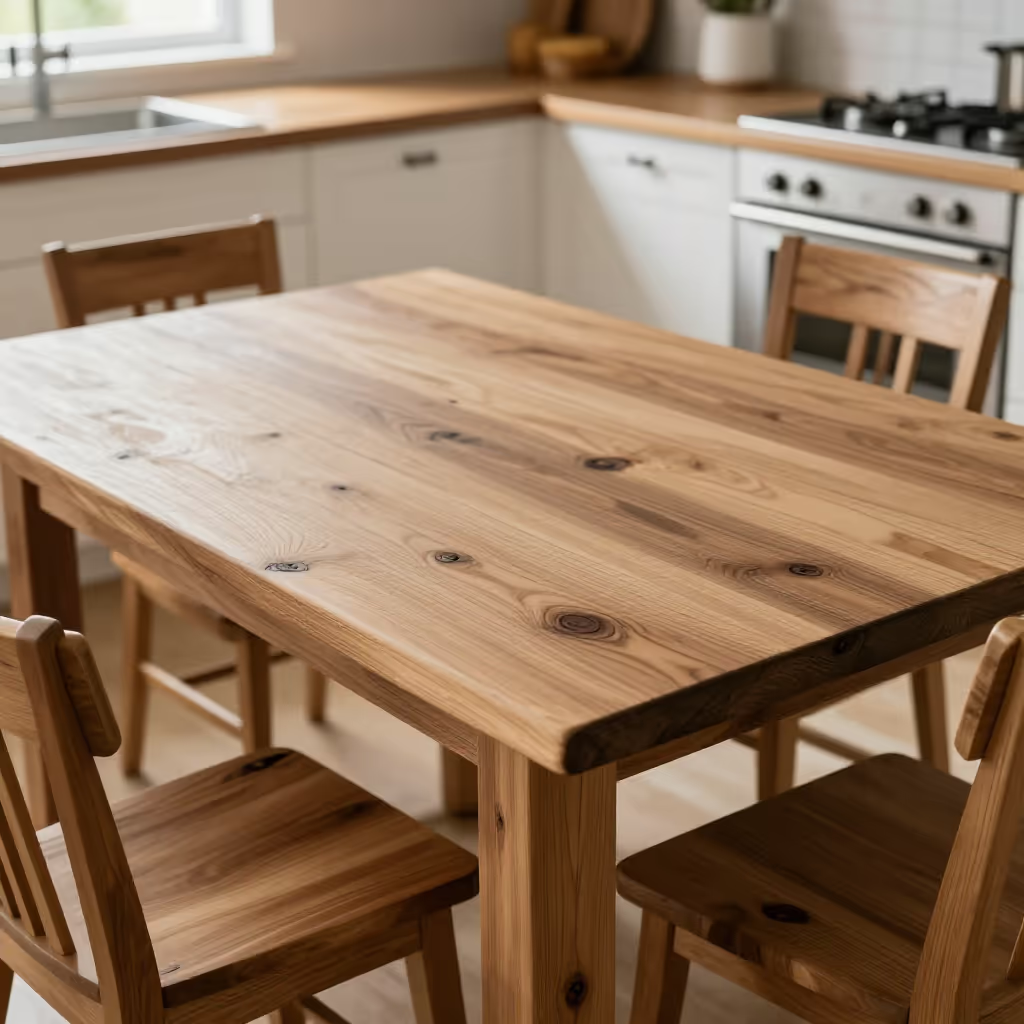
Made from the material wood.
EXAMPLE
Der alte Tisch hatte eine massive, hölzerne Platte.
The old table had a solid wooden top.
wooden
Loading your saved state.
wooden
Made from the material wood.
Der alte Tisch hatte eine massive, hölzerne Platte.
The old table had a solid wooden top.

wooden
Describes movements, behavior, or spoken expressions that seem stiff, awkward, and unnatural.
Der Schauspieler wirkte in seiner Rolle sehr hölzern und konnte nicht überzeugen.
The actor seemed very wooden in his role and failed to convince.
'Hölzern' (wooden) is formed from the noun 'das Holz' (wood) and the ending '-ern'. The ending '-ern' is often used for adjectives that describe a material, such as 'golden' (golden) or 'eisern' (iron).
Die Kirche hatte eine alte, hölzerne Tür.
The church had an old wooden door.
You can recognize the figurative meaning by the fact that the sentence is not about an object, but about a person, their behavior, or their language. It then describes something stiff and unnatural.
Seine Entschuldigung klang sehr hölzern und nicht ehrlich.
His apology sounded very wooden and not sincere.
In the figurative meaning, 'hölzern' (wooden) is often combined with verbs like 'wirken' (to seem) or 'klingen' (to sound). Nouns like 'Bewegungen' (movements), 'Sprache' (language/speech), or 'Stil' (style) are also typical.
Der Politiker wirkte in dem Interview sehr hölzern.
The politician seemed very wooden in the interview.
stiff
Steif and hölzern can both describe unnatural behavior. Steif usually emphasizes a very formal, reserved manner. Hölzern more strongly describes the overall awkward and artificial impression, for example in movements or speech.

Seine Begrüßung wirkt hölzern, weil seine Worte und Bewegungen unnatürlich wirken.
His greeting seems wooden because his words and movements seem unnatural.
Seine Begrüßung wirkt steif, weil er sehr förmlich und reserviert bleibt.
His greeting seems stiff because he remains very formal and reserved.