

steif
stiff
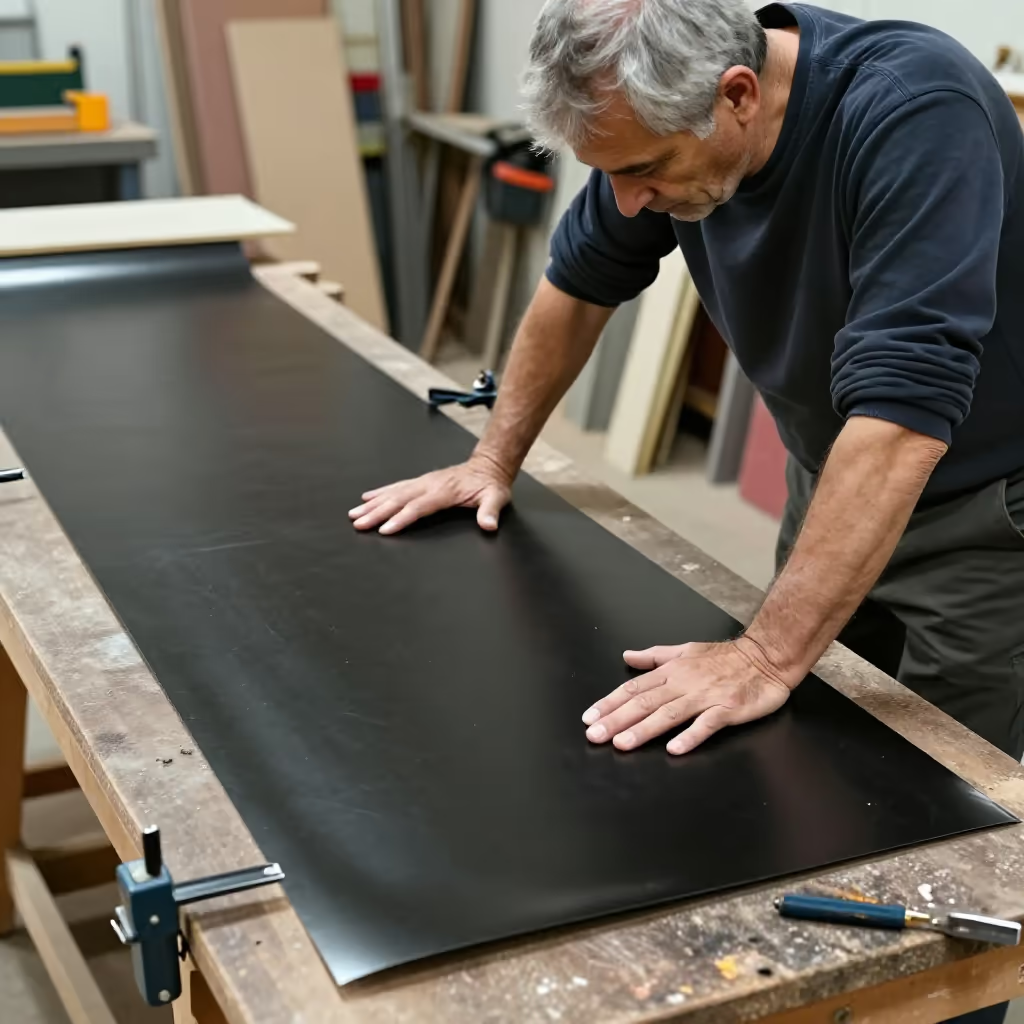
Hard and inflexible; not easy to move or deform.
EXAMPLE
Der Karton ist steif genug, um als Unterlage zu dienen.
The cardboard is stiff enough to serve as a backing.
stiff
Loading your saved state.
stiff
Hard and inflexible; not easy to move or deform.
Der Karton ist steif genug, um als Unterlage zu dienen.
The cardboard is stiff enough to serve as a backing.

stiff
Referring to body parts: painful and limited in movement, often due to cold, exertion, or illness.
Nach der Gartenarbeit war mein Rücken ganz steif.
After the gardening, my back was completely stiff.

stiff
Referring to a person's behavior: very formal, reserved, and not relaxed or easygoing.
Die Atmosphäre beim ersten Kennenlernen war etwas steif.
The atmosphere when we first met was a bit stiff.
stiff
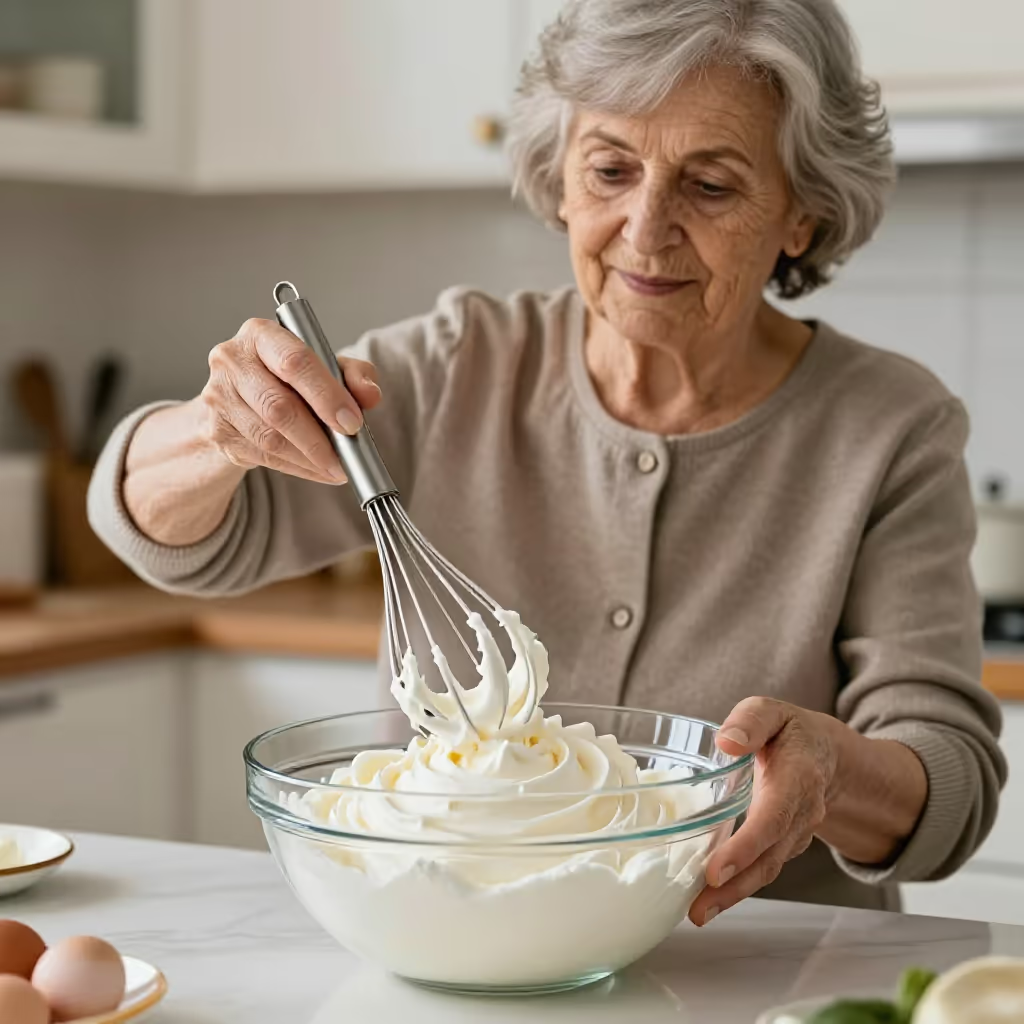
Referring to a liquid such as cream or egg whites: beaten until it has a firm consistency.
Für das Dessert muss das Eiweiß steif geschlagen werden.
For the dessert, the egg whites need to be beaten stiff.

stiff
Referring to wind or a breeze: strong and forceful.
An der Küste wehte eine steife Brise.
A stiff breeze was blowing on the coast.
You can recognize the meaning of 'steif' (stiff) from the noun it describes. If it refers to a body part, it is about pain or immobility. If it describes a person or atmosphere, it means formal and tense.
Nach der langen Wanderung waren meine Beine ganz steif.
After the long hike, my legs were completely stiff.
In connection with the body, 'steif' (stiff) is often used for specific body parts. Typical combinations are 'ein steifer Nacken' (a stiff neck), 'steife Gelenke' (stiff joints), or 'steife Finger' (stiff fingers).
Vom langen Sitzen am Computer habe ich oft einen steifen Nacken.
From sitting at the computer for a long time, I often get a stiff neck.
When a person or their behavior is described as 'steif' (stiff), it is usually meant negatively or critically. It describes a lack of ease and naturalness in social situations.
Er ist ein sehr steifer Typ und lacht fast nie.
He is a very stiff guy and almost never laughs.
In the context of cooking and baking, 'steif' (stiff) is used almost exclusively in the fixed expression 'etwas steif schlagen' (to beat something until stiff). This usually refers to cream or egg whites.
Für die Mousse au Chocolat musst du die Sahne steif schlagen.
For the chocolate mousse, you have to whip the cream until stiff.
In relation to the weather, 'steif' (stiff) occurs almost only in the fixed combination 'eine steife Brise' (a stiff breeze). This describes a strong but not stormy wind.
Am Meer weht heute eine steife Brise.
There is a stiff breeze blowing by the sea today.
strong
When referring to wind, „stark“ and „steif“ describe a high level of strength. „Stark“ is the general, neutral choice for intensity; „steif“ is used in the fixed expression „steifer Wind“. Both are possible here, but „steif“ is restricted to this particular expression.

An der Küste weht heute ein steifer Wind.
A stiff wind is blowing on the coast today.
An der Küste weht heute ein starker Wind.
A strong wind is blowing on the coast today.