

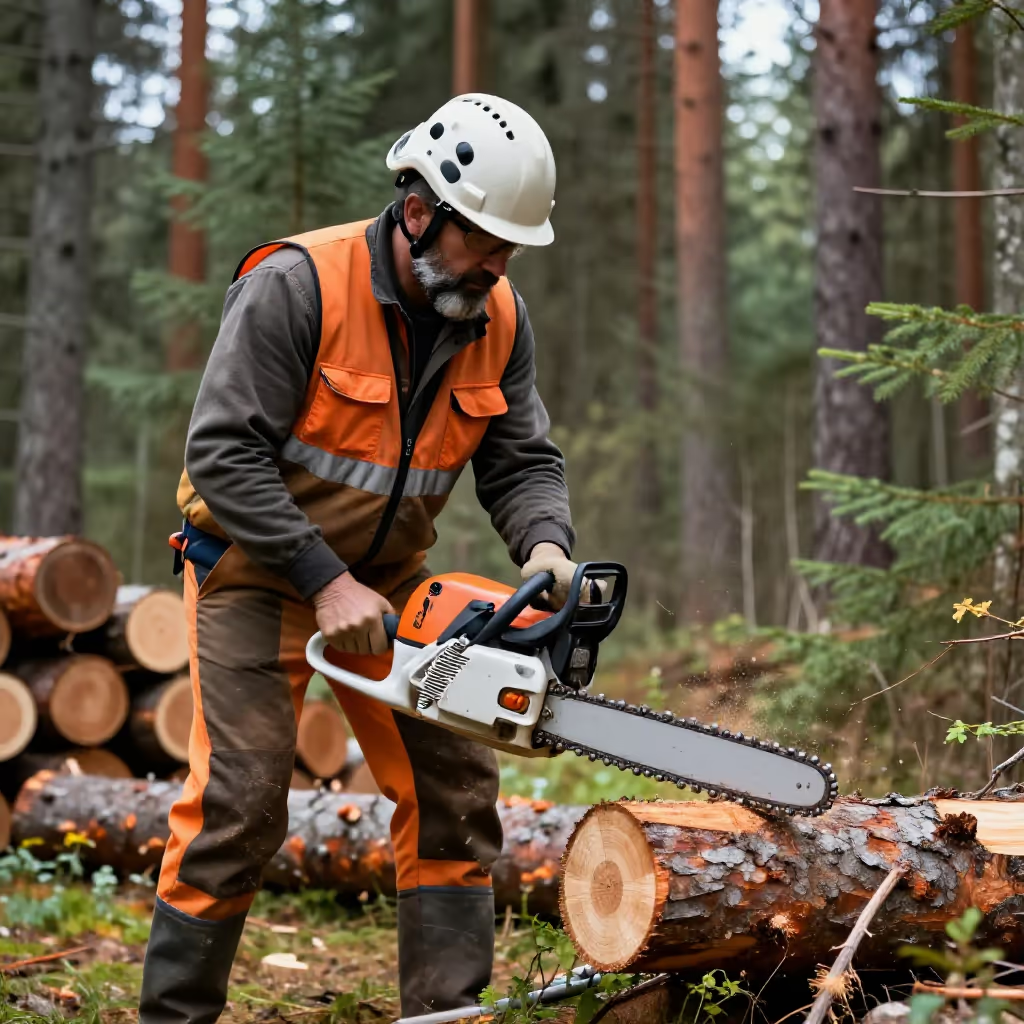
A person who works professionally in the forest, especially felling trees. The term is often regional or outdated; today, 'Forstwirt' (forestry worker) or 'Holzfäller' (woodcutter/lumberjack) are more common.
example
Früher arbeiteten viele Männer aus dem Dorf als Holzer in den landesherrlichen Wäldern.
In the past, many men from the village worked as woodcutters in the lord's forests.
Usage tips
Word structure
The word is derived directly from 'das Holz' (wood). The ending '-er' is often used in German to refer to a male person whose profession is connected with the base word.
EXAMPLE
Ein Holzer muss körperlich fit und stark sein.
A woodcutter has to be physically fit and strong.
Register and style
The term 'Holzer' (woodcutter) is considered regional or slightly outdated today. In modern or supraregional contexts, the occupational titles 'Forstwirt' (forestry worker) or 'Holzfäller' (woodcutter/lumberjack) are more common.
EXAMPLE
Mein Großvater hat sein Leben lang als Holzer im Schwarzwald gearbeitet.
My grandfather worked as a woodcutter in the Black Forest all his life.
Typical activities
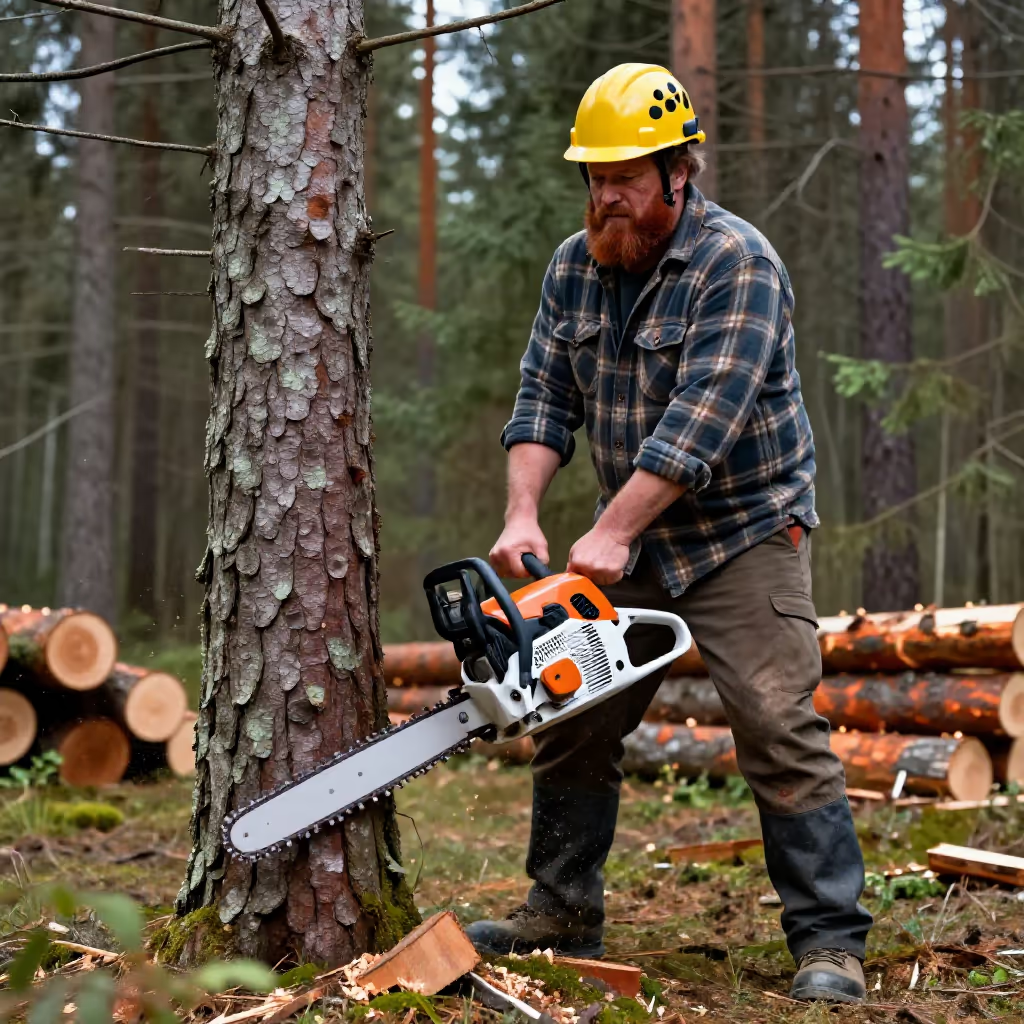
The work of a 'Holzer' (woodcutter) is often described with the verbs 'Bäume fällen' (to fell trees), 'Holz machen' (to cut/prepare wood), or 'im Wald arbeiten' (to work in the forest).
EXAMPLE
Die Holzer fällen die markierten Bäume.
The woodcutters fell the marked trees.
Compare with
confusable
Holzer vs Förster
forester
'der Förster' and 'der Holzer' both have to do with work in the forest, but they do not mean the same thing. A 'Förster' (forester) is responsible for a forest area. For example, he takes care of maintenance, protection, hunting, and planning the timber harvest. A 'Holzer' mainly does practical work with wood and fells trees. The word 'Holzer' is also regional or somewhat outdated; in everyday language, people often say 'Holzfäller' (lumberjack) or 'Forstwirt' (forestry worker) instead. Learners may confuse the words because both work in the forest. The important point is: the 'Förster' organizes and looks after the forest, while the 'Holzer' mainly does the physical work of felling trees.
Holzer
Wegen des Sturms arbeiten heute mehrere Holzer im Wald.
Because of the storm, several woodcutters are working in the forest today.
Förster
Der Förster erklärt den Kindern, warum junge Bäume geschützt werden müssen.
The forester explains to the children why young trees need to be protected.