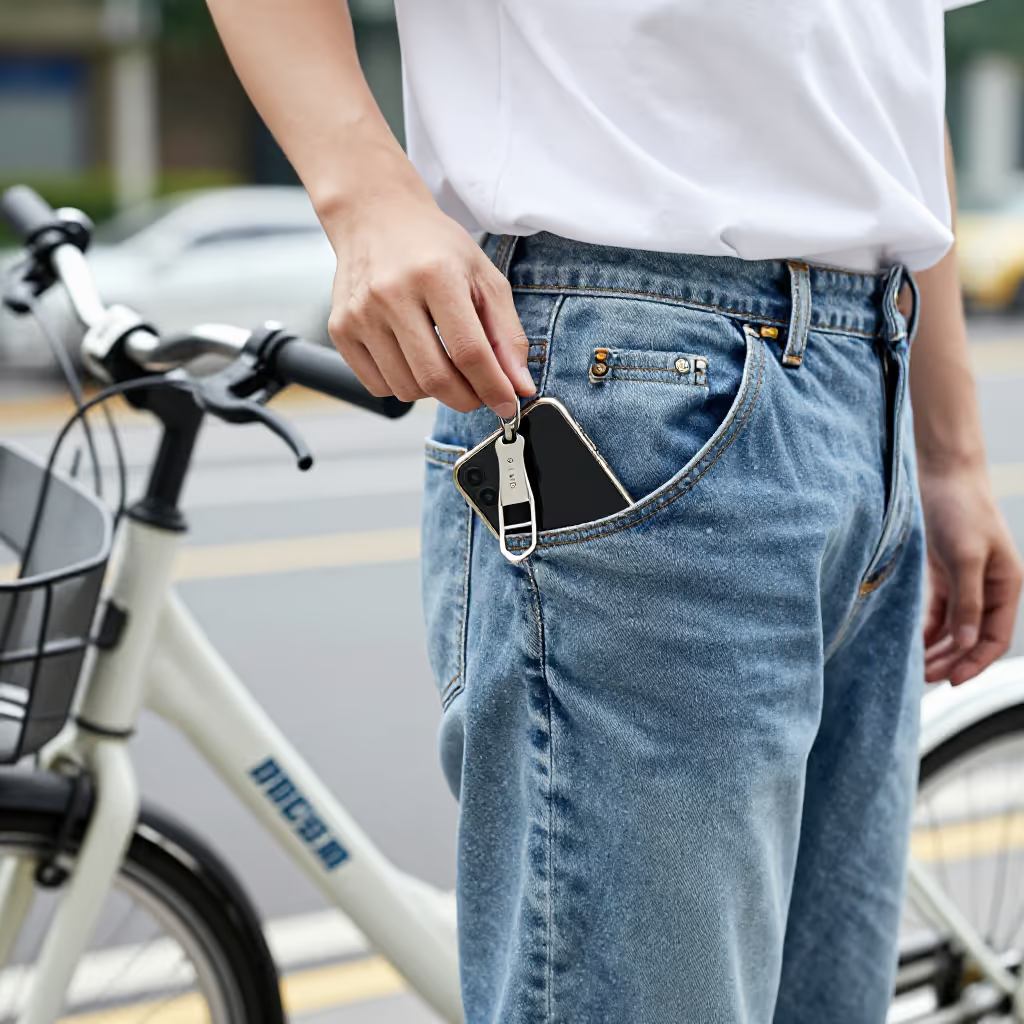
A small pocket sewn into a pair of pants, where you can keep objects such as keys, money, or a mobile phone.
example
Er zog sein Handy aus der Hosentasche, um auf die Uhr zu sehen.
He pulled his phone out of his pants pocket to check the time.

Usage tips
Word composition
The word is simply made up of 'die Hose' (pants) and 'die Tasche' (pocket/bag). The 'n' in the middle is a linking n that connects the two words. So it is literally a pocket in a pair of pants.
EXAMPLE
Meine Jacke hat keine Taschen, also muss alles in die Hosentasche.
My jacket has no pockets, so everything has to go in my pants pocket.
Typical verbs
Common verbs used with 'Hosentasche' (pants pocket) are 'stecken' (to put/stick), 'haben' (to have), 'suchen' (to search), and 'ziehen' (to pull). The prepositions 'in' (with the accusative for direction) and 'aus' (with the dative) are central here.
EXAMPLE
Er steckte die Hände tief in die Hosentaschen.
He stuck his hands deep into his pants pockets.
Fixed expression
The idiom 'jemanden in der Hosentasche haben' means that you are far superior to a person or have full control over them. It is often used in the context of competitions or conflicts.
EXAMPLE
Die erfahrene Anwältin hatte den Zeugen nach wenigen Fragen in der Hosentasche.
After just a few questions, the experienced lawyer had the witness in her pocket.
Compare with
near_synonym · confusable
Hosentasche vs Tasche
bag / pocket
'die Tasche' and 'die Hosentasche' can both refer to a place where you keep things. But 'die Tasche' is more general: it can be a portable container, for example a shopping bag, or a small pocket in clothing. 'die Hosentasche' is more precise and means only the pocket in a pair of pants. Learners may confuse the words because 'Tasche' can also mean a clothing pocket. When it is clear that you are talking about pants, 'Hosentasche' sounds more precise.