

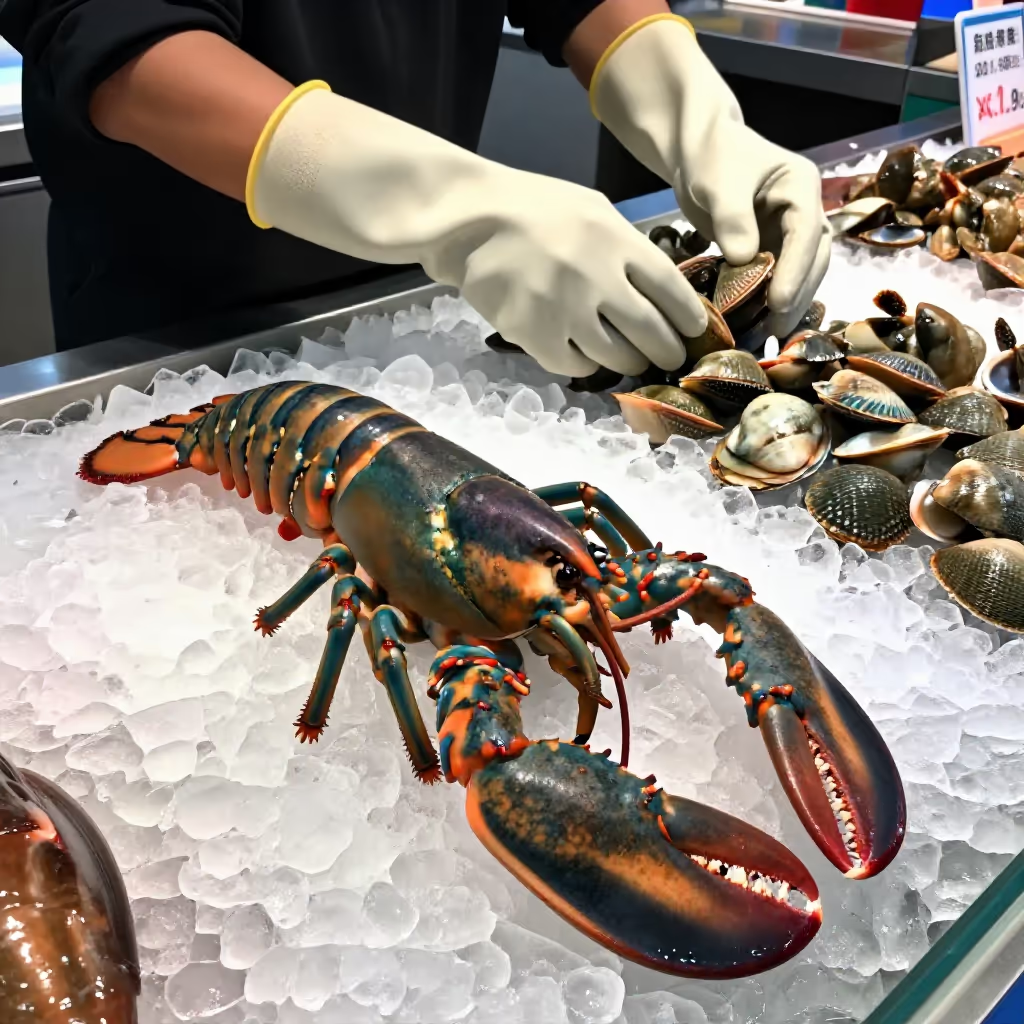
der Hummer
lobster
A large crustacean with claws that lives in the sea and is considered a delicacy.
EXAMPLE
Im Restaurant bestellten wir Hummer mit Knoblauchbutter.
At the restaurant, we ordered lobster with garlic butter.
lobster / Hummer
Loading your saved state.
lobster
A large crustacean with claws that lives in the sea and is considered a delicacy.
Im Restaurant bestellten wir Hummer mit Knoblauchbutter.
At the restaurant, we ordered lobster with garlic butter.

Hummer
A large off-road vehicle made by the American brand Hummer.
Er fährt einen riesigen Hummer, der kaum in die Parklücke passt.
He drives a huge Hummer that barely fits into the parking space.
You can always tell from context whether the animal or the car is meant. In conversations about food, cooking, or sea creatures, it means the crustacean. In the context of traffic, cars, and luxury, it means the vehicle.
Für das Abendessen kochen wir heute den Hummer.
We're cooking the lobster for dinner today.
When referring to the animal, 'Hummer' (lobster) is often combined with verbs related to eating and preparation: 'Hummer essen' (to eat lobster), 'Hummer bestellen' (to order lobster), or 'Hummer kochen' (to cook lobster).
In diesem Fischrestaurant kann man frischen Hummer essen.
You can eat fresh lobster at this seafood restaurant.
When the car is meant, typical verbs are 'fahren' (to drive) or 'besitzen' (to own). The vehicle is also often described by its size, e.g. as a 'riesiger Hummer' (huge Hummer).
Er träumt davon, einmal einen Hummer zu fahren.
He dreams of driving a Hummer one day.