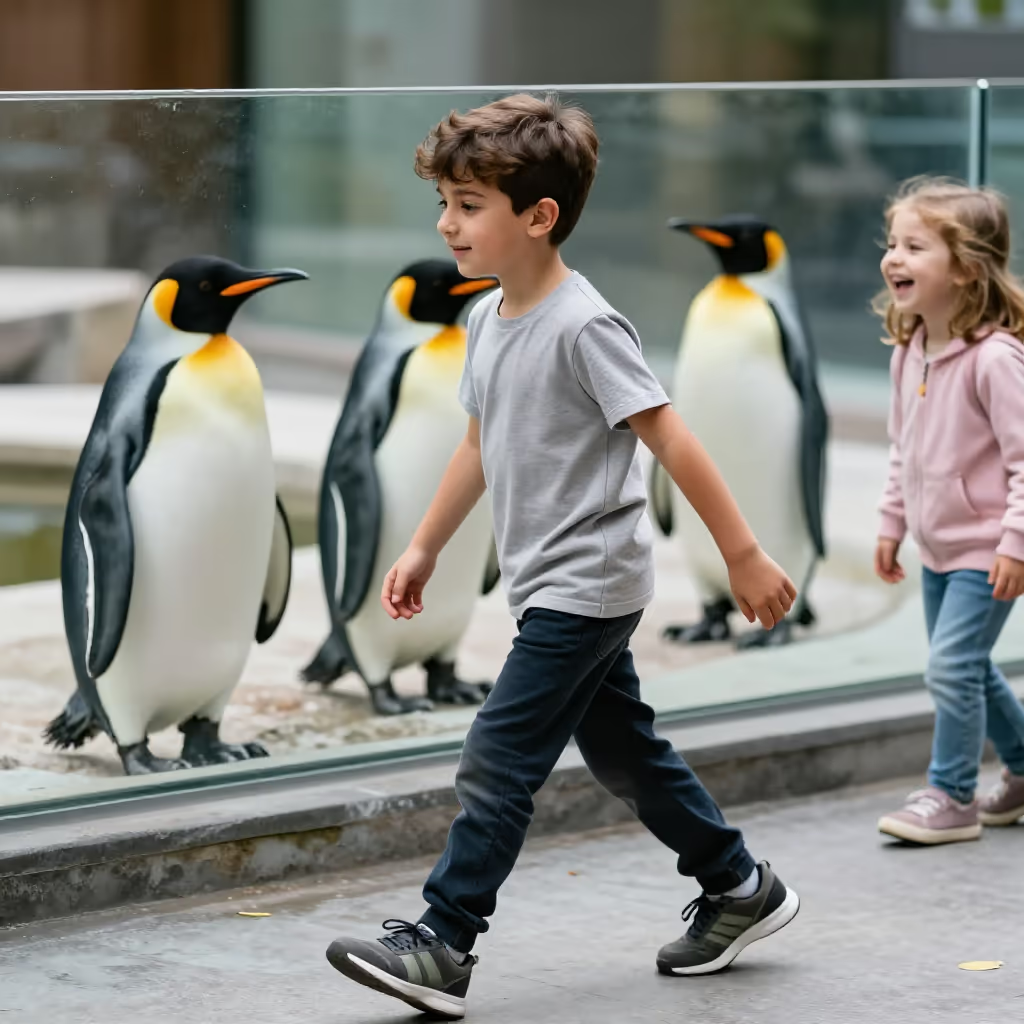
To copy the behavior, voice, or movements of another person or an animal, often in a humorous way.
example
Der Komiker kann die Stimmen vieler berühmter Politiker perfekt imitieren.
The comedian can perfectly imitate the voices of many famous politicians.
Usage tips
Verbs ending in -ieren
'Imitieren' (to imitate) belongs to a large group of verbs that end in '-ieren'. These verbs are always regular, inseparable, and form the past participle with 'hat' and the ending '-t' ('hat imitiert').
EXAMPLE
Er hat die Stimme des Sängers perfekt imitiert.
He perfectly imitated the singer's voice.
Use with the accusative
The verb 'imitieren' (to imitate) is transitive and always needs a direct object in the accusative. You always imitate 'jemanden' (someone) or 'etwas' (something).
EXAMPLE
Der kleine Junge versucht, die Bewegungen seines Vaters zu imitieren.
The little boy is trying to imitate his father's movements.
Context clue
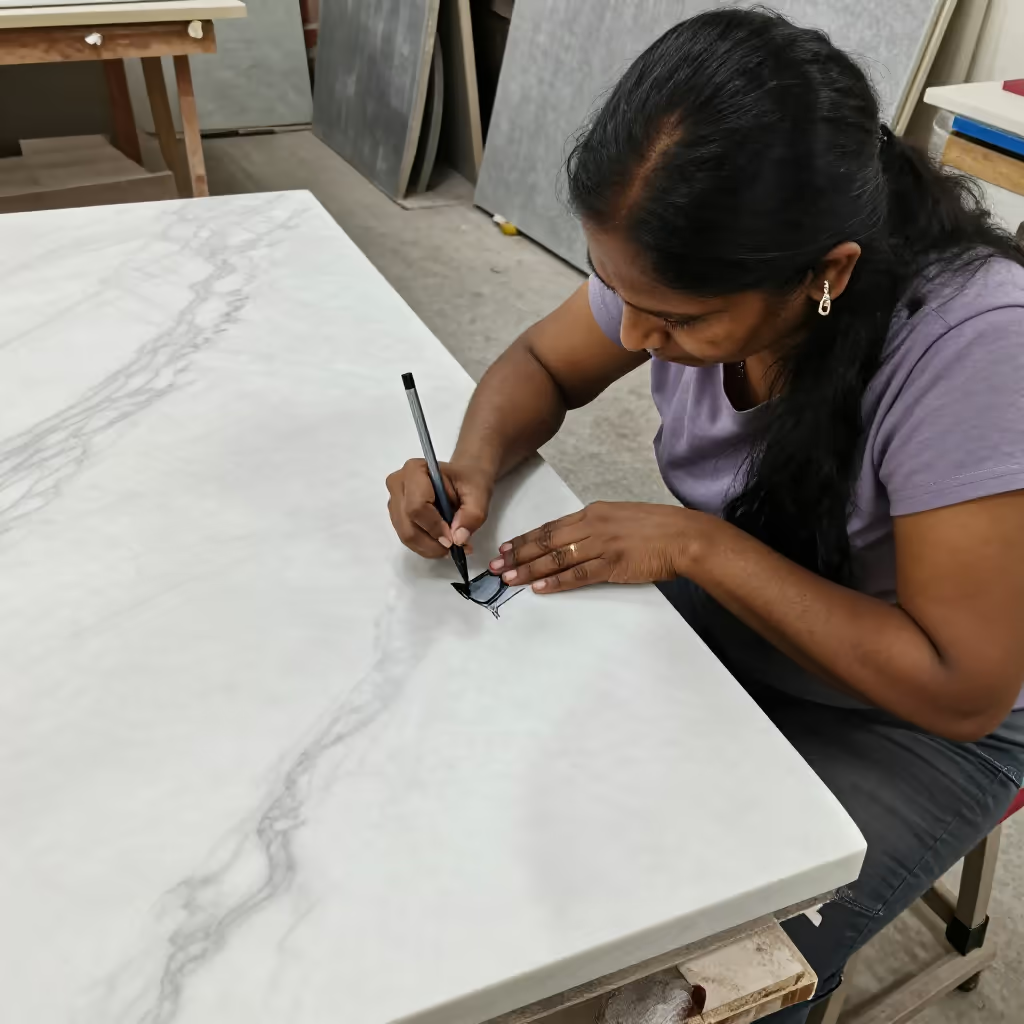
The object of the verb makes the meaning clear. If the object is a person, an animal, a voice, or a gesture, it means 'nachahmen' (to mimic/imitate). If it is about a material or a product, it means 'nachbilden' (to reproduce/imitate).
EXAMPLE
Der Papagei kann verschiedene Geräusche imitieren.
The parrot can imitate various sounds.
Typical collocations
When people or animals are being imitated, typical objects are 'eine Stimme' (a voice), 'ein Geräusch' (a sound), 'eine Geste' (a gesture), 'ein Akzent' (an accent), or 'das Verhalten' (the behavior).
EXAMPLE
Es ist schwer, seinen einzigartigen Stil zu imitieren.
It is hard to imitate his unique style.
Compare with
near_synonym · confusable
imitieren vs kopieren
to copy
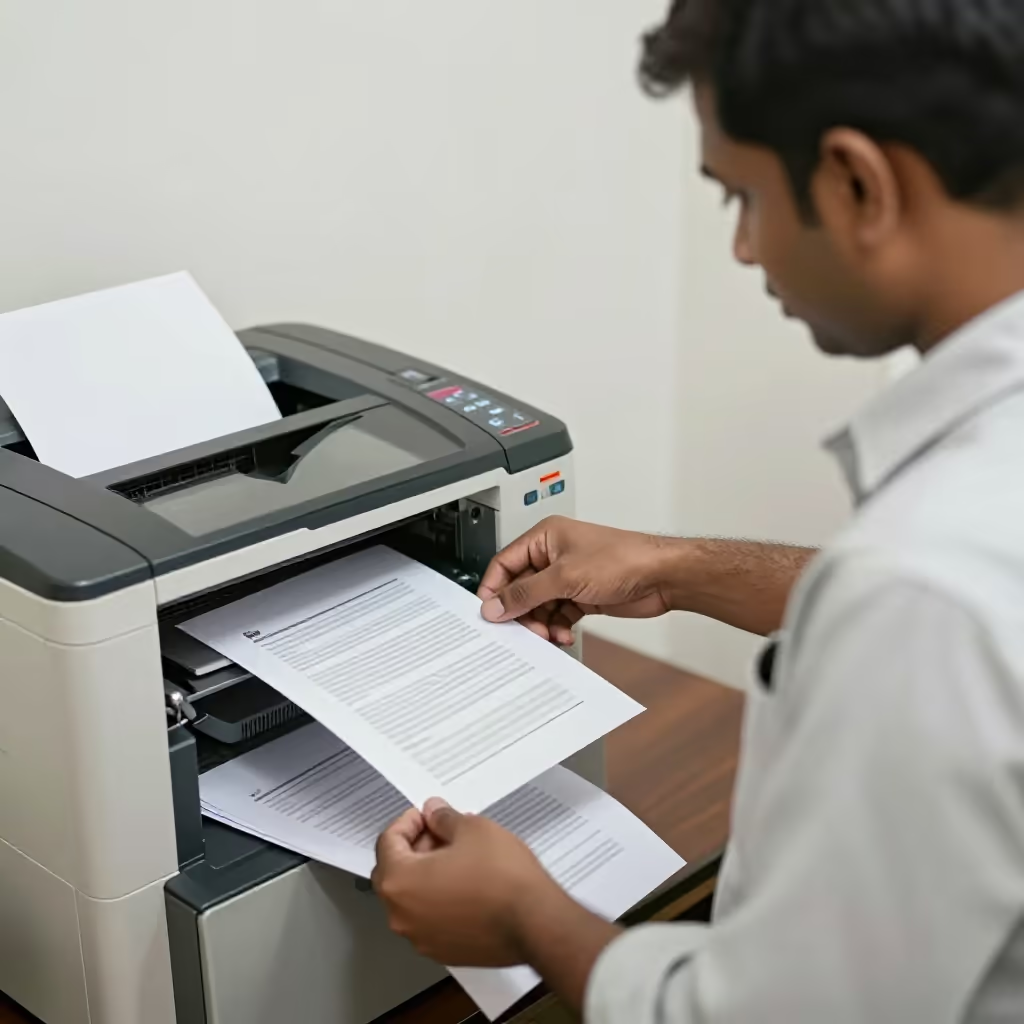
'kopieren' and 'imitieren' overlap when someone copies another person's behavior, style, or work. 'kopieren' is broader and can also be meant in a very practical sense: you take something over as exactly as possible. 'imitieren' is used especially for voices, movements, behavior, or for things that are supposed to look like another material or product. It often sounds more deliberate and sometimes more humorous or artistic. The words can be confused because both describe a kind of imitation. But for files and documents, you do not say 'imitieren'; you say 'kopieren'. For a voice or gestures, 'imitieren' is usually more precise.
imitieren
In der Pause hat er die Stimme des Lehrers imitiert und alle mussten lachen.
During the break, he imitated the teacher's voice and everyone had to laugh.
kopieren
Für den Kurs hat meine Mutter die Vorlage aus dem Buch kopiert.
For the course, my mother copied the template from the book.