


der Hund
dog
A domesticated mammal that is often kept as a pet and is known for its loyalty.
EXAMPLE
Unser Hund wartet jeden Tag an der Tür, bis wir nach Hause kommen.
Our dog waits at the door every day until we come home.
dog
Loading your saved state.
dog
A domesticated mammal that is often kept as a pet and is known for its loyalty.
Unser Hund wartet jeden Tag an der Tür, bis wir nach Hause kommen.
Our dog waits at the door every day until we come home.
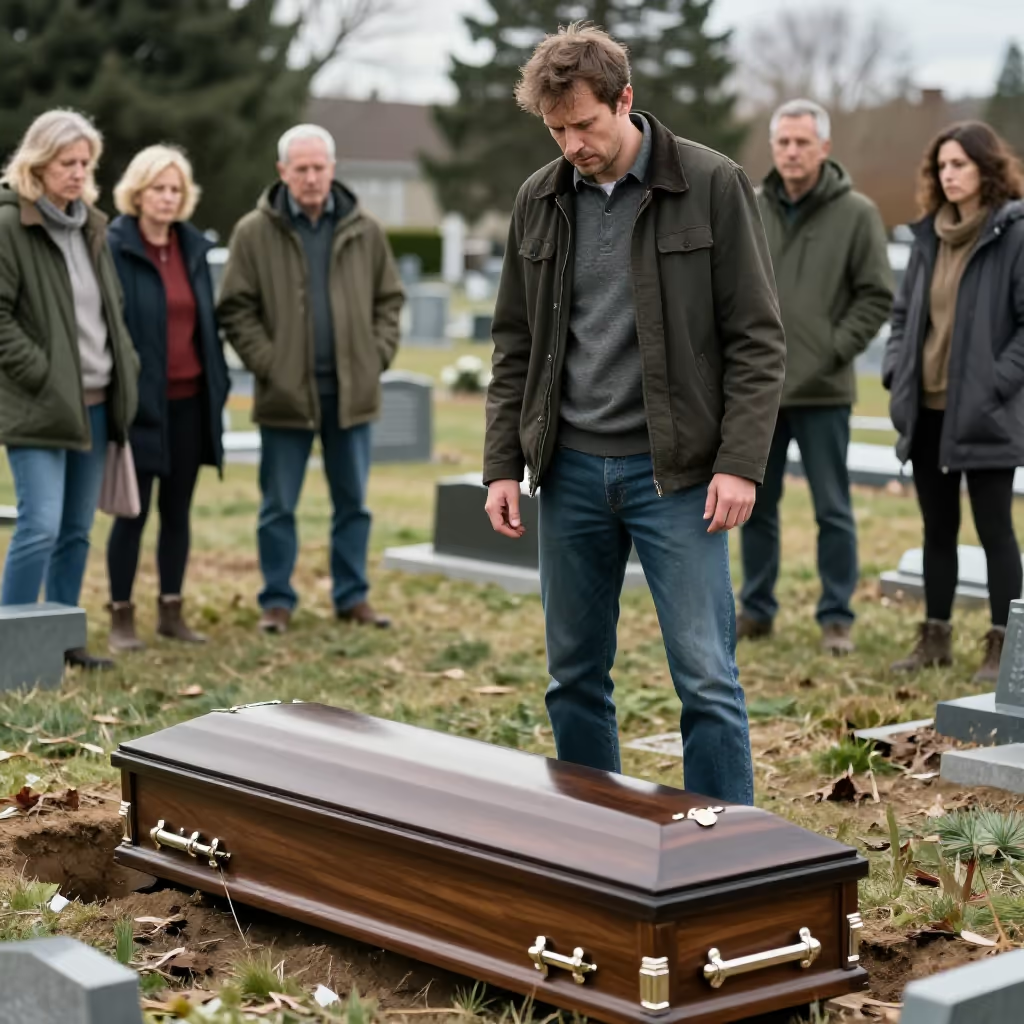
there's the rub
Colloquial idiom meaning: that is the real cause of the problem.
Wir haben zu wenig Personal für zu viel Arbeit – genau da liegt der Hund begraben.
We have too few staff for too much work—that's exactly where the real problem lies.

to have gone downhill
Colloquial idiom meaning: to have fallen into a bad financial or health situation.
Seit er spielsüchtig ist, ist er finanziell wirklich auf den Hund gekommen.
Since he became addicted to gambling, he has really gone downhill financially.

to go to the dogs
Colloquial idiom meaning: to fall apart, be ruined, or fail.
Wenn wir keine neuen Kunden finden, wird die Firma bald vor die Hunde gehen.
If we don't find new customers, the company will soon go to the dogs.
The word 'Hund' (dog) is a very productive base word and forms many compound nouns. The first word often describes what has to do with the dog, for example 'Hundefutter' (dog food; food for the dog) or 'Hundeleine' (dog leash; leash for the dog).
Bitte kaufe noch eine Packung Hundefutter.
Please buy another pack of dog food.
In everyday life, 'Hund' (dog) is often combined with certain verbs. Typical phrases are 'mit dem Hund Gassi gehen' (to take the dog for a walk), 'einen Hund halten' (to keep/own a dog), or the statement 'der Hund bellt' (the dog barks).
Jeden Abend muss ich mit dem Hund Gassi gehen.
Every evening I have to take the dog for a walk.
The idiom 'da liegt der Hund begraben' (that's where the dog is buried) is a fixed expression. It is used as a complete sentence or subordinate clause to name the actual cause of a problem.
Das Auto startet nicht, weil die Batterie leer ist. Aha, da liegt also der Hund begraben!
The car won't start because the battery is dead. Aha, so that's where the real problem lies!
The idiom 'auf den Hund gekommen sein' (to have gone downhill) describes a bad state and is conjugated with the verb 'sein' (to be). It usually refers to a person's financial or health situation.
Nachdem er seine Arbeit verloren hat, ist er finanziell wirklich auf den Hund gekommen.
After he lost his job, he really went downhill financially.
The idiom 'vor die Hunde gehen' (to go to the dogs) describes a process of failure or decline and is conjugated with the verb 'gehen' (to go). It can refer to people, but also to things like companies or plans.
Ohne eine grundlegende Sanierung wird das alte Haus bald vor die Hunde gehen.
Without major renovation, the old house will soon go to the dogs.
mutt
Der Hund and der Köter both refer to a domesticated animal. Hund is the neutral term, while Köter sounds colloquial and strongly derogatory, often because of the animal's appearance or because it is perceived as annoying. Hund is appropriate in an objective situation, while Köter expresses deliberate disparagement.
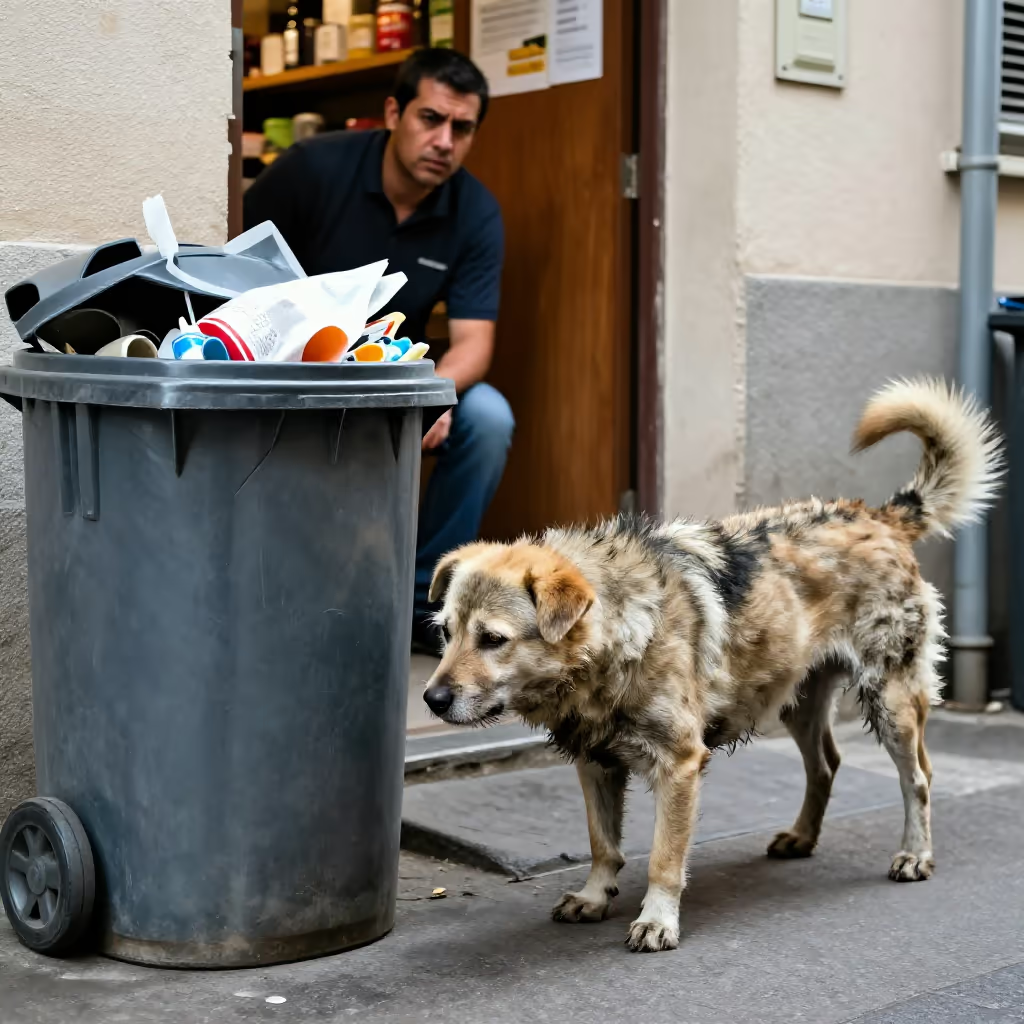
Der Hund wartet ruhig vor der Bäckerei auf seine Besitzerin.
The dog waits quietly in front of the bakery for its owner.
Der Nachbar schimpfte über den Köter, der wieder in seinem Garten wühlte.
The neighbor cursed about the mutt that was digging in his garden again.