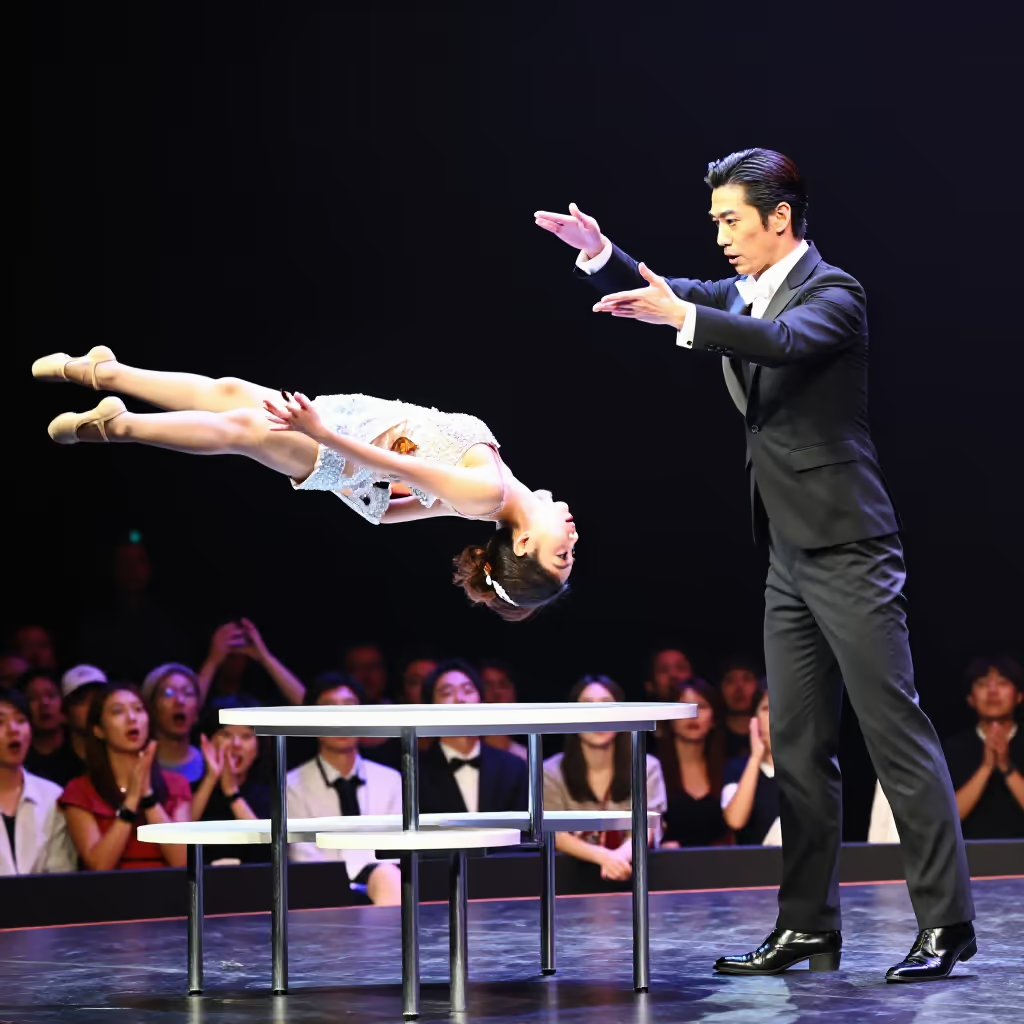
A false perception of reality caused by the senses; a sensory deception.
example
Die Oase in der Wüste war nur eine optische Illusion, die durch die Hitze entstand.
The oasis in the desert was only an optical illusion caused by the heat.

Usage tips
Word family
The adjective corresponding to 'die Illusion' (illusion) is 'illusorisch' (illusory). It means 'deceptive' or 'based on a deception' and is often used to describe unfounded hopes or plans.
EXAMPLE
Seine Hoffnung, ohne Anstrengung reich zu werden, war völlig illusorisch.
His hope of becoming rich without effort was completely illusory.
Typical expressions
In the meaning 'wishful idea', 'Illusion' (illusion) is often used in fixed expressions with reflexive verbs. Typical examples are 'sich Illusionen machen' (to have illusions / kid oneself) and 'sich einer Illusion hingeben' (to give oneself over to an illusion).
EXAMPLE
Mach dir keine Illusionen, die Aufgabe wird sehr schwierig sein.
Don't kid yourself; the task will be very difficult.
Typical combinations
When it is about a sensory deception, 'Illusion' (illusion) is often combined with an adjective that describes the affected sense. The most common are 'optische Illusion' (optical illusion) and 'akustische Illusion' (auditory illusion).
EXAMPLE
Die Fata Morgana in der Wüste ist eine bekannte optische Illusion.
The mirage in the desert is a well-known optical illusion.
Context: magic
In the context of entertainment, especially magic shows, 'Illusion' (illusion) refers to a trick that deceives the audience. Words like 'Magier' (magician), 'Bühne' (stage), or 'Trick' (trick) point to this meaning.
EXAMPLE
Der Magier erzeugte die perfekte Illusion, durch eine Wand zu gehen.
The magician created the perfect illusion of walking through a wall.
Compare with
confusable
Illusion vs Hoffnung
hope
'die Hoffnung' and 'die Illusion' can both have to do with a wish for the future. 'Hoffnung' is positive and means that you believe or wish that something good can happen. A hope can be realistic, but it does not have to be certain. 'Illusion', on the other hand, sounds critical: you believe in something that does not match reality. That is why a false hope can become an illusion. Learners may confuse the words because both are connected with wishes and expectations. The difference is: hope leaves the possibility open, while illusion emphasizes the mistake.
Illusion
Er macht sich keine Illusion, dass das Problem von allein verschwindet.
He has no illusions that the problem will disappear on its own.
Hoffnung
Nach dem Gespräch hat Lena wieder Hoffnung, dass sie die Prüfung schafft.
After the conversation, Lena has hope again that she will pass the exam.