

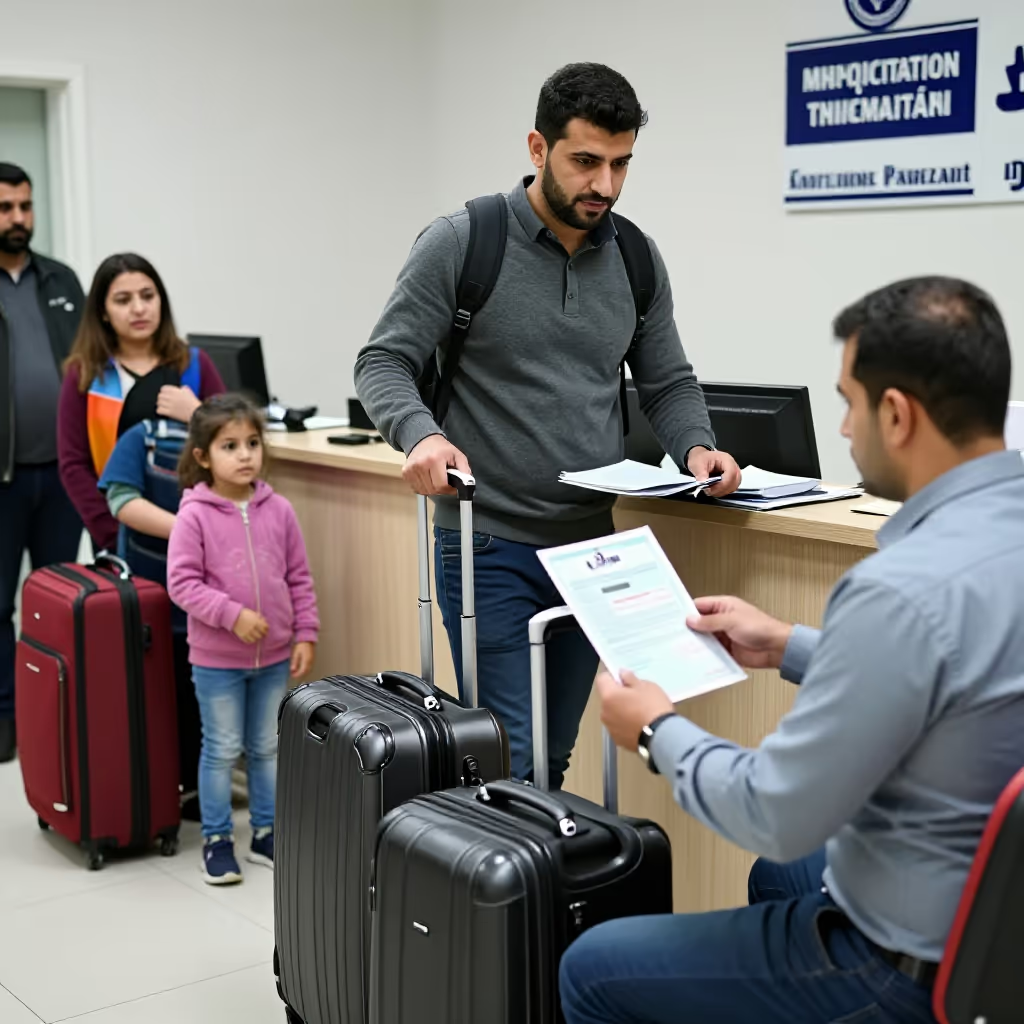
A person who has come to a foreign country in order to live there permanently; an immigrant.
example
Als Immigrant aus Italien musste mein Großvater in den 60er Jahren erst Deutsch lernen.
As an immigrant from Italy, my grandfather first had to learn German in the 1960s.

Usage tips
Word structure
The word comes from Latin. The prefix 'im-' means 'into', and the root 'migrare' means 'to wander' or 'to migrate'. So an Immigrant (immigrant) is literally someone who 'wanders into' a country.
EXAMPLE
Viele Immigranten kamen in der Hoffnung auf ein besseres Leben nach Deutschland.
Many immigrants came to Germany hoping for a better life.
Word family
'Der Immigrant' (the immigrant) belongs to a word family. The related verb is 'immigrieren' (to immigrate), and the abstract noun is 'die Immigration' (immigration).
EXAMPLE
Die Regierung hat neue Regeln für die Immigration erlassen.
The government has issued new rules for immigration.
Correct preposition
To state an immigrant's origin, you use the preposition 'aus' (from). To describe the destination country where the person lives, you use 'in' (in).
EXAMPLE
Er ist ein Immigrant aus der Türkei und lebt seit 20 Jahren in Berlin.
He is an immigrant from Turkey and has lived in Berlin for 20 years.
Compare with
confusable
Immigrant vs Flüchtling
refugee
'der Flüchtling' and 'der Immigrant' can both mean a person who has come to another country. But they are not the same. 'Flüchtling' emphasizes that the person had to flee out of necessity, for example from war or persecution. 'Immigrant' emphasizes that a person has immigrated to a country in order to live there permanently. The reason can vary greatly. The words are easy to confuse because many refugees later also live in a new country. If the reason for fleeing is important, you say 'Flüchtling'. If it is generally about immigration and permanent residence, you say 'Immigrant'.
Immigrant
Am Montag erzählt ein Immigrant im Kurs von seinem ersten Jahr in Deutschland.
On Monday, an immigrant in the course talks about his first year in Germany.
Flüchtling
Sie unterstützt einen Flüchtling, der morgen einen wichtigen Termin hat.
She is supporting a refugee who has an important appointment tomorrow.