


A hormone produced in the pancreas that plays a central role in regulating blood sugar levels. A lack of insulin or resistance to it leads to diabetes.
example
Nach einer Mahlzeit steigt die Produktion von Insulin im Körper an.
After a meal, the body's production of insulin increases.
Usage tips
Context clue
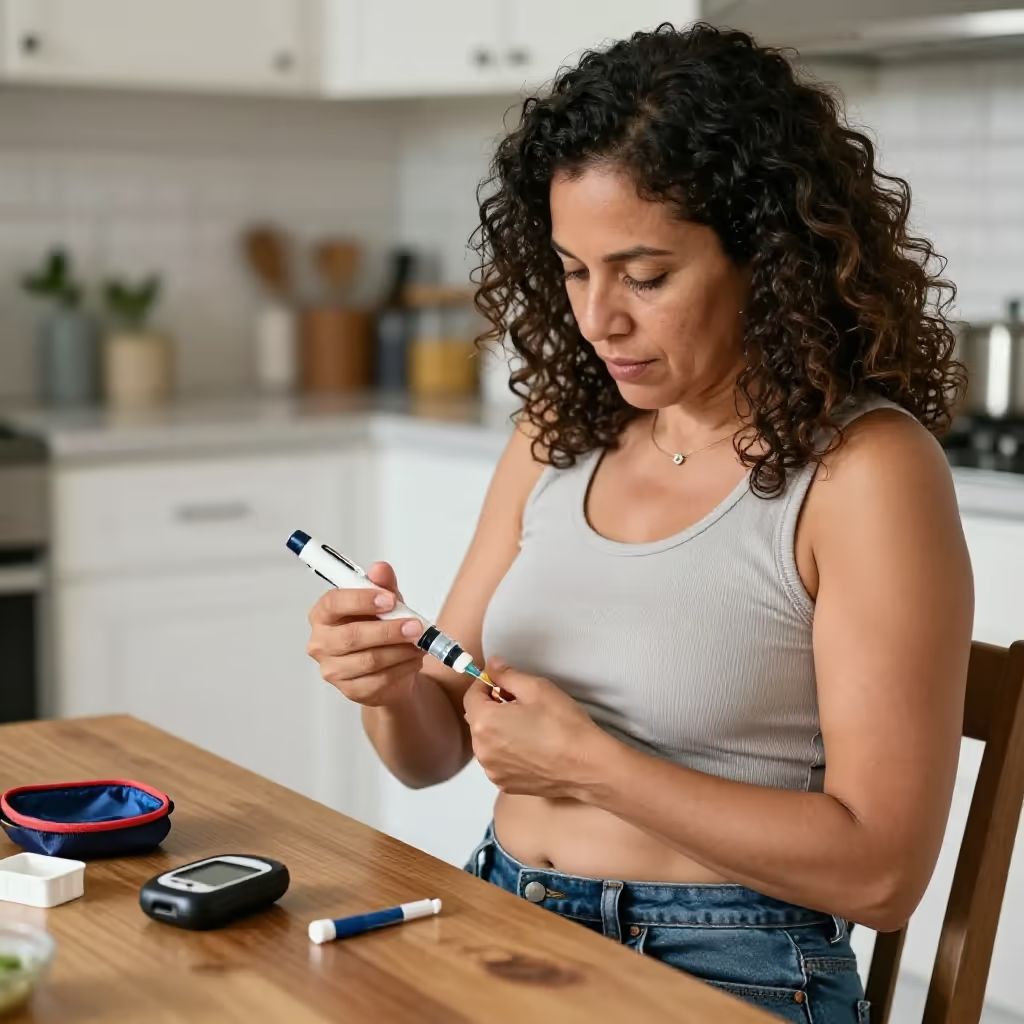
You distinguish the hormone from the medication by the verbs. The body 'produziert' (produces) or 'schüttet aus' (secretes) the hormone. A patient 'spritzt sich' (injects themselves with) or 'benötigt' (needs) the medication.
EXAMPLE
Die Bauchspeicheldrüse produziert Insulin.
The pancreas produces insulin.
Typical collocations
When talking about the hormone, people often speak of the 'Insulinspiegel' (insulin level, the amount in the blood) or of 'Insulinresistenz' (insulin resistance, when the body no longer responds well to it).
EXAMPLE
Sport kann helfen, den Insulinspiegel zu senken.
Exercise can help lower insulin levels.
Typical verbs
In connection with the medication, the most important verbs are 'sich spritzen' (to inject oneself), 'benötigen' (to need), and 'verabreichen' (to administer). The reflexive form 'sich etwas spritzen' (to inject oneself with something) is very common here.
EXAMPLE
Die Krankenschwester verabreichte dem Patienten eine Dosis Insulin.
The nurse administered a dose of insulin to the patient.