

irakisch
Iraqi
Relating to Iraq, its people, its culture, or language; originating from Iraq.
EXAMPLE
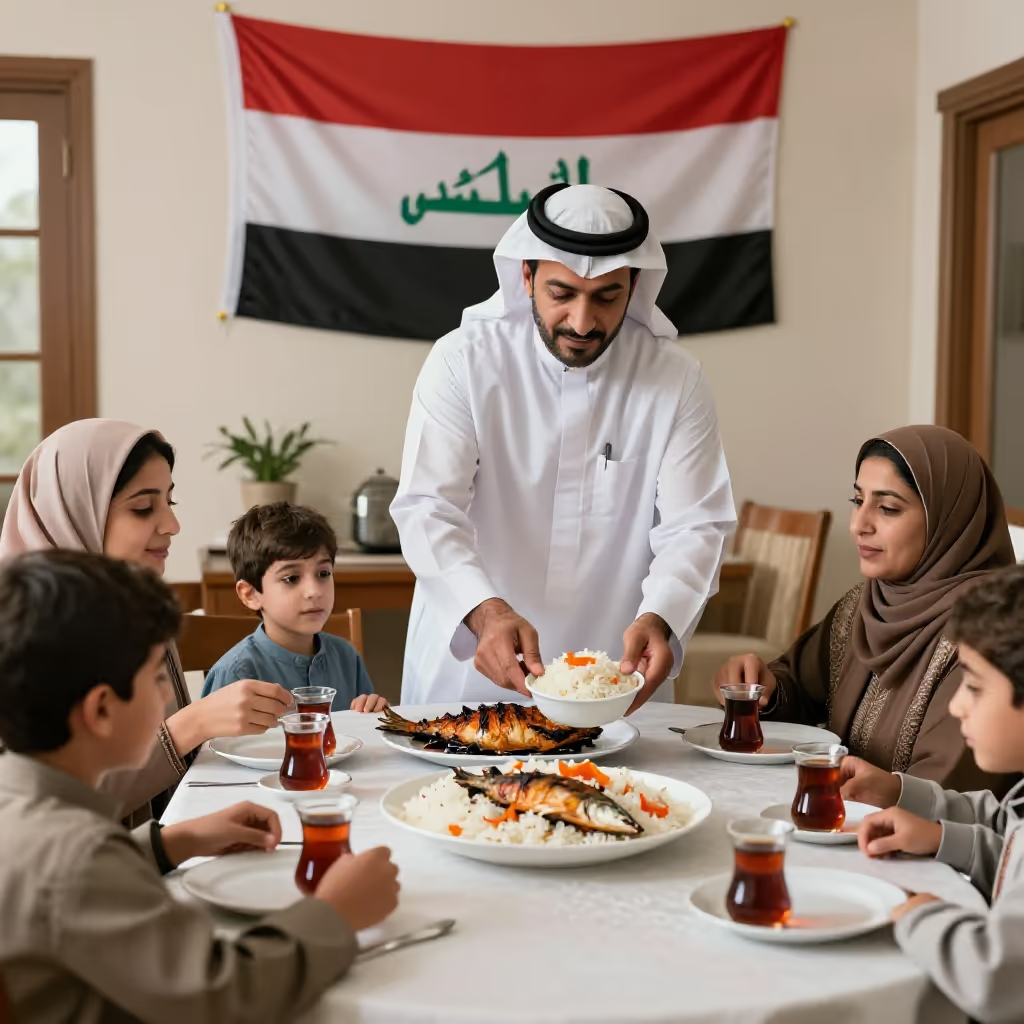
Die irakische Küche ist für ihre vielfältigen und aromatischen Gerichte bekannt.
Iraqi cuisine is known for its varied and aromatic dishes.
Iraqi
Loading your saved state.
Iraqi
Relating to Iraq, its people, its culture, or language; originating from Iraq.
Die irakische Küche ist für ihre vielfältigen und aromatischen Gerichte bekannt.
Iraqi cuisine is known for its varied and aromatic dishes.
Adjectives that describe origin are often formed in German with the ending '-isch'. Here, the country 'der Irak' (Iraq) becomes the adjective 'irakisch' (Iraqi).
Er interessiert sich für die Geschichte des Irak und die irakische Kultur.
He is interested in the history of Iraq and Iraqi culture.
Unlike in English, adjectives derived from country names and ending in '-isch' are written in lowercase in German. So it is 'irakisch' (Iraqi), not 'Irakisch'.
Wir haben gestern in einem irakischen Restaurant gegessen.
We ate at an Iraqi restaurant yesterday.
Like other adjectives, 'irakisch' (Iraqi) can stand before a noun, in which case it is declined, or after a verb like 'sein' (to be), in which case it remains unchanged.
Ein irakischer Künstler stellt seine Werke in Berlin aus.
An Iraqi artist is exhibiting his works in Berlin.