

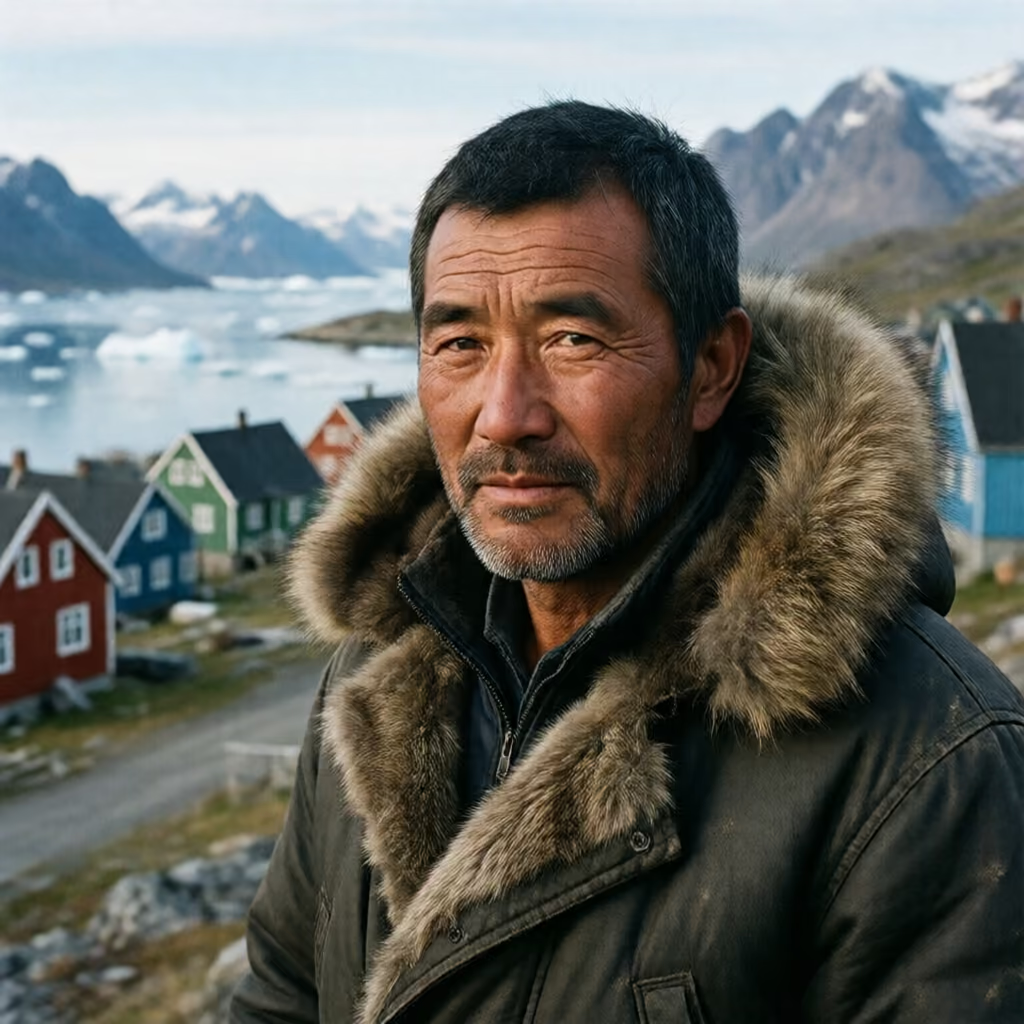
der Inuk
Inuk
A member of the Inuit, the Indigenous peoples of the Arctic regions of North America and Greenland.
EXAMPLE
Der Inuk erzählte von seinem Leben in Grönland.
The Inuk talked about his life in Greenland.
Inuk
der Inuk, die Inuit
Loading your saved state.
Inuk
A member of the Inuit, the Indigenous peoples of the Arctic regions of North America and Greenland.
Der Inuk erzählte von seinem Leben in Grönland.
The Inuk talked about his life in Greenland.
| gender | masculine der |
|---|---|
| plural | die Inuit |
| genitive | des Inuks |
| singular | plural | |
|---|---|---|
| nominative | der Inuk | die Inuit |
| accusative | den Inuk | die Inuit |
| dative | dem Inuk | den Inuit |
| genitive | des Inuks | der Inuit |
The article changes with the case; it is shown in colour.
'Inuk' (an Inuit person) refers to a single person. In German sentences, the word therefore usually appears with an indefinite or definite article and can be accompanied by a phrase indicating the person's region of origin.
Ein Inuk aus Nunavut sprach über den Alltag in der Arktis.
An Inuk from Nunavut spoke about everyday life in the Arctic.
Der Inuk lebt seit vielen Jahren in Grönland.
The Inuk has been living in Greenland for many years.
Common combinations include 'ein Inuk aus Grönland' (an Inuk from Greenland), 'ein Inuk aus Nunavut' (an Inuk from Nunavut), and 'ein Inuk erzählt von seinem Leben' (an Inuk talks about his life). Regional details often make it clearer who the word refers to in the sentence.
Ein Inuk aus Nunavut berichtete über die Veränderungen im arktischen Klima.
An Inuk from Nunavut reported on changes in the Arctic climate.
'Inuk' (an Inuit person) mainly appears in factual texts about Indigenous peoples, the Arctic, Greenland, or the history of North America. The word refers to a person and is generally used respectfully and neutrally.
In dem Bericht erklärt ein Inuk, wie sich das Leben in der arktischen Region verändert hat.
In the report, an Inuk explains how life in the Arctic region has changed.