


der Italiener
Italian
A male person who comes from Italy or has Italian citizenship.
EXAMPLE
Mein neuer Kollege ist Italiener und kommt aus Rom.
My new colleague is Italian and comes from Rome.
Italian / Italian restaurant
Loading your saved state.
Italian
A male person who comes from Italy or has Italian citizenship.
Mein neuer Kollege ist Italiener und kommt aus Rom.
My new colleague is Italian and comes from Rome.
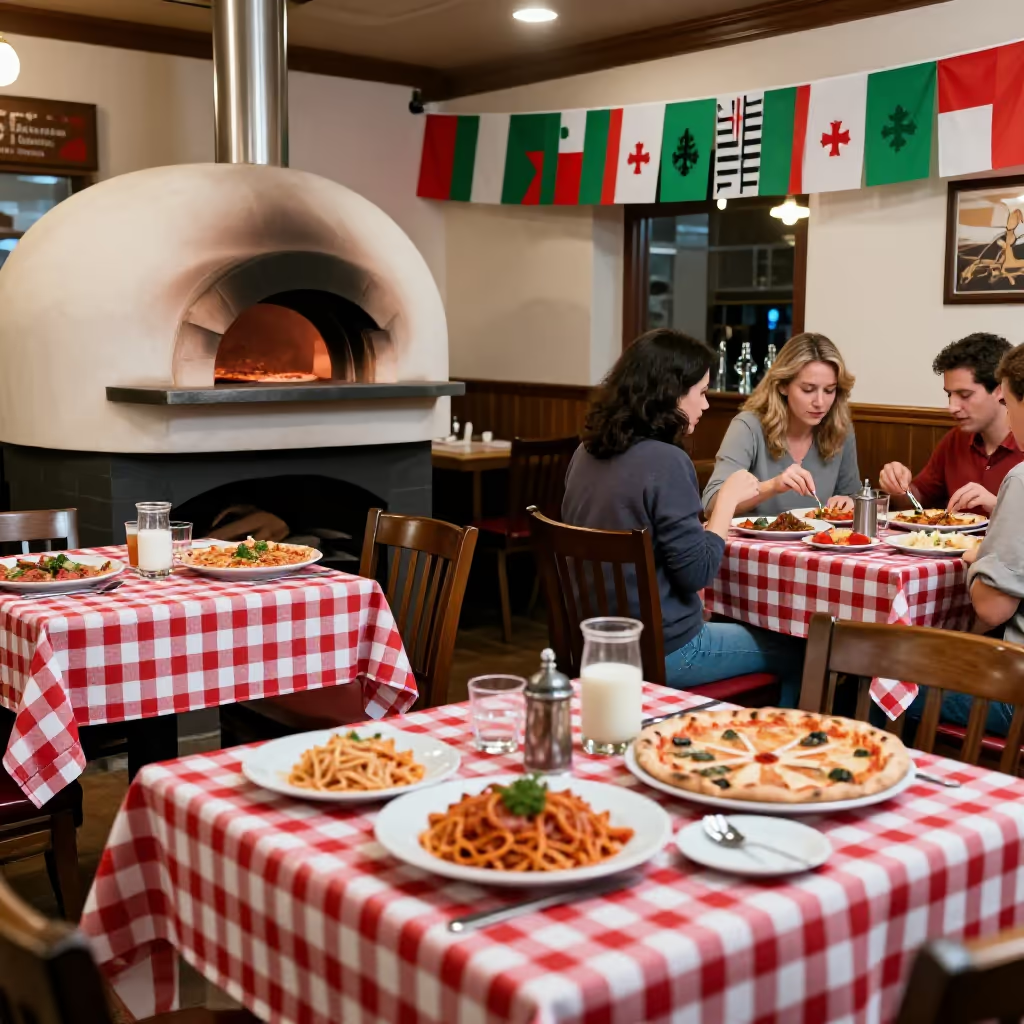
Italian restaurant
A colloquial term for an Italian restaurant.
Wollen wir heute Abend zum Italiener gehen und eine Pizza essen?
Shall we go to the Italian restaurant tonight and eat pizza?
The word 'Italiener' (Italian) is formed from the country name 'Italien' (Italy) with the ending '-er'. This ending is often used to refer to male inhabitants of countries or cities.
Ein Mann aus Berlin ist ein Berliner, ein Mann aus Italien ist ein Italiener.
A man from Berlin is a Berliner; a man from Italy is an Italian.
You can tell from context whether a person or a restaurant is meant. If it's about food or going out, the restaurant is usually meant, often in combination with prepositions like 'zum' (to the) or 'beim' (at the).
Lass uns heute Abend zum Italiener gehen.
Let's go to the Italian restaurant tonight.
When 'der Italiener' (the Italian restaurant) means a restaurant, it is often used with certain phrases: 'zum Italiener gehen' (to go to the Italian restaurant), 'beim Italiener essen' (to eat at the Italian restaurant), or 'einen Tisch beim Italiener reservieren' (to reserve a table at the Italian restaurant).
Wir haben für Samstag einen Tisch beim Italiener reserviert.
We reserved a table at the Italian restaurant for Saturday.
The term 'der Italiener' (the Italian restaurant) for an Italian restaurant is very common, but it is considered colloquial.
Ich kenne einen guten Italiener in der Nähe.
I know a good Italian restaurant nearby.