

japanisch
Japanese
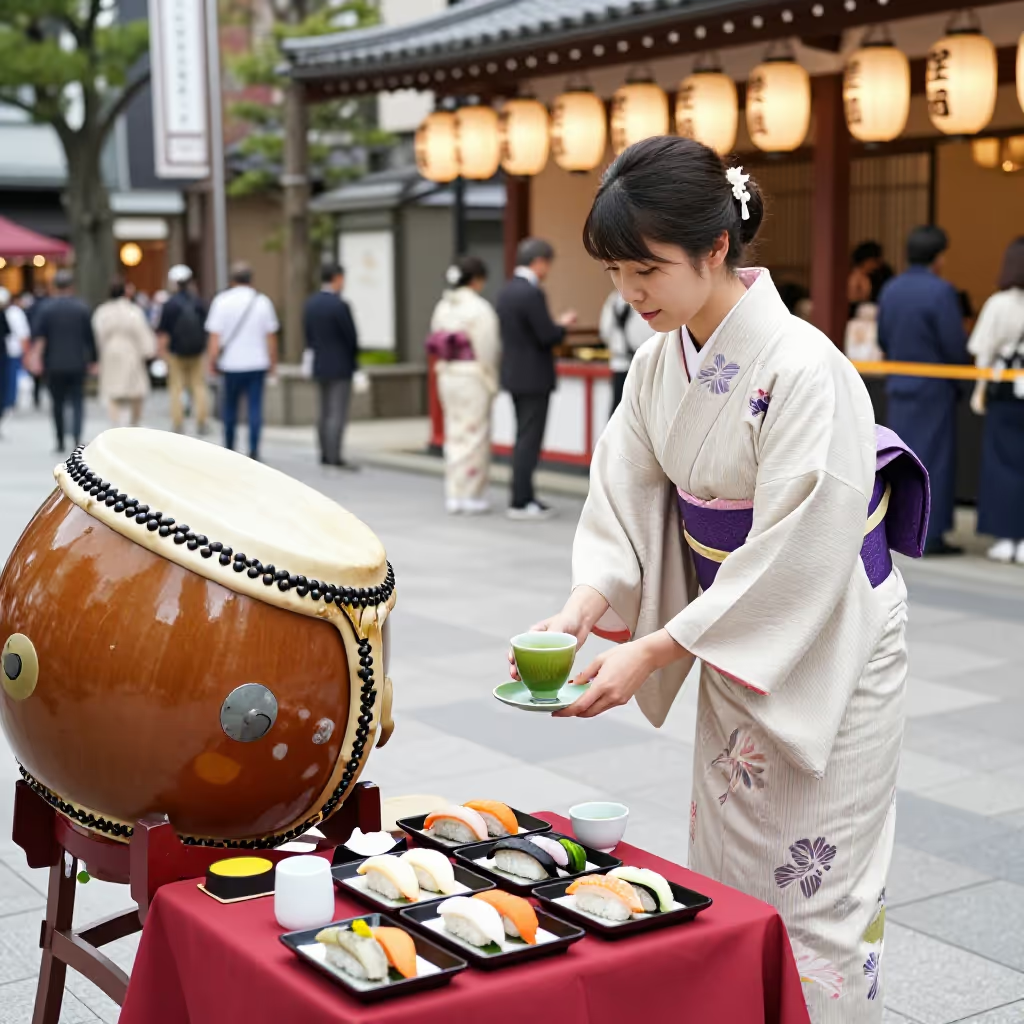
Relates to the country of Japan, its inhabitants, its culture, or its products.
EXAMPLE
Die japanische Teezeremonie ist ein faszinierendes Ritual.
The Japanese tea ceremony is a fascinating ritual.
Japanese
Loading your saved state.
Japanese
Relates to the country of Japan, its inhabitants, its culture, or its products.
Die japanische Teezeremonie ist ein faszinierendes Ritual.
The Japanese tea ceremony is a fascinating ritual.
Japanese
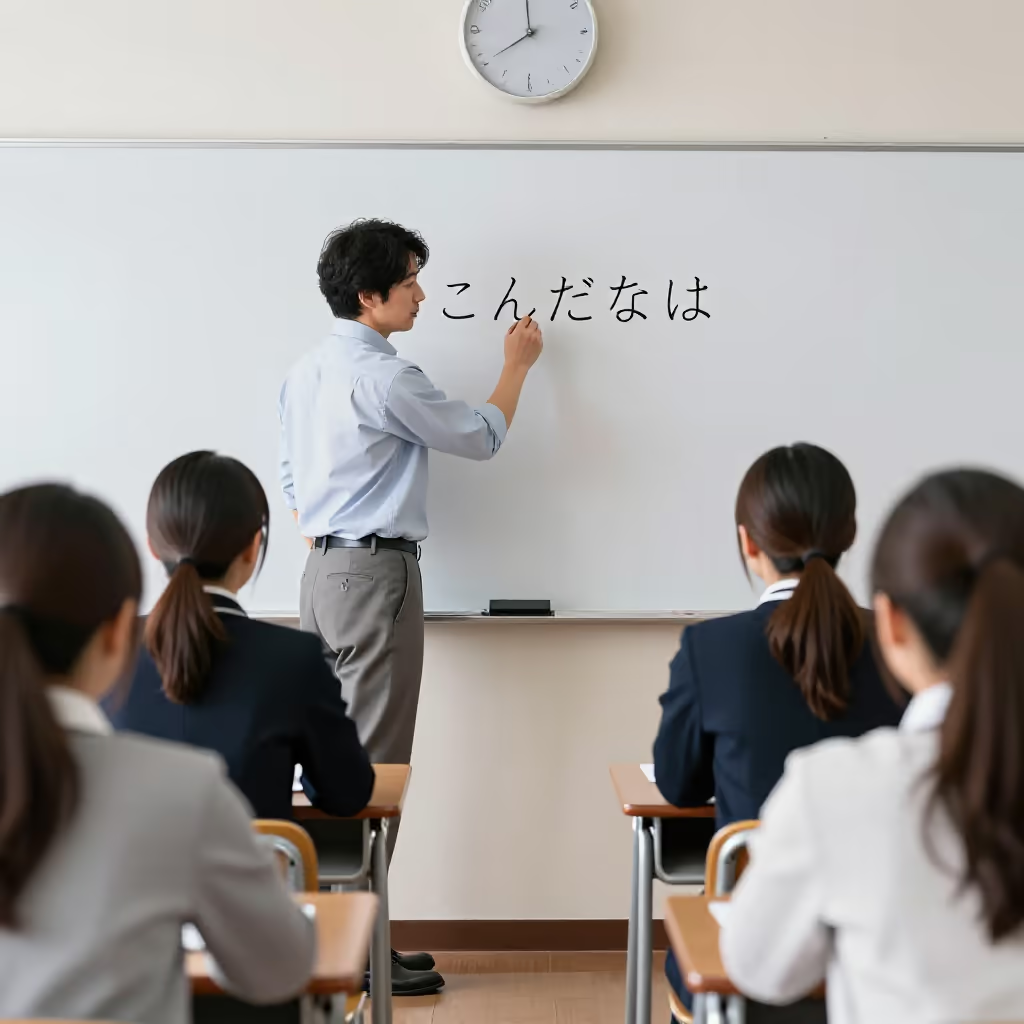
Relates to the Japanese language. Often in the phrase 'auf Japanisch' (in Japanese).
Der Film wurde im Originalton mit deutschen Untertiteln gezeigt, also auf Japanisch.
The film was shown in the original audio with German subtitles, so in Japanese.
The adjective 'japanisch' (Japanese) is formed from the country name 'Japan' with the ending '-isch' (-ish). This pattern is found in many adjectives that describe origin.
Ich interessiere mich für die japanische Geschichte.
I am interested in Japanese history.
Pay attention to lowercase spelling. The adjective 'japanisch' (Japanese) is written with a lowercase letter, even when it refers to the country Japan.
Wir essen heute Abend japanisch.
We are eating Japanese food tonight.
When it is about culture or products, 'japanisch' (Japanese) often appears with nouns like 'Küche' (cuisine), 'Garten' (garden), 'Kunst' (art), or 'Auto' (car).
Die japanische Küche ist für ihre frischen Zutaten bekannt.
Japanese cuisine is known for its fresh ingredients.
When the language is meant, the fixed phrase 'auf Japanisch' (in Japanese) is almost always used. The adjective alone is rarely used here.
Können Sie das bitte auf Japanisch sagen?
Could you please say that in Japanese?