

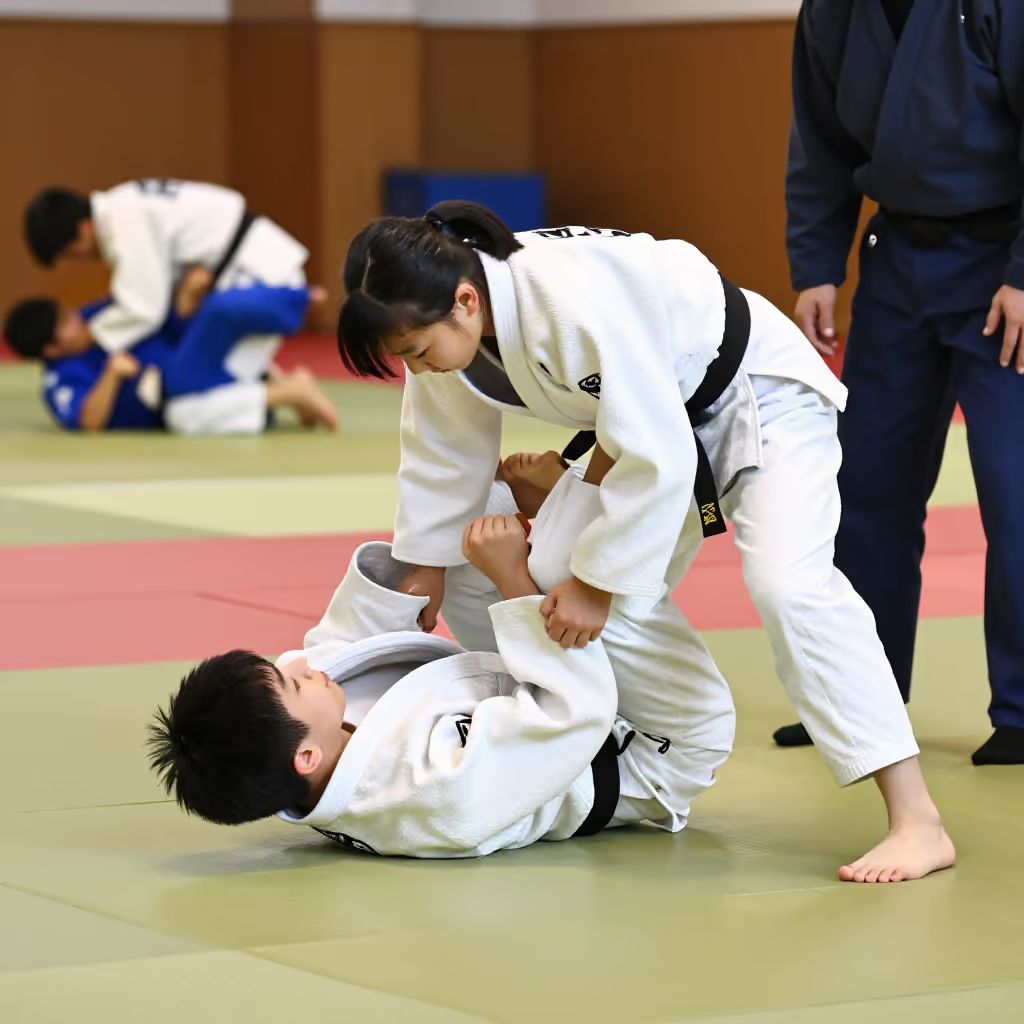
A Japanese martial art based on the principle of 'winning by yielding.' The goal is to defeat the opponent through throws, holds, or joint-lock techniques without injuring them.
example
Viele Kinder lernen Judo, um ihr Selbstbewusstsein und ihre Körperbeherrschung zu stärken.
Many children learn judo to strengthen their self-confidence and body control.
Usage tips
Use without article
Like most names of sports, 'Judo' is normally used without an article when speaking about it generally or saying that you practice it.
EXAMPLE
Ich mache seit drei Jahren Judo.
I have been doing judo for three years.
Typical verb
To express that you practice this sport, the most common verb is 'machen' (to do). So you say 'Judo machen' (to do judo). 'Trainieren' (to train) is also possible.
EXAMPLE
Meine Tochter möchte gerne Judo machen.
My daughter would like to do judo.
The person
A person who practices judo is called 'Judoka.' The word is the same for men ('der Judoka') and women ('die Judoka').
EXAMPLE
Die deutsche Judoka hat eine Medaille gewonnen.
The German judoka won a medal.
Compare with
confusable
Judo vs Karate
karate
'das Karate' and 'das Judo' are both Japanese martial arts and can therefore easily be confused. The most important difference lies in the techniques. Karate is mainly about punches, kicks, thrusts, and blocking movements. Judo is more about throwing the opponent, holding them down, or controlling them with joint locks. So if you are talking about kicking and striking, 'Karate' fits better. If it is about throws and holds, 'Judo' is more precise.
Judo
Beim Judo lernen wir, wie man einen Gegner sicher zu Boden wirft.
In judo, we learn how to throw an opponent safely to the ground.
Karate
Morgen übt sie im Kurs neue Tritte für das Karate.
Tomorrow she will practice new kicks for karate in the course.