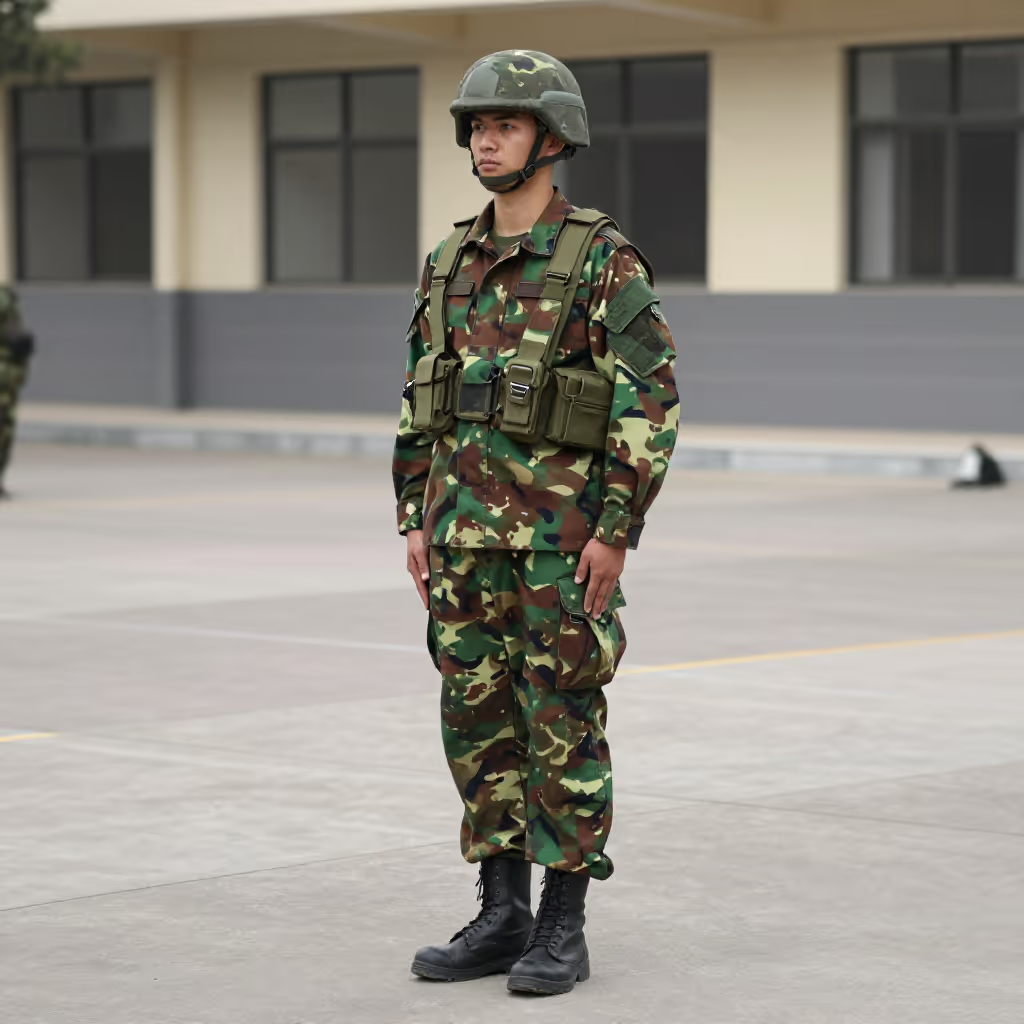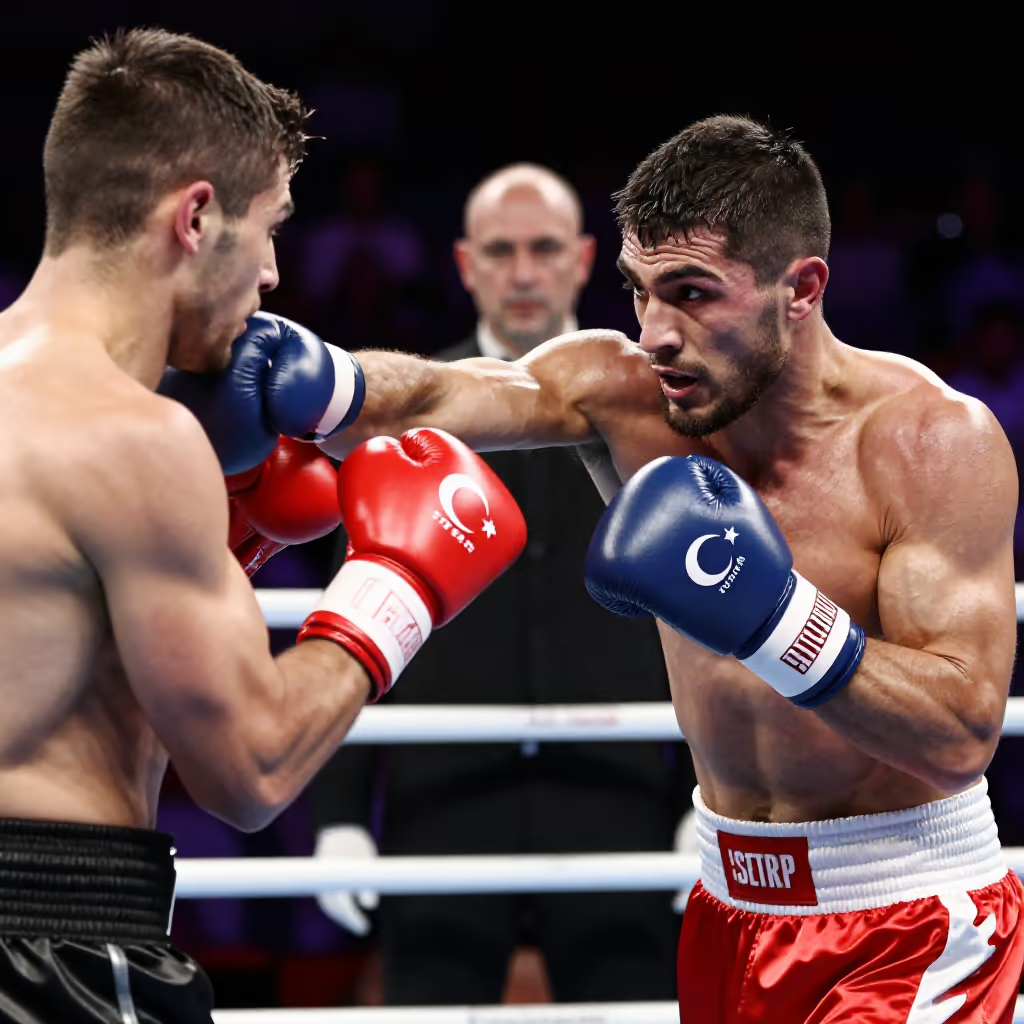
A person who takes part in a physical fight, for example a soldier, a boxer, or a martial artist.
example
Der junge Boxer erwies sich als talentierter und ausdauernder Kämpfer.
The young boxer proved to be a talented and enduring fighter.
Usage tips
Word family
'Der Kämpfer' (the fighter) is derived directly from the verb 'kämpfen' (to fight) and the noun 'der Kampf' (the fight). A fighter is therefore a person who fights a fight.
EXAMPLE
Er kämpft für seine Überzeugungen und ist ein echter Kämpfer.
He fights for his beliefs and is a real fighter.
Correct preposition
The prepositions 'für' (for) and 'gegen' (against) are very important with this word. You are a fighter 'für' a goal (accusative) or 'gegen' an opponent or a problem (accusative).
EXAMPLE
Sie ist eine Kämpferin für Tierrechte.
She is a fighter for animal rights.
Figurative meaning
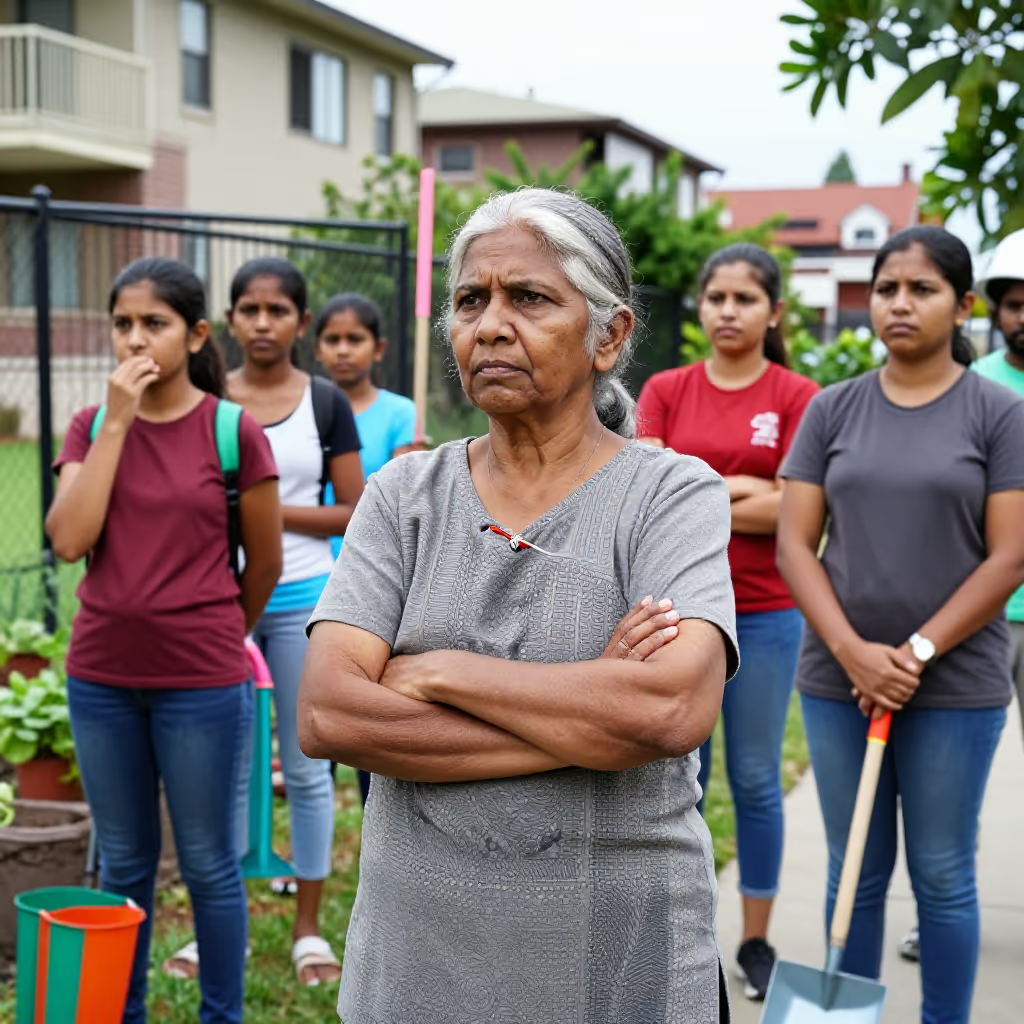
The figurative meaning is very common. It describes a person who does not give up and shows great willpower, for example in the fight against an illness or for an idea.
EXAMPLE
Obwohl sie sehr krank war, blieb sie immer eine Kämpferin.
Although she was very ill, she always remained a fighter.
Compare with
near_synonym · confusable
Kämpfer vs Soldat
soldier
'Soldat' and 'Kämpfer' can both mean a person who fights. 'Soldat' is more precise when the person belongs to the military and has military training. 'Kämpfer' is more general: it can be a soldier, but also a boxer, a martial artist, or someone who strongly works toward a goal. The words can be confused because soldiers are often fighters. But not every fighter is a soldier. When it is about the military, 'Soldat' is usually more precise; when the commitment or the fight itself is the focus, 'Kämpfer' fits better.
Kämpfer
Trotz vieler Probleme blieb sie eine Kämpferin und gab ihr Ziel nicht auf.
Despite many problems, she remained a fighter and did not give up on her goal.
Soldat
Der Soldat kehrt nach mehreren Monaten im Ausland zu seiner Familie zurück.
The soldier returns to his family after several months abroad.