

Refers to the Austrian federal state of Carinthia, its inhabitants, or its culture; originating from Carinthia.
example
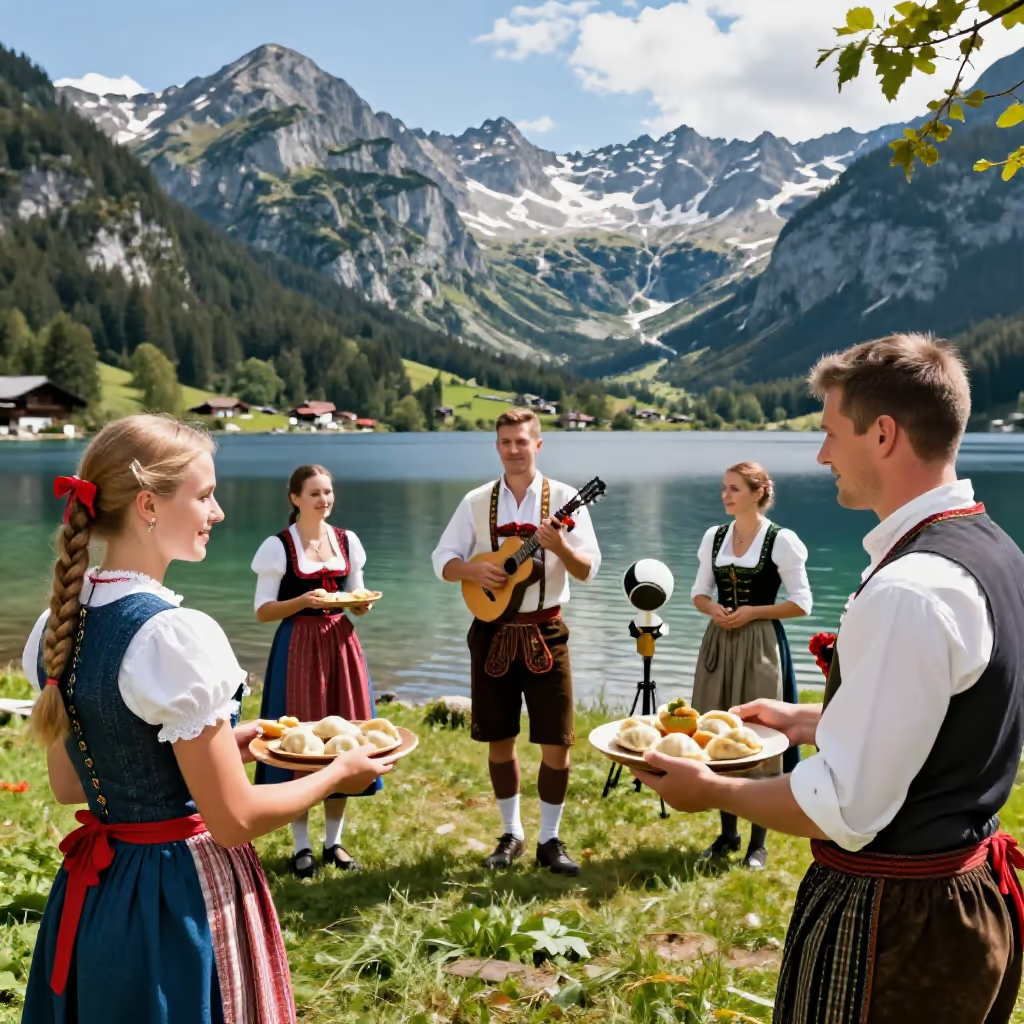
Als Spezialität des Hauses gibt es heute originale Kärntner Kasnudeln.
As the house specialty today, there are original Carinthian Kasnudeln.
Usage tips
Special grammar
Adjectives derived from a place name and ending in '-er' have two special rules: they are always capitalized and they are never declined. So the form stays the same in every case and gender.
EXAMPLE
Wir haben eine Wanderung um einen schönen Kärntner See gemacht.
We went on a hike around a beautiful Carinthian lake.
Origin of the word
The word 'Kärntner' (Carinthian) is derived directly from the name of the Austrian federal state 'Kärnten' (Carinthia). It describes origin from or affiliation with this region.
EXAMPLE
Das Bundesland Kärnten ist für seine Berge und Seen bekannt.
The federal state of Carinthia is known for its mountains and lakes.
Typical collocations
The adjective is often used in connection with regional specialties, geographical places, or cultural characteristics. Typical examples are 'Kärntner Kasnudeln' (Carinthian Kasnudeln), 'Kärntner Seenlandschaft' (Carinthian lake landscape), or 'Kärntner Dialekt' (Carinthian dialect).
EXAMPLE
Im Urlaub probieren wir unbedingt die berühmten Kärntner Nudeln.
On vacation, we definitely want to try the famous Carinthian noodles.