

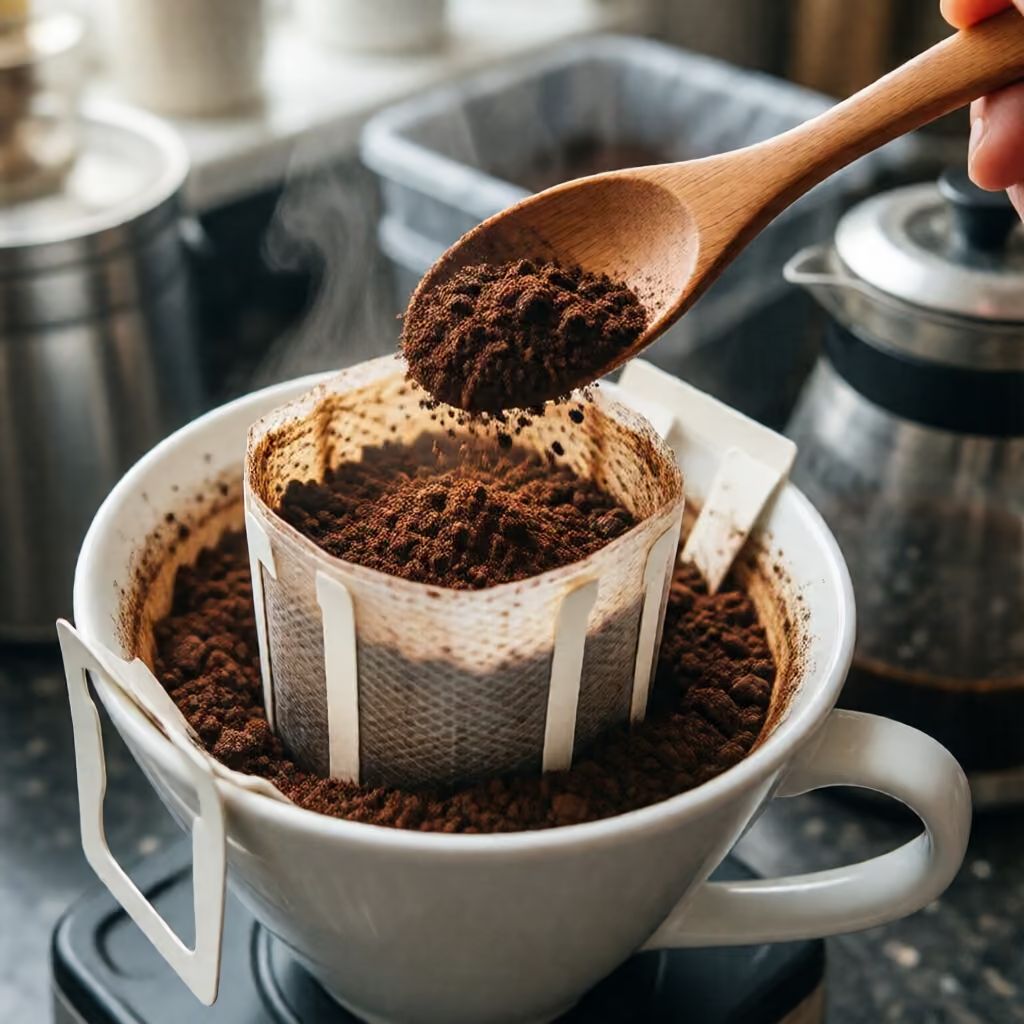
der Kaffeesatz
coffee grounds
The moist coffee residue left at the bottom or in the filter after brewing.
EXAMPLE
Bitte schütte den Kaffeesatz in den Biomüll.
Please put the coffee grounds in the organic waste.
coffee grounds
der Kaffeesatz, die Kaffeesätze
Loading your saved state.
coffee grounds
The moist coffee residue left at the bottom or in the filter after brewing.
Bitte schütte den Kaffeesatz in den Biomüll.
Please put the coffee grounds in the organic waste.
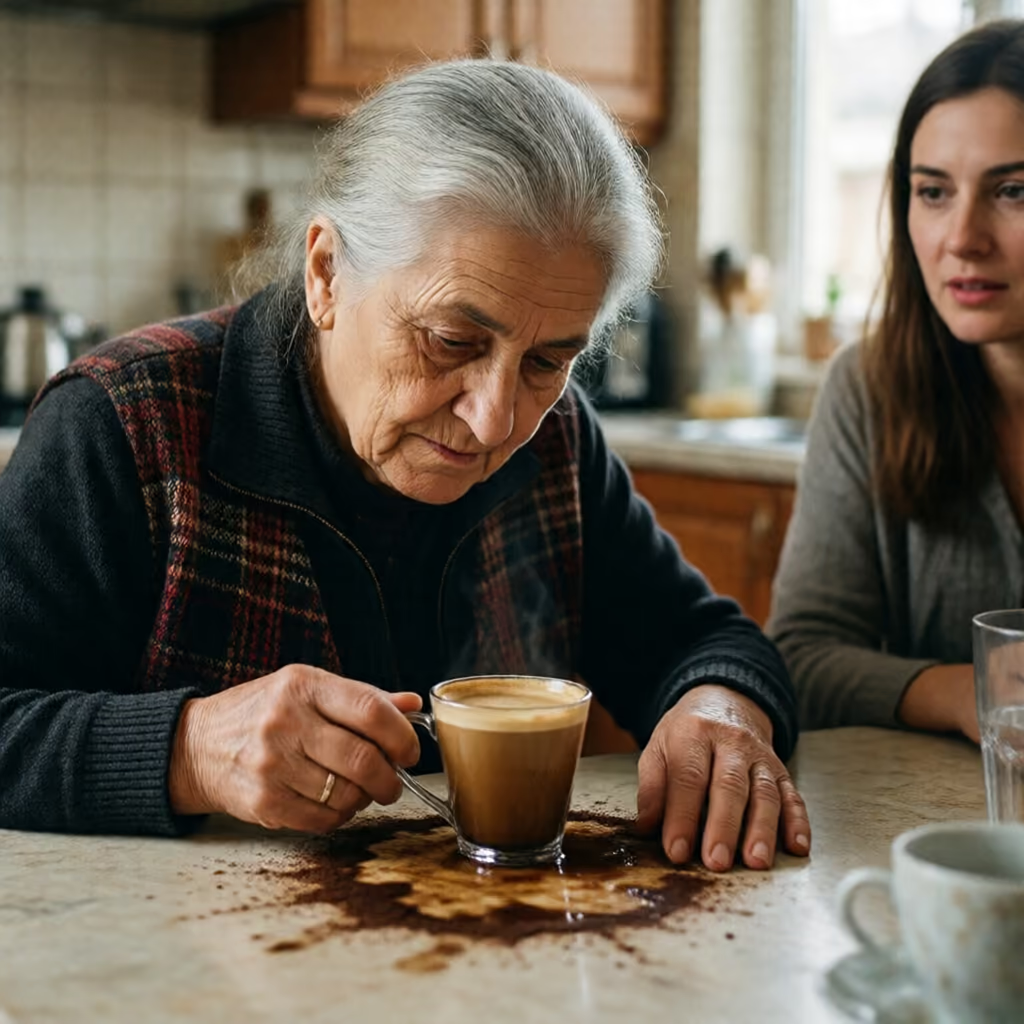
to read coffee grounds
To supposedly recognize the future or certain events from the shapes formed by coffee grounds.
Meine Großmutter konnte angeblich Kaffeesatz lesen.
Apparently, my grandmother could read coffee grounds.
| gender | masculine der |
|---|---|
| plural | die Kaffeesätze |
| genitive | des Kaffeesatzes |
| singular | plural | |
|---|---|---|
| nominative | der Kaffeesatz | die Kaffeesätze |
| accusative | den Kaffeesatz | die Kaffeesätze |
| dative | dem Kaffeesatz | den Kaffeesätzen |
| genitive | des Kaffeesatzes | der Kaffeesätze |
The article changes with the case; it is shown in colour.
'Kaffeesatz' (coffee grounds) is made up of 'Kaffee' (coffee) and 'Satz'. 'Satz' refers here to something that settles as residue, so the word means the residue that settles from coffee.
Der Kaffeesatz war noch warm, als ich ihn aus der Kanne nahm.
The coffee grounds were still warm when I took them out of the pot.
In its literal meaning, 'Kaffeesatz' (coffee grounds) frequently occurs with verbs such as 'wegwerfen' (to throw away), 'entsorgen' (to dispose of), 'entfernen' (to remove), or 'trocknen' (to dry). 'Kaffeesatz im Filter' (coffee grounds in the filter) and 'Kaffeesatz in der Tasse' (coffee grounds in the cup) are also typical collocations.
Nach dem Frühstück entfernte er den Kaffeesatz aus dem Filter.
After breakfast, he removed the coffee grounds from the filter.
The meaning related to predictions appears especially in the fixed expression 'Kaffeesatz lesen' (to read coffee grounds). 'Aus dem Kaffeesatz lesen' (to read from coffee grounds), with a person as the subject, is also common.
Auf dem Fest las eine Wahrsagerin den Gästen die Zukunft aus dem Kaffeesatz.
At the party, a fortune-teller read the guests' futures from the coffee grounds.