

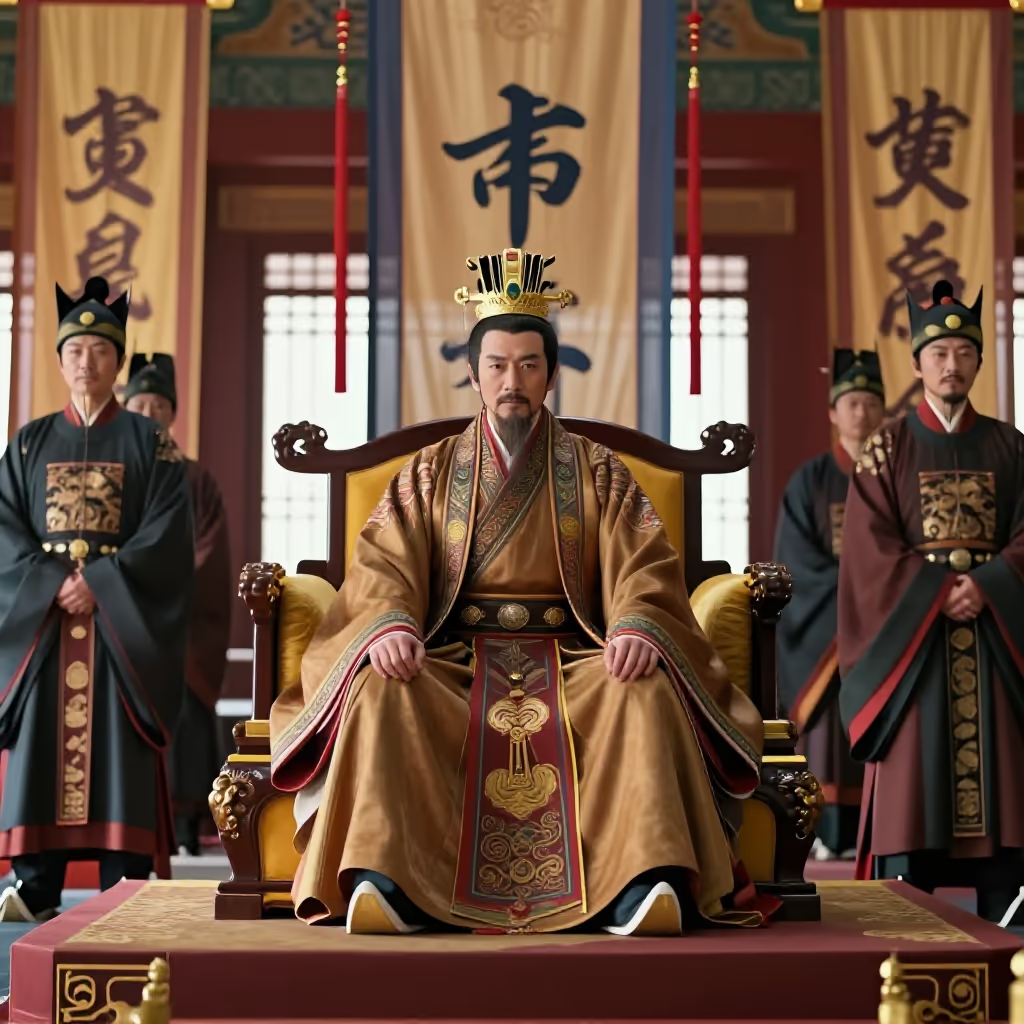
der Kaiser
emperor
The title of the male ruler of an empire, ranking above a king.
EXAMPLE
Napoleon Bonaparte krönte sich 1804 selbst zum Kaiser der Franzosen.
Napoleon Bonaparte crowned himself Emperor of the French in 1804.
emperor / Kaiser roll
Loading your saved state.
emperor
The title of the male ruler of an empire, ranking above a king.
Napoleon Bonaparte krönte sich 1804 selbst zum Kaiser der Franzosen.
Napoleon Bonaparte crowned himself Emperor of the French in 1804.
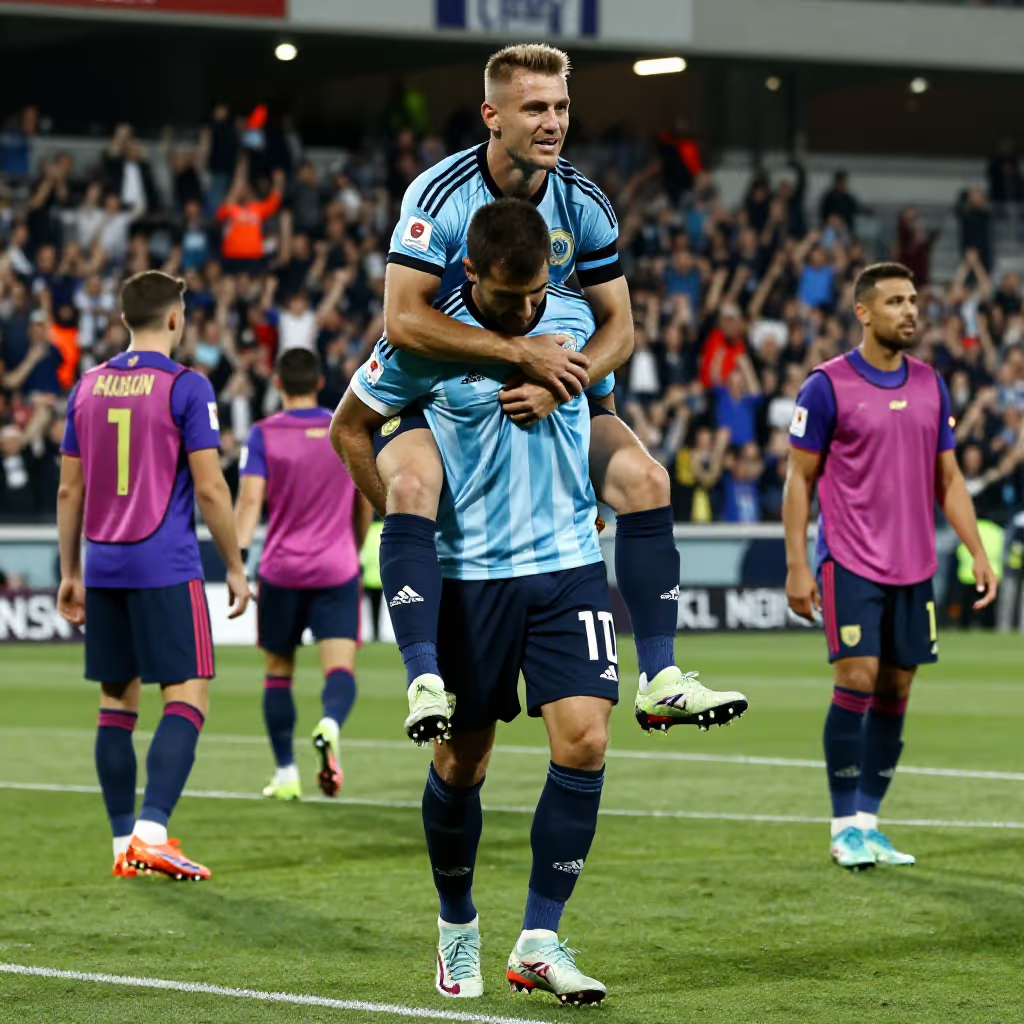
the Kaiser
A colloquial, honorific term for an outstanding and dominant personality, especially in sports.
Wegen seiner eleganten Spielweise wurde der Fußballer Franz Beckenbauer „der Kaiser“ genannt.
Because of his elegant style of play, the footballer Franz Beckenbauer was called 'the Kaiser'.

Kaiser roll
Short form of 'Kaisersemmel', a round bread roll with a star-shaped pattern, common especially in Austria and southern Germany.
Beim Bäcker hole ich mir zum Frühstück einen frischen Kaiser mit Mohn.
At the bakery, I get myself a fresh Kaiser roll with poppy seeds for breakfast.
The German word 'Kaiser' has a special history: it derives directly from the name of the Roman ruler Gaius Julius Caesar. This origin explains the title's great historical significance.
Der letzte deutsche Kaiser dankte 1918 ab.
The last German emperor abdicated in 1918.
The three meanings are clearly separated by context. If it is about history and rulers, an emperor is meant. In a sports context, it is an honorific nickname. At the bakery or at breakfast, it is a bread roll.
Karl der Große wurde im Jahr 800 zum Kaiser gekrönt.
Charlemagne was crowned emperor in the year 800.
The meaning 'bread roll' is regional. 'Der Kaiser' or 'die Kaisersemmel' is used especially in Austria and southern Germany. In other parts of Germany, other words for bread rolls are common.
In Wien isst man zum Frühstück oft eine Kaisersemmel mit Butter und Marmelade.
In Vienna, people often eat a Kaiser roll with butter and jam for breakfast.
The best-known use as a nickname is 'der Kaiser' (the Kaiser) for the German footballer Franz Beckenbauer. This name was given to him because of his elegant and commanding style of play.
Franz Beckenbauer ist als „der Kaiser“ eine Legende des deutschen Fußballs.
Franz Beckenbauer is a legend of German football as 'the Kaiser'.
king
König and Kaiser can refer to an outstanding person in sports. König figuratively names the best in a particular area and combines easily with that area. Kaiser sounds more like a personal, honorary nickname for a dominant sports personality.

Wegen seiner dominanten Spielweise nannten die Fans Martin den Kaiser.
Because of his dominant style of play, the fans called Martin the emperor.
Als bester Torjäger der Liga gilt Martin als König der Stürmer.
As the league's top goal scorer, Martin is considered the king of strikers.