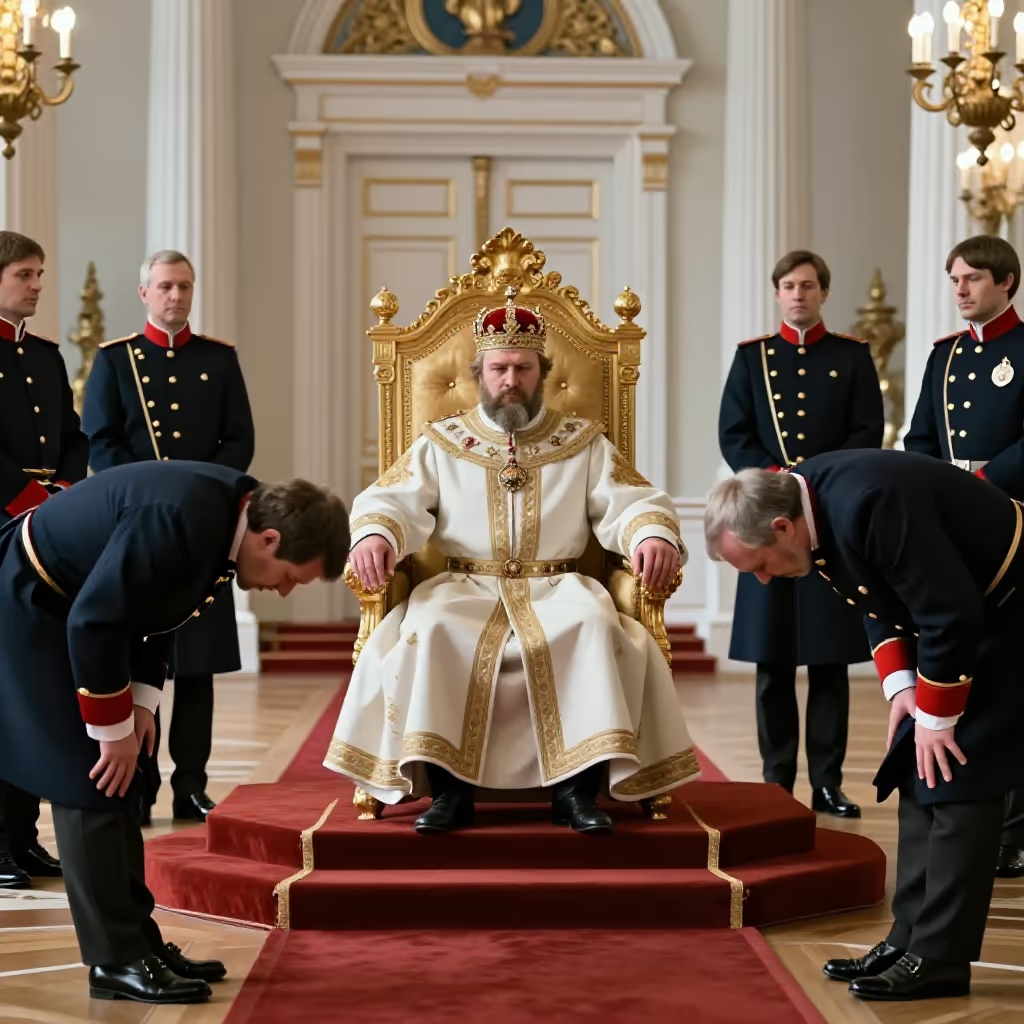
The title of the monarch in the Russian Empire until 1917, as well as in some other Slavic countries such as Bulgaria and Serbia in the Middle Ages.
example
Der letzte russische Zar und seine Familie wurden 1918 hingerichtet.
The last Russian tsar and his family were executed in 1918.

Usage tips
Context clue
You can recognize the historical meaning (m01) from a context referring to the history of Russia, Bulgaria, or Serbia. The figurative meaning (m02) is used for powerful people in modern business or culture.
EXAMPLE
Im Geschichtsunterricht lernten wir über den russischen Zaren Peter den Großen.
In history class, we learned about the Russian tsar Peter the Great.
Origin of the word
The word 'Zar' (tsar) comes from the Russian title 'царь' (tsar), which in turn goes back to the Roman title 'Caesar'. This underlines its historical meaning as the highest ruler.
EXAMPLE
Iwan der Schreckliche war der erste russische Herrscher, der sich zum Zaren krönen ließ.
Ivan the Terrible was the first Russian ruler to have himself crowned tsar.
Metaphorical use
In the figurative meaning, 'Zar' (czar) describes a person with very great, almost unchecked power in a particular area. The term often has a slightly critical or at least very strong undertone.
EXAMPLE
Als Medien-Zar kontrolliert er mehrere große Zeitungen und Fernsehsender.
As a media czar, he controls several major newspapers and television stations.
Compare with
near_synonym · confusable
Zar vs König
king
'der König' and 'der Zar' can both refer to a male ruler. 'König' is the general title for the ruler of a monarchy. 'Zar' is a specific historical title, especially for Russia until 1917 and for some Slavic countries. So not every king is a tsar. Both words can also be used figuratively: a 'König' is then someone who is especially successful in a particular field; a 'Zar' is more likely someone with very great control. The risk of confusion comes from the fact that both sound like powerful rulers. Strictly speaking, 'Zar' is only accurate in suitable historical contexts or figurative contexts involving power.
Zar
Im Geschichtsunterricht liest die Klasse über den letzten Zar von Russland.
In history class, the class reads about the last tsar of Russia.