

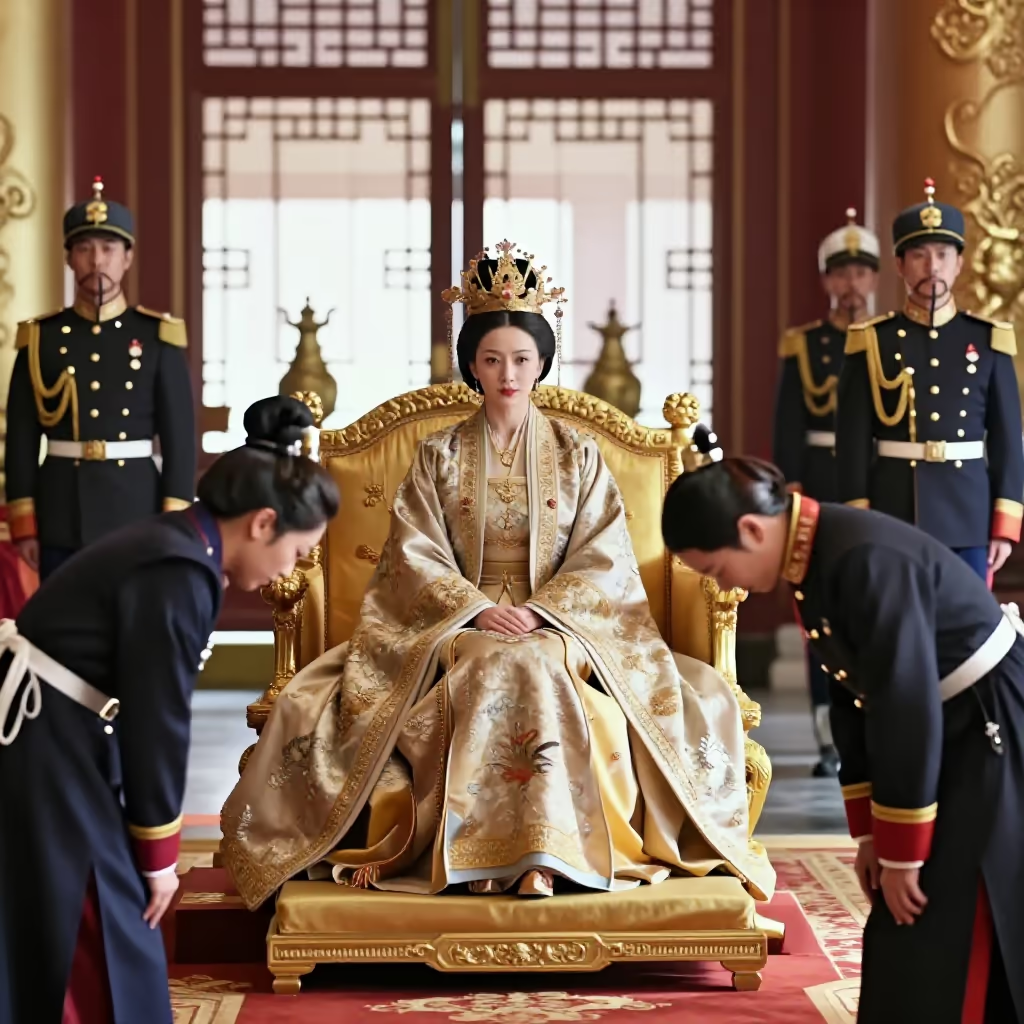
die Kaiserin
empress
The female ruler of an empire or the wife of an emperor.
Kaiserin Sisi von Österreich-Ungarn ist bis heute eine berühmte historische Figur.
Empress Sisi of Austria-Hungary remains a famous historical figure to this day.
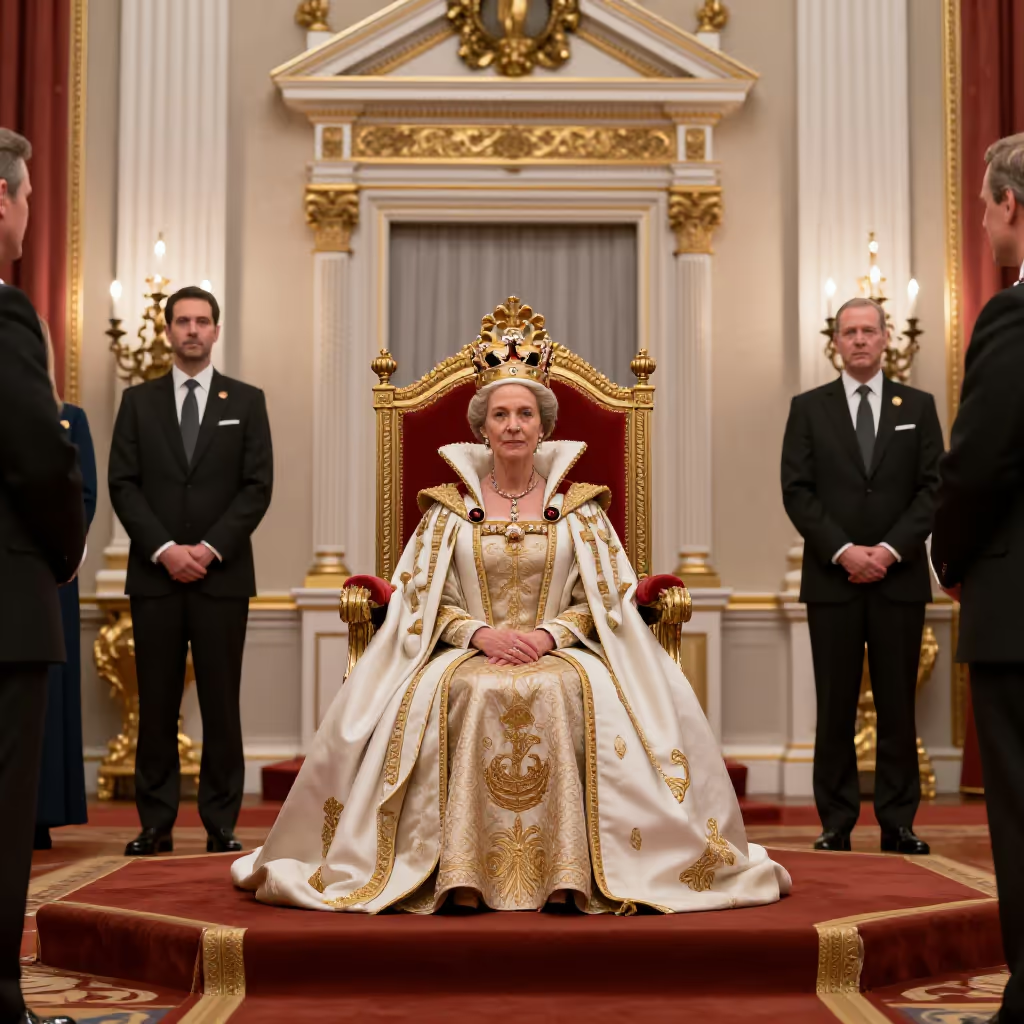
empress
Loading your saved state.
empress
The female ruler of an empire or the wife of an emperor.
Kaiserin Sisi von Österreich-Ungarn ist bis heute eine berühmte historische Figur.
Empress Sisi of Austria-Hungary remains a famous historical figure to this day.

'Kaiserin' (empress) is the feminine form of 'der Kaiser' (the emperor). The ending '-in' is the standard form for creating feminine personal nouns for titles, professions, or roles.
Die Schauspielerin spielte die Rolle einer mächtigen Kaiserin.
The actress played the role of a powerful empress.
In German-speaking countries, 'Kaiserin' (empress) is a historical title. Today it is mainly used for historical figures or female rulers of other countries, for example formerly in Japan.
Im Geschichtsunterricht haben wir über die römischen Kaiserinnen gesprochen.
In history class, we talked about the Roman empresses.
As a title, 'Kaiserin' (empress) often stands directly before the name or is combined with 'von' and the name of the empire.
Die Biografie von Kaiserin Maria Theresia ist sehr interessant.
The biography of Empress Maria Theresa is very interesting.
emperor / Kaiser roll
'der Kaiser' and 'die Kaiserin' are closely related because both have to do with an empire. The difference is mainly in gender and role. 'der Kaiser' is the male ruler of an empire. 'die Kaiserin' can be the ruler herself or the wife of an emperor. Learners may confuse the words because of their similar form. Pay attention to the article: 'der Kaiser' for the male person, 'die Kaiserin' for the female person.

Die Kaiserin traf wichtige Gäste im Palast.
The empress met important guests in the palace.
Am Montag spricht die Klasse über den Kaiser und seine Macht im Reich.
On Monday, the class talks about the emperor and his power in the empire.