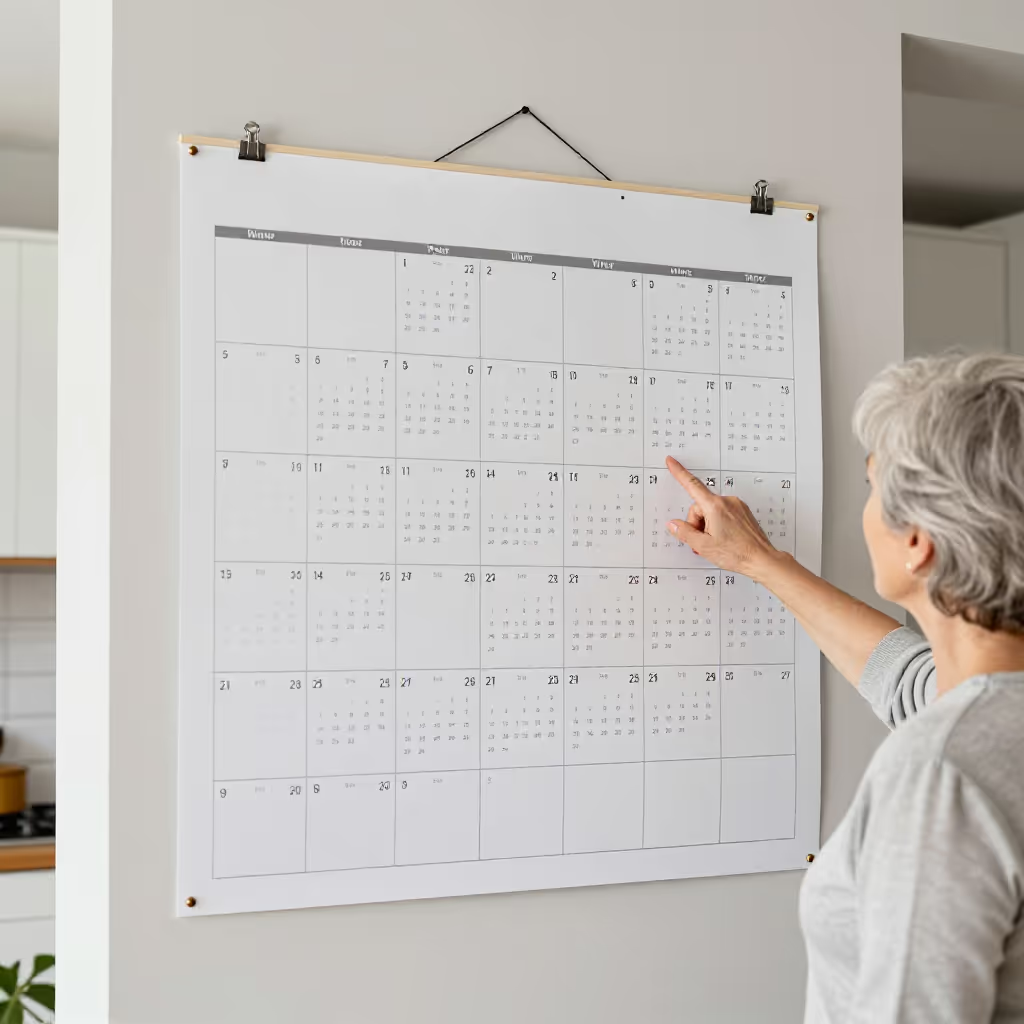
An overview of the days, weeks, and months of a year, often in printed or digital form.
example
Ich habe einen Wandkalender mit schönen Landschaftsfotos geschenkt bekommen.
I was given a wall calendar with beautiful landscape photos as a gift.
Usage tips
Context clue
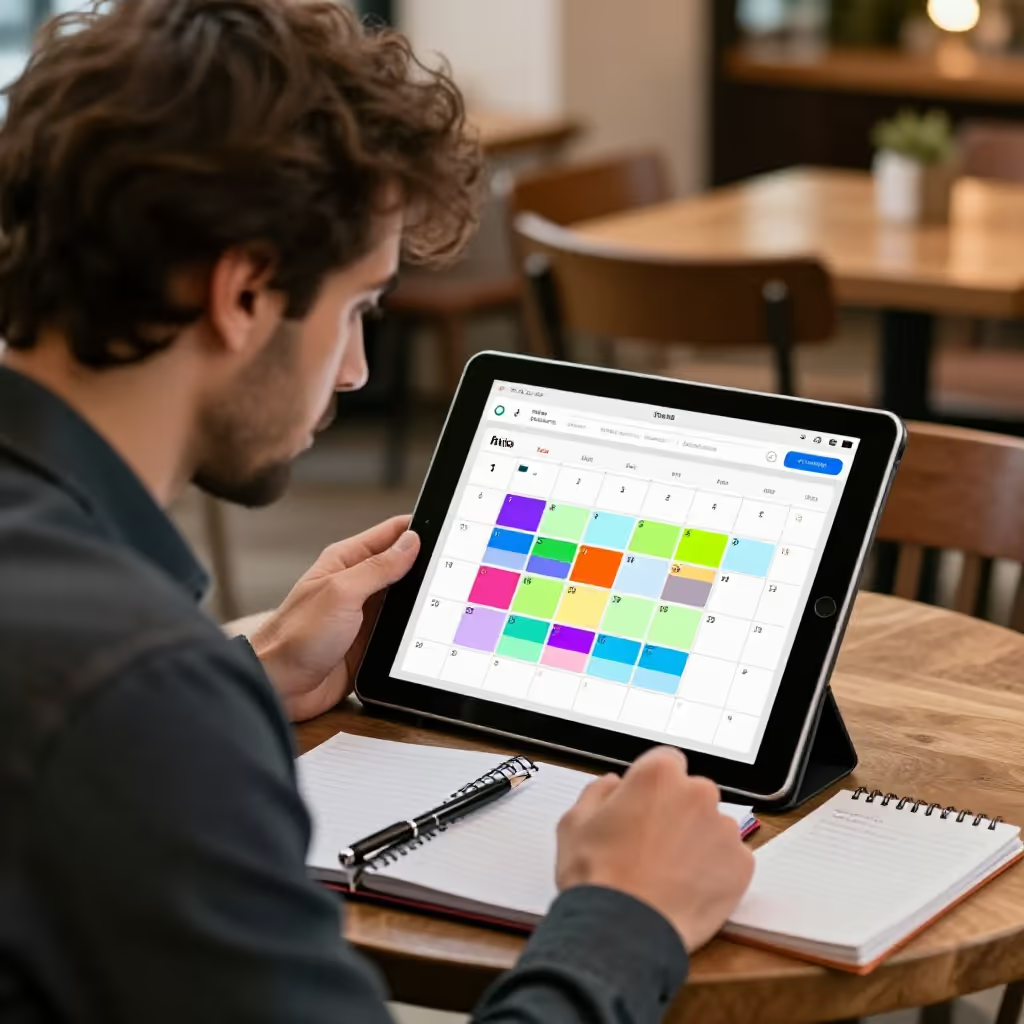
The word 'Kalender' (calendar) has two main meanings. Context words like 'Wand' (wall), 'Monat' (month), or 'Jahr' (year) point to the yearly overview. Words like 'Termin' (appointment), 'eintragen' (to enter), or 'nachschauen' (to check) point to the personal planner.
EXAMPLE
Für das neue Jahr brauche ich einen neuen Wandkalender.
For the new year, I need a new wall calendar.
Typical collocations
To specify the type of calendar, the word is often used in compounds. Common examples are 'Wandkalender' (wall calendar), 'Taschenkalender' (pocket calendar), or the popular 'Adventskalender' (Advent calendar) during the Christmas season.
EXAMPLE
Die Kinder freuen sich jeden Tag darauf, ein Türchen am Adventskalender zu öffnen.
The children look forward every day to opening a little door on the Advent calendar.
Important prepositions
When you plan appointments, pay attention to the case after the preposition 'in'. An action is expressed with the accusative ('in den Kalender eintragen' — to enter into the calendar), a state with the dative ('im Kalender stehen' — to be in the calendar).
EXAMPLE
Ich trage mir das Meeting sofort in den Kalender ein.
I'll enter the meeting in my calendar right away.
Typical verbs
In connection with scheduling, 'Kalender' (calendar) is often combined with certain verbs. Typical phrases are: 'einen Termin eintragen' (to enter an appointment), 'in den Kalender schauen' (to look in the calendar), or the statement 'einen vollen Kalender haben' (to have a full calendar).
EXAMPLE
Vor der Urlaubsplanung sollte ich besser in meinen Kalender schauen.
Before planning the vacation, I should probably check my calendar.
Compare with
near_synonym · confusable
Kalender vs Agenda
agenda
'der Kalender' and 'die Agenda' can both have to do with planning and appointments. A 'Kalender' shows days, weeks, and months, or helps organize personal appointments. 'Agenda' can also be a planner, but in German it is very often used for the list of topics in a meeting. That is why the words can be confused, especially when planning is involved. For dates and appointments, 'Kalender' is usually more natural. For items to be discussed in a meeting, 'Agenda' fits better.
Kalender
Im Kalender sieht Maria, dass der Arzttermin erst nächste Woche ist.
In the calendar, Maria sees that the doctor's appointment is not until next week.
Agenda
Auf der Agenda stehen heute drei wichtige Punkte für das Team.
There are three important items for the team on today's agenda.