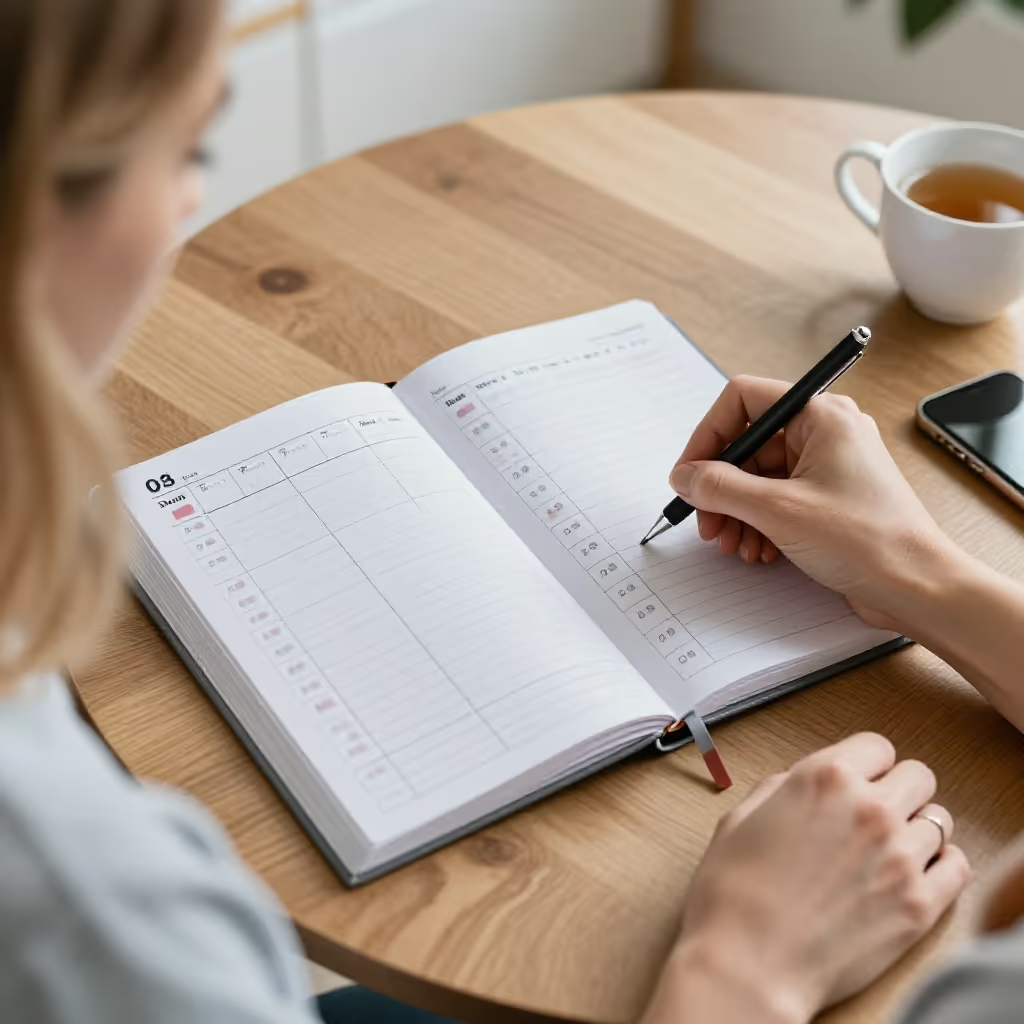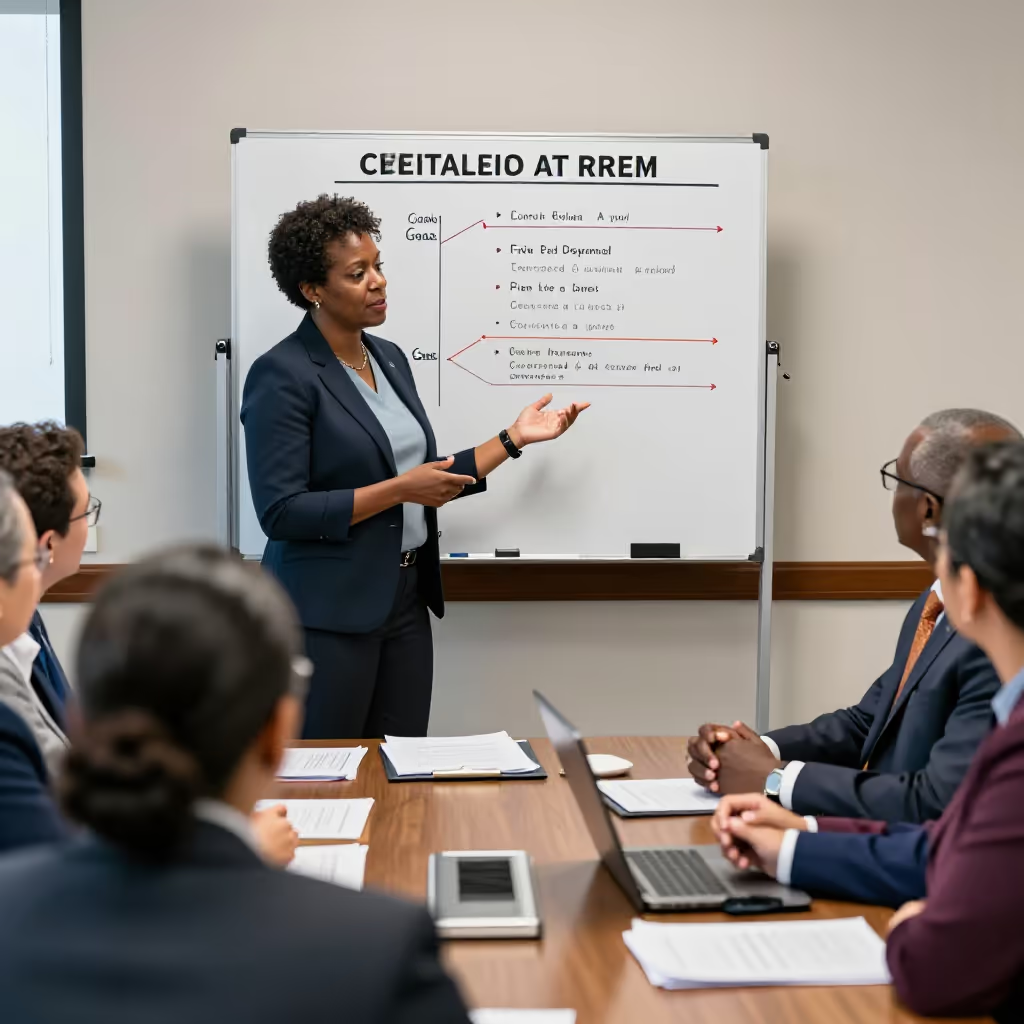
A list of topics or items that are to be discussed in a meeting or conference in a particular order; the agenda.
example
Der erste Punkt auf der Agenda ist die Genehmigung des Protokolls der letzten Sitzung.
The first item on the agenda is the approval of the minutes from the last meeting.

Usage tips
Origin of the word
'Agenda' is a Latin word and literally means 'the things that are to be done.' This origin explains why it is used both for a list of tasks in a meeting and for personal appointments.
EXAMPLE
Die Agenda für heute ist sehr voll.
Today's agenda is very full.
Typical collocations
In the context of meetings, 'Agenda' (agenda) is often used in fixed phrases: something 'steht auf der Agenda' (is on the agenda), you 'setzt einen Punkt auf die Agenda' (put an item on the agenda), or you 'arbeitet die Agenda ab' (work through the agenda).
EXAMPLE
Welcher Punkt steht als Nächstes auf der Agenda?
Which item is next on the agenda?
Context clue
The figurative meaning of a plan or goal is often made clear by adjectives such as 'politisch' (political), 'persönlich' (personal), or 'versteckt' (hidden). It then refers to the real intentions of a person or group, which are not always openly stated.
EXAMPLE
Er verfolgt seine ganz persönliche Agenda.
He is pursuing his very own personal agenda.
False friend
While 'agenda' in English usually means the list of items for a meeting, 'die Agenda' in German can also refer to a personal notebook or appointment planner. This book-related meaning is uncommon in modern English.
EXAMPLE
Ich trage alle meine Termine in meine Agenda ein.
I enter all my appointments in my planner.
Register and style
The use of 'Agenda' (planner/diary) for an appointment book is becoming less common and can sometimes sound a bit old-fashioned. However, the meaning is still correct and understandable.
EXAMPLE
Meine Großmutter notiert sich alles in ihrer alten Agenda aus Leder.
My grandmother writes everything down in her old leather diary.
Compare with
near_synonym · confusable
Agenda vs Programm
program
'das Programm' and 'die Agenda' can both mean a plan with items or goals. 'Programm' works well for events, parties, or organizations and can describe content, activities, or goals. 'Agenda' is used especially for meetings and conferences when referring to the list of topics. In a broader sense, 'Agenda' can also mean a strategic plan with goals. The words can be confused because both express something planned. In a meeting, 'Agenda' often sounds more precise; for an event or a public plan, 'Programm' sounds more natural.
Agenda
Im Büro steht heute nur ein kurzer Punkt auf der Agenda.
At the office, there is only one short item on the agenda today.
Programm
Für das Stadtfest gibt es ein Programm mit Musik, Essen und Spielen für Kinder.
For the town festival, there is a program with music, food, and games for children.