

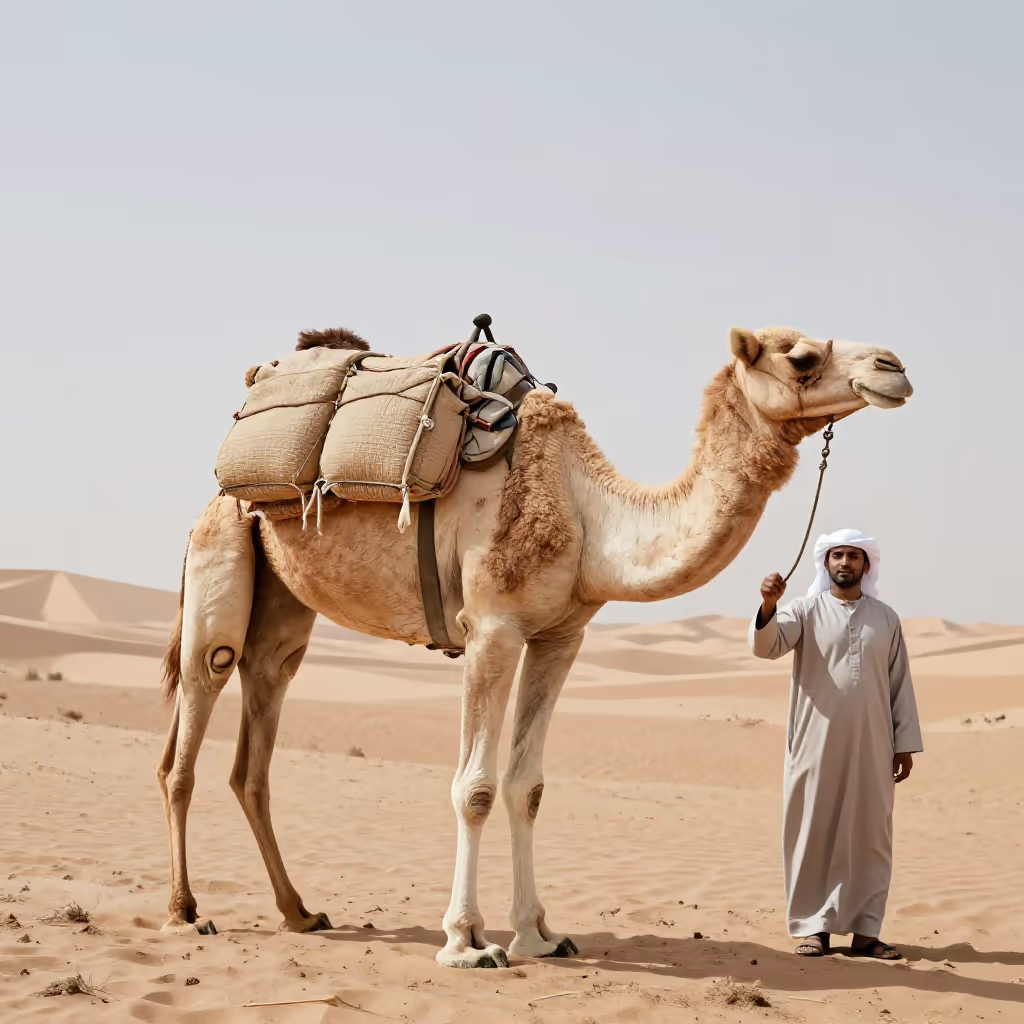
das Kamel
camel
A large mammal with one or two humps that lives in desert regions and is often used as a pack and riding animal.
EXAMPLE
In der Wüste sahen wir eine Karawane mit vielen Kamelen.
In the desert, we saw a caravan with many camels.
camel
Loading your saved state.
camel
A large mammal with one or two humps that lives in desert regions and is often used as a pack and riding animal.
In der Wüste sahen wir eine Karawane mit vielen Kamelen.
In the desert, we saw a caravan with many camels.

idiot
Colloquially and derogatorily, a term for a stupid, clumsy, or stubborn person.
Du Kamel, jetzt hast du schon wieder den falschen Knopf gedrückt!
You idiot, now you've pressed the wrong button again!
Whether the animal or the insult is meant becomes clear immediately from context. If you are talking about a desert, a zoo, or a trip, the animal is meant. In an argument or in a frustrated remark about a person, it is an insult.
Im Zoo haben wir die Kamele gefüttert.
At the zoo, we fed the camels.
When referring to the animal, 'Kamel' (camel) is often used in connection with words like 'Wüste' (desert), 'Karawane' (caravan), 'Höcker' (hump), or the verb 'reiten' (to ride).
Die Touristen ritten auf Kamelen durch die Wüste.
The tourists rode camels through the desert.
As an insult, 'Kamel' (idiot) is colloquial and expresses that someone is seen as stupid or clumsy. It is often used as a direct exclamation.
So ein Kamel! Jetzt hat er den Kaffee verschüttet.
What an idiot! Now he's spilled the coffee.
Even when 'Kamel' (idiot) is used to insult a man, the word keeps its neuter gender. You say 'Er ist ein Kamel' (He is an idiot), not 'Er ist einER Kamel.'
Mein Bruder hat meinen Geburtstag vergessen, er ist so ein Kamel.
My brother forgot my birthday; he is such an idiot.
donkey
Both words are derogatory terms for a stupid, clumsy, or stubborn person. Esel is a commonly used general insult, whereas Kamel sounds distinctly colloquial and often expresses particular anger. Esel is more suitable in more neutral everyday speech, while Kamel can be used in a rougher, spontaneous reaction.

Du Kamel, du hast den Schlüssel schon wieder vergessen.
You idiot, you forgot the key again.
Du Esel, du hast den Schlüssel schon wieder vergessen.
You idiot, you forgot the key again.