

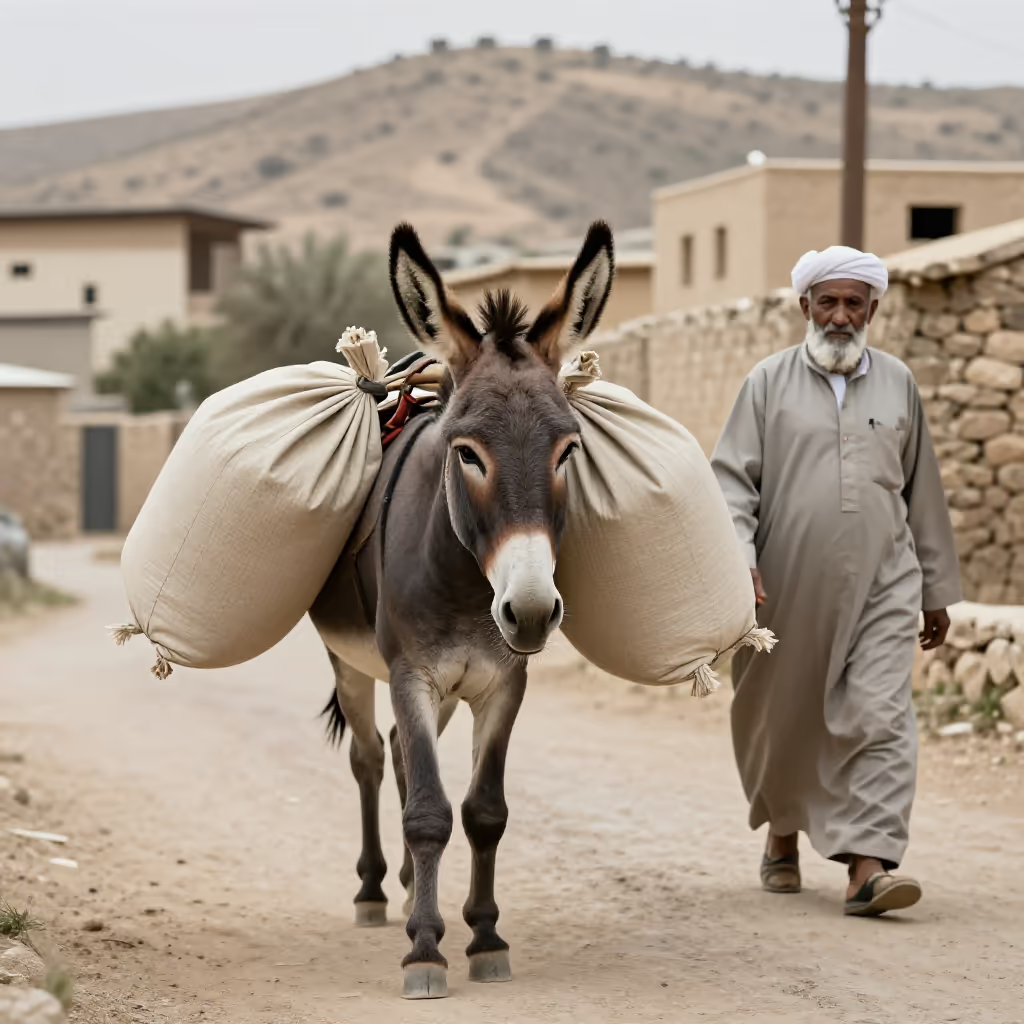
der Esel
donkey
A domestic animal related to the horse, with long ears, often used as a pack animal.
In den Bergen transportieren die Bauern ihre Waren oft mit einem Esel.
In the mountains, farmers often transport their goods with a donkey.

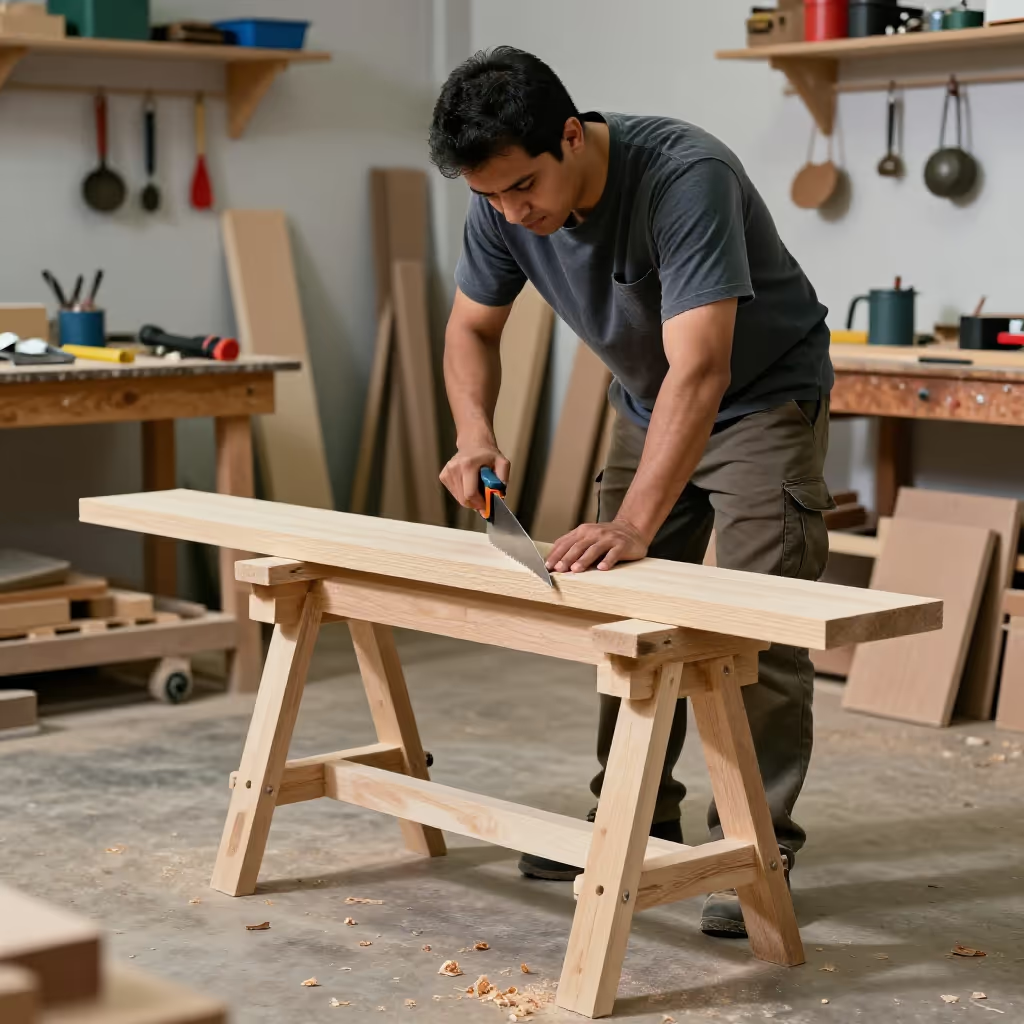
donkey
Loading your saved state.
donkey
A domestic animal related to the horse, with long ears, often used as a pack animal.
In den Bergen transportieren die Bauern ihre Waren oft mit einem Esel.
In the mountains, farmers often transport their goods with a donkey.
The word 'Esel' (donkey) is the basis for 'Eselsbrücke' (mnemonic). This is a memory aid or a simple trick to remember complex information—literally a 'bridge' for 'stupid' people.
Mit einer Eselsbrücke kann ich mir die Reihenfolge der Planeten merken.
With a mnemonic, I can remember the order of the planets.
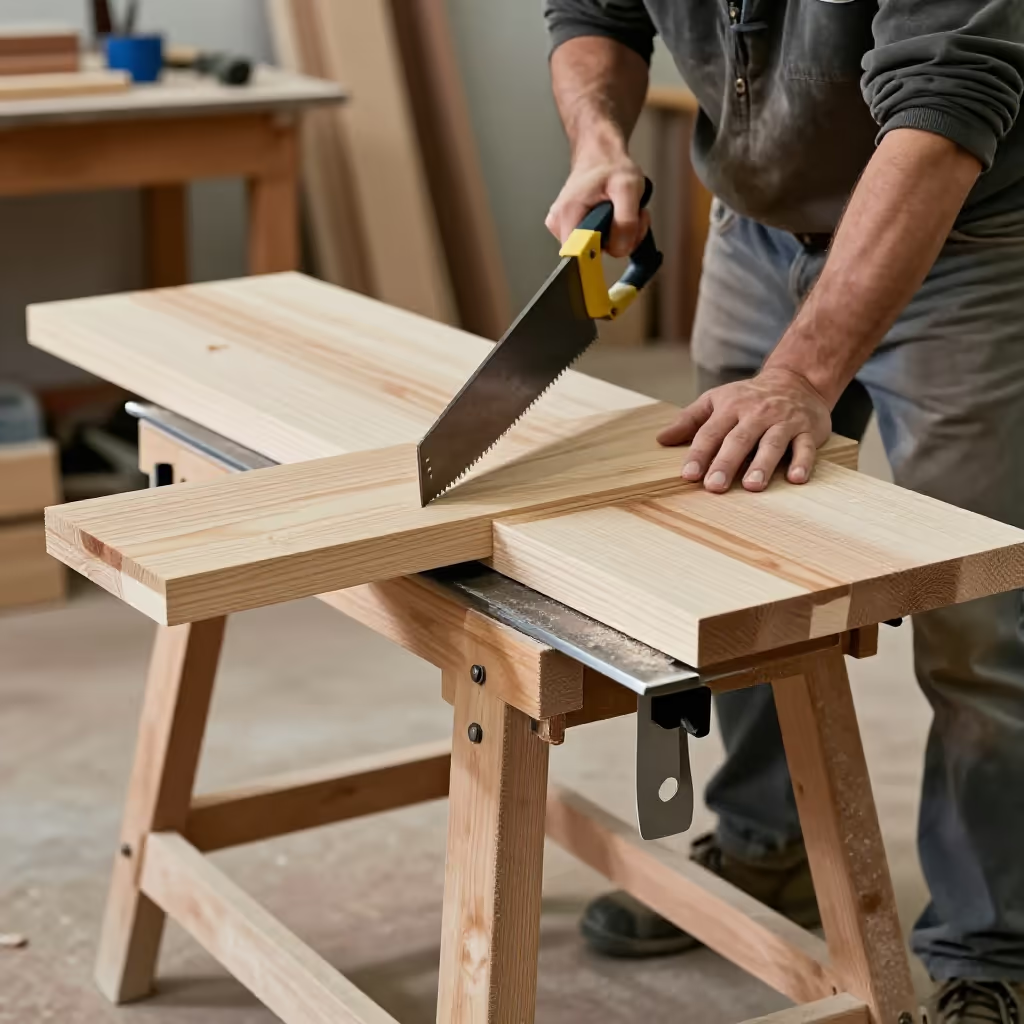
You can recognize the meaning of 'Esel' from the context. If it is about animals, farms, or loads, it means the animal. In an argument or when someone has made a mistake, it is an insult. In the context of crafts, painting, or sawing, it means the frame.
Der alte Bauer belud seinen Esel mit Säcken.
The old farmer loaded his donkey with sacks.
The donkey is proverbially known for its stubbornness. The expression 'stur sein wie ein Esel' (to be as stubborn as a donkey) means that someone is very headstrong and does not change their opinion.
Er will einfach nicht nachgeben, er ist stur wie ein Esel.
He simply doesn't want to give in; he's as stubborn as a donkey.
As an insult, 'Esel' (idiot/donkey) is colloquial and is often used as a direct form of address to call someone stupid or clumsy.
Sei doch kein Esel und lies zuerst die Anleitung!
Don't be an idiot—read the instructions first!
The meaning 'Gestell' (frame/stand) belongs to technical language from crafts and art. Not all German speakers know or use the word in this sense.
Zum Holzsägen benutze ich einen stabilen Esel aus Metall.
For sawing wood, I use a sturdy metal trestle.
desire / buck
'der Bock' and 'der Esel' can both refer to animals, and both words can also be used for a frame or stand. As animals, however, they are different: a Bock is a male animal, for example among goats or deer. An Esel is a separate domestic animal with long ears. With objects, the words overlap more: a Bock is often a trestle or stand used for support, for example when sawing. An Esel can also be a frame or stand, often for holding pictures or wood. Learners may confuse the words because both occur in workshop situations. Pay attention to the context: animal, sawing, or painting.

Omar stellt die Leinwand für das Projekt auf den Esel.
Omar puts the canvas for the project on the easel.
Vor dem Sägen legt Paul das Brett auf den Bock.
Before sawing, Paul puts the board on the trestle.