


der Kamm
comb
An object with a row of teeth or prongs used to arrange, detangle, or style hair.
EXAMPLE
Hast du einen Kamm für mich? Meine Haare sind vom Wind ganz zerzaust.
Do you have a comb for me? My hair is completely tousled from the wind.
comb / ridge / crest
Loading your saved state.
comb
An object with a row of teeth or prongs used to arrange, detangle, or style hair.
Hast du einen Kamm für mich? Meine Haare sind vom Wind ganz zerzaust.
Do you have a comb for me? My hair is completely tousled from the wind.
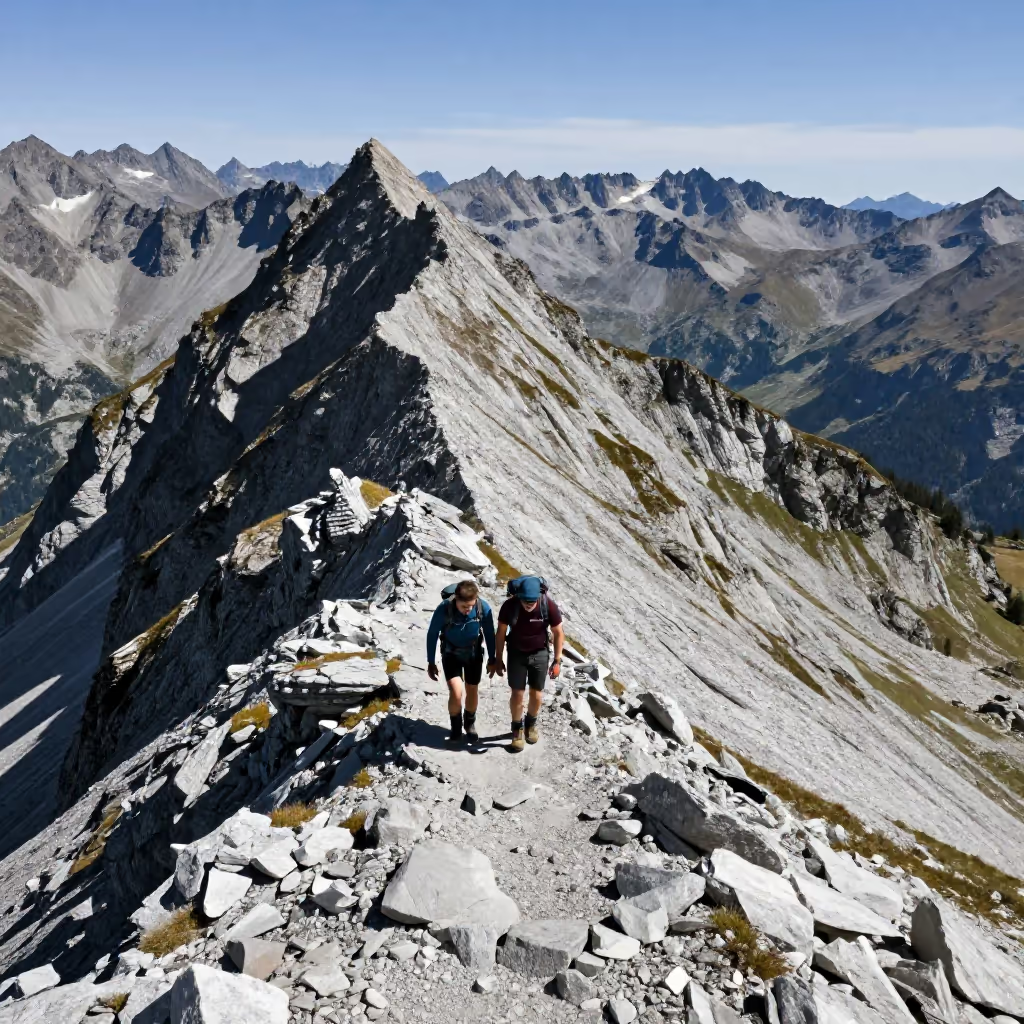
ridge
The highest, often narrow line of a mountain or mountain range; a mountain ridge.
Nach einem anstrengenden Aufstieg erreichten die Wanderer endlich den Kamm des Berges und genossen die Aussicht.
After a strenuous climb, the hikers finally reached the ridge of the mountain and enjoyed the view.
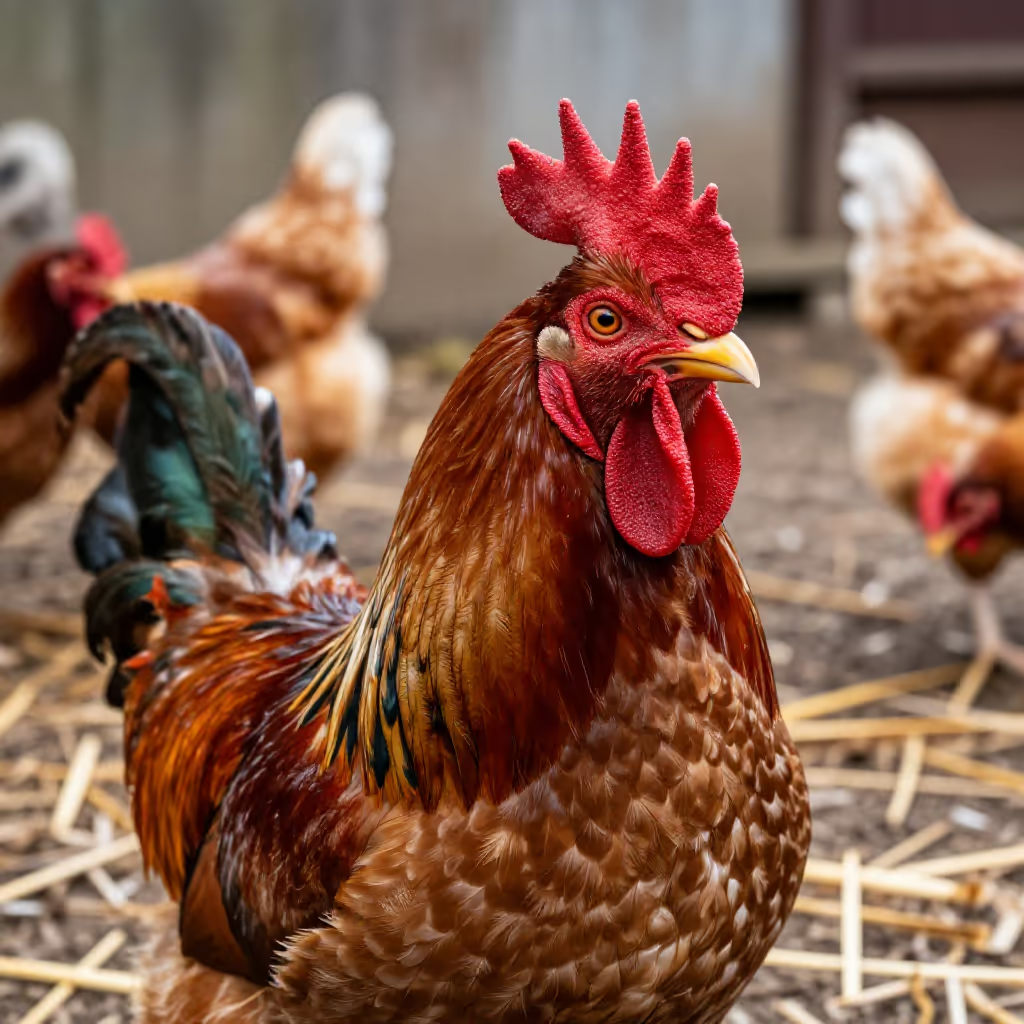
comb
The red, fleshy flap of skin on the head of chickens and related birds, especially a rooster.
Der Hahn reckte stolz seinen leuchtend roten Kamm in die Höhe.
The rooster proudly stretched his bright red comb upward.
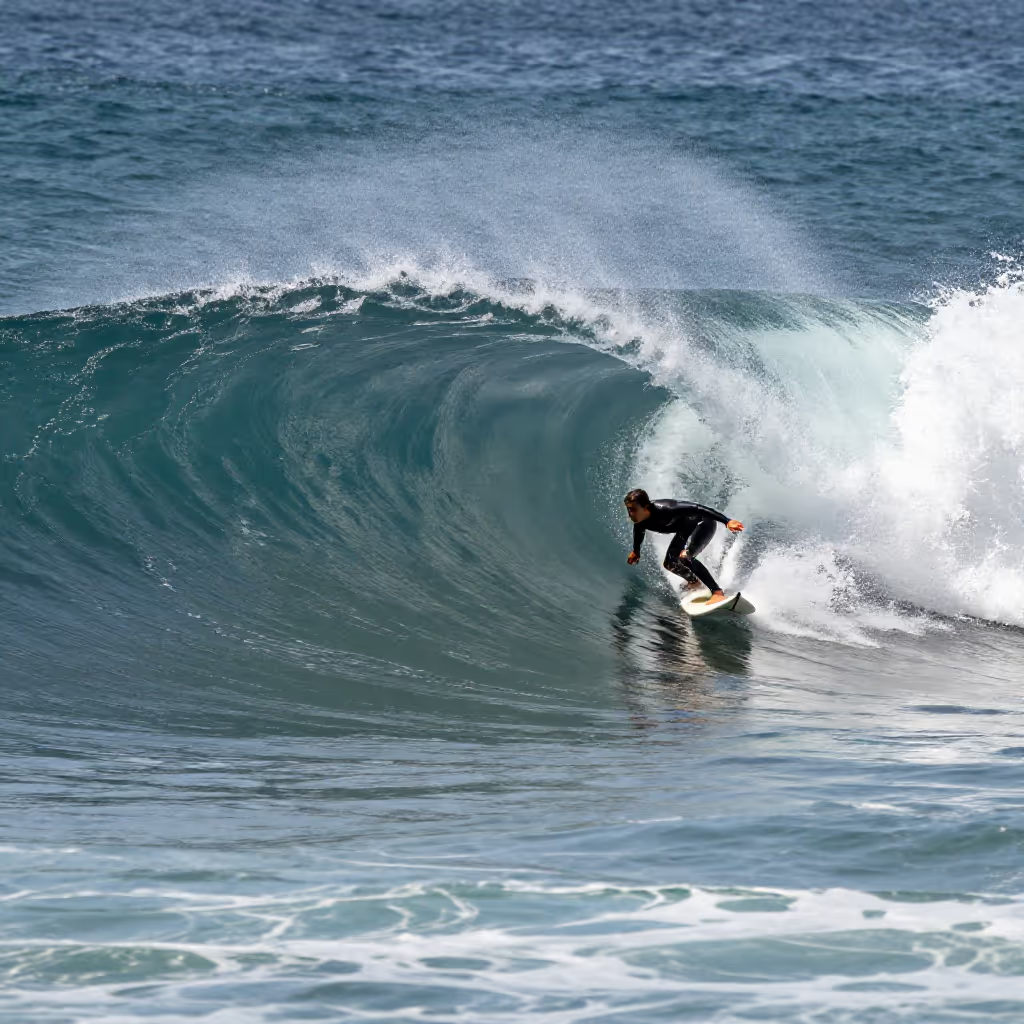
crest
The highest point of a water wave, just before it breaks.
Der Surfer ritt geschickt auf dem Kamm der riesigen Welle.
The surfer skillfully rode on the crest of the huge wave.
All meanings of 'Kamm' (comb / ridge / crest) describe a structure with a narrow, often jagged or raised upper edge. Whether with hair, mountains, waves, or animals, the shape is the connecting idea.
Vom Kamm des Gebirges hatten wir eine fantastische Aussicht.
From the ridge of the mountain range, we had a fantastic view.
The idiom 'alle über einen Kamm scheren' means to treat all people or things the same and not make distinctions, often in a negative, unfair sense.
Man kann nicht alle Politiker über einen Kamm scheren, es gibt auch engagierte Leute.
You can't tar all politicians with the same brush; there are also dedicated people.
The verb that goes with the noun 'der Kamm' (the comb) is 'kämmen' (to comb). It is usually used reflexively: 'sich (die Haare) kämmen' (to comb one's hair).
Ich muss mir noch schnell die Haare kämmen, bevor wir gehen.
I still have to quickly comb my hair before we go.
In the meaning 'Bergrücken' (mountain ridge), the preposition 'auf' is almost always used. You hike 'auf dem Kamm' (on the ridge, position) or climb 'auf den Kamm' (onto the ridge, direction).
Die Wanderung auf dem Kamm war anstrengend, aber wunderschön.
The hike on the ridge was exhausting but beautiful.
back
For mountains, Rücken refers to a longer, relatively broad ridge. Kamm specifically refers to its upper, often narrow line. Kamm is more precise for the narrow line at the highest point, while Rücken refers to the broader, elongated form.

Der schmale Kamm des Berges zieht sich weit nach Norden.
The mountain's narrow crest stretches far to the north.
Der breite Rücken des Berges zieht sich weit nach Norden.
The mountain's broad ridge stretches far to the north.