


der Rücken
back
The rear part of the human or animal body between the neck and the buttocks.
EXAMPLE
Ich habe vom langen Sitzen Schmerzen im Rücken.
I have back pain from sitting for so long.
back
Loading your saved state.
back
The rear part of the human or animal body between the neck and the buttocks.
Ich habe vom langen Sitzen Schmerzen im Rücken.
I have back pain from sitting for so long.
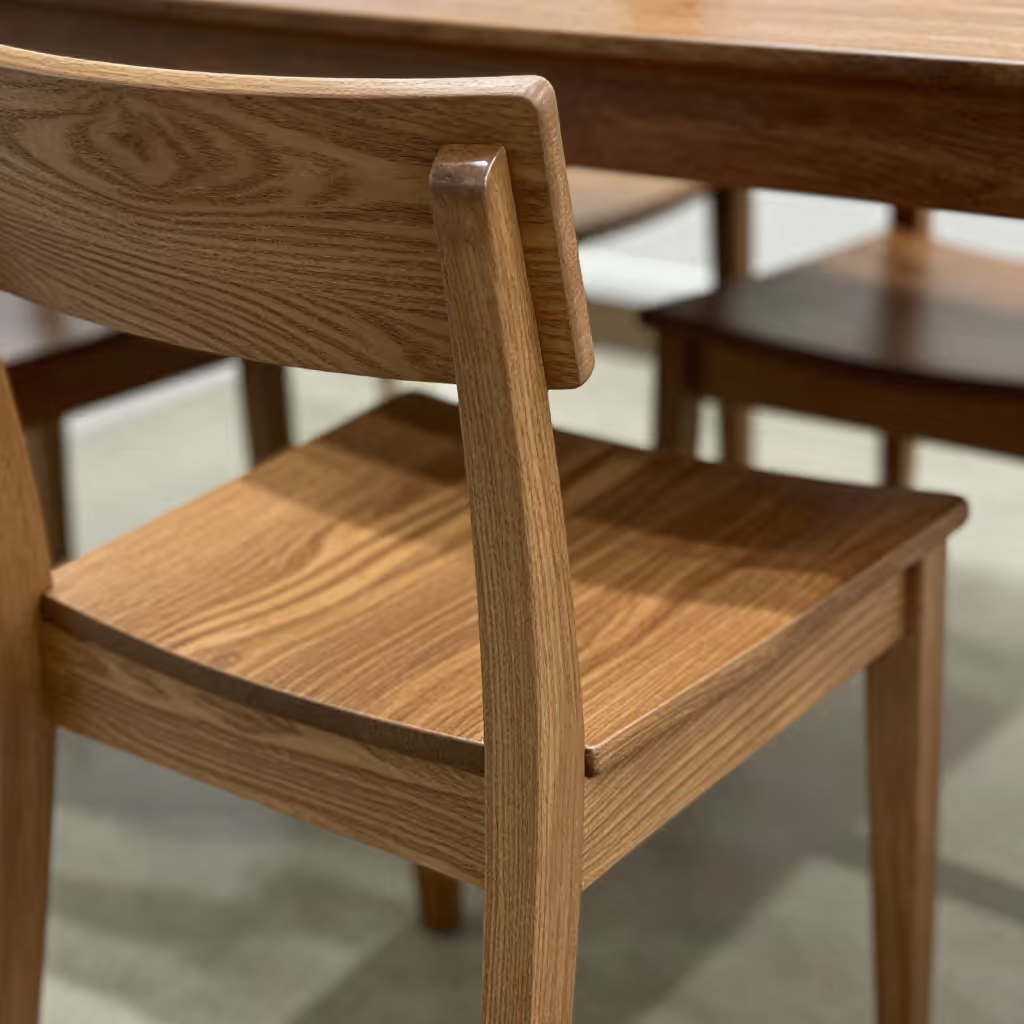
back / spine
The back side of an object, for example a chair, book, or cupboard.
Auf dem Rücken des Buches steht der Titel in goldenen Buchstaben.
The title is written in gold letters on the spine of the book.

to stab someone in the back
To betray or abandon someone even though that person trusted you.
Ich dachte, er wäre mein Freund, aber bei der Abstimmung ist er mir in den Rücken gefallen.
I thought he was my friend, but during the vote he stabbed me in the back.

to have one's back free
To be free of other worries or obligations so that one can concentrate on a specific task.
Seit die Kinder in der Kita sind, habe ich endlich den Rücken frei, um mein Buch zu schreiben.
Since the children have been in daycare, I finally have my back free to write my book.

support / backing
In a figurative sense, support or backing.
Mit dem Rücken seiner Familie konnte er das Risiko eingehen und seine eigene Firma gründen.
With the backing of his family, he was able to take the risk and start his own company.
The word 'Rücken' (back) is the basis for many other words that have to do with 'hinten' (behind/back) or 'zurück' (back), for example 'zurück' (back), 'Rückseite' (back side), 'Rucksack' (backpack), or 'Rückgrat' (backbone).
Für die Wanderung packe ich meinen Rucksack.
I'm packing my backpack for the hike.
In connection with the body part, fixed phrases like 'Schmerzen im Rücken haben' (to have back pain), 'auf dem Rücken liegen' (to lie on one's back), or colloquially 'Rücken haben' (to have back pain) are very common.
Ich schlafe am liebsten auf dem Rücken.
I prefer to sleep on my back.
The idiom 'jemandem in den Rücken fallen' means to betray someone. The person who is betrayed is always in the dative.
Er hat mir versprochen zu helfen, aber dann ist er mir in den Rücken gefallen.
He promised to help me, but then he stabbed me in the back.
The idiom 'den Rücken frei haben' means that you can focus on something without worries or distractions. You have the support you need.
Dank der Hilfe meiner Eltern habe ich den Rücken frei, um mich auf mein Studium zu konzentrieren.
Thanks to my parents' help, I have my back free to focus on my studies.
In a figurative sense, 'Rücken' (back) stands for support. A common phrase is 'jemandem den Rücken stärken' (to strengthen someone's back), which means to support someone morally.
In der schwierigen Situation hat mir meine Familie immer den Rücken gestärkt.
In the difficult situation, my family always had my back.
support
Unterstützung directly means help and can stand on its own for practical, moral, or idealistic help. Rücken can also mean backing, but only in figurative, fixed, or clearly metaphorical expressions. Use Unterstützung for general help and Rücken for figurative backing.

Bei dem schwierigen Projekt wusste er seine Kolleginnen im Rücken.
During the difficult project, he knew his colleagues had his back.
Dank der Unterstützung seiner Kolleginnen konnte er das Projekt rechtzeitig beenden.
Thanks to the support of his colleagues, he was able to finish the project on time.