

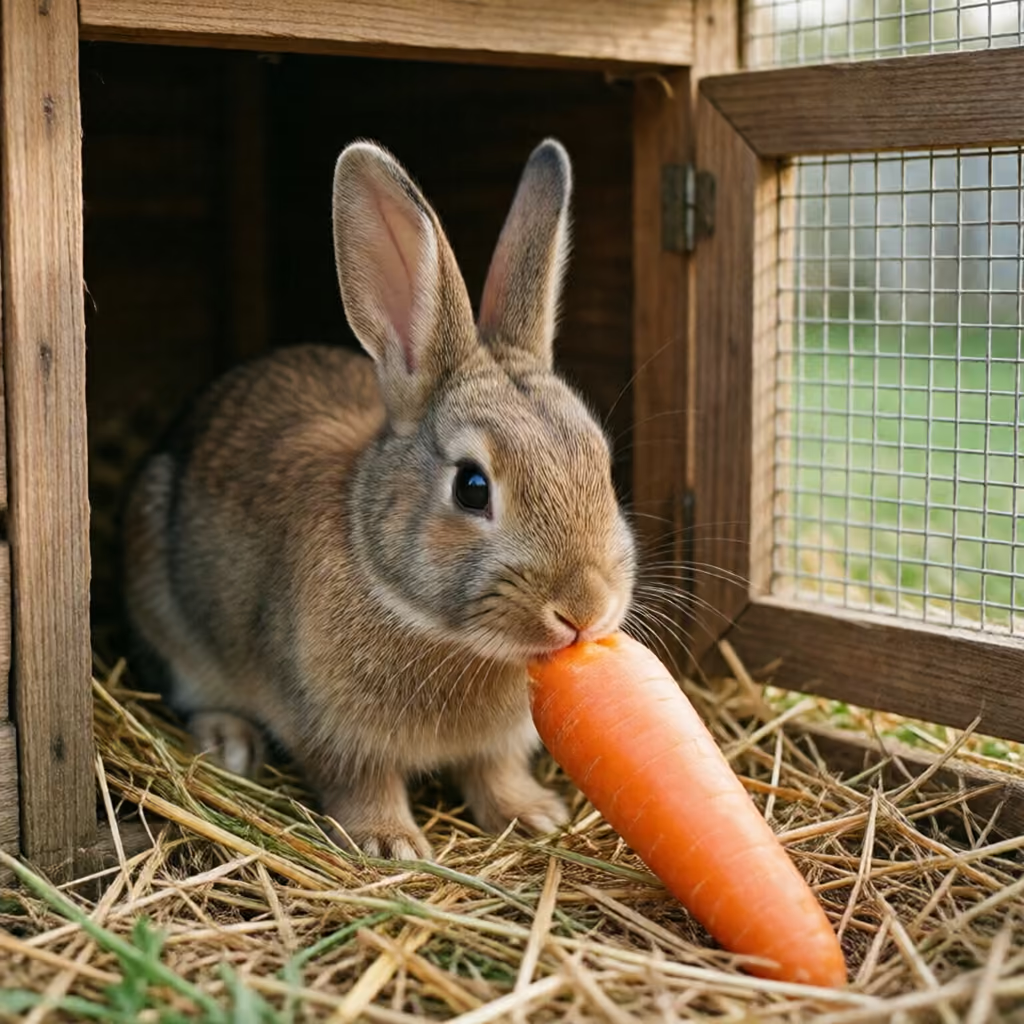
das Karnickel
rabbit
An informal term for a rabbit.
EXAMPLE
Das Karnickel sitzt im Stall und knabbert an einer Karotte.
The rabbit is sitting in the hutch and nibbling on a carrot.
rabbit
das Karnickel, die Karnickel
Loading your saved state.
rabbit
An informal term for a rabbit.
Das Karnickel sitzt im Stall und knabbert an einer Karotte.
The rabbit is sitting in the hutch and nibbling on a carrot.
| gender | neuter das |
|---|---|
| plural | die Karnickel |
| genitive | des Karnickels |
| singular | plural | |
|---|---|---|
| nominative | das Karnickel | die Karnickel |
| accusative | das Karnickel | die Karnickel |
| dative | dem Karnickel | den Karnickeln |
| genitive | des Karnickels | der Karnickel |
The article changes with the case; it is shown in colour.
'Karnickel' is an informal German word and often sounds folksy or familiar. It is especially fitting in conversations about animals in the countryside or in private settings.
Mein Opa hält mehrere Karnickel hinter dem Haus.
My grandpa keeps several rabbits behind the house.
Common collocations include 'Karnickel halten' (to keep rabbits), 'ein Karnickel füttern' (to feed a rabbit), 'Karnickel züchten' (to breed rabbits), and 'Karnickelstall' (rabbit hutch). These expressions are especially associated with keeping pets and farming.
Die Kinder dürfen das Karnickel jeden Morgen füttern.
The children are allowed to feed the rabbit every morning.
Words such as 'Stall' (hutch), 'Heu' (hay), 'füttern' (to feed), 'züchten' (to breed), or 'Karotte' (carrot) usually show that 'Karnickel' is being used in connection with a living animal. The context often describes keeping, caring for, or the behavior of the animal.
Der Züchter füttert die Karnickel zweimal täglich mit frischem Heu.
The breeder feeds the rabbits fresh hay twice a day.