

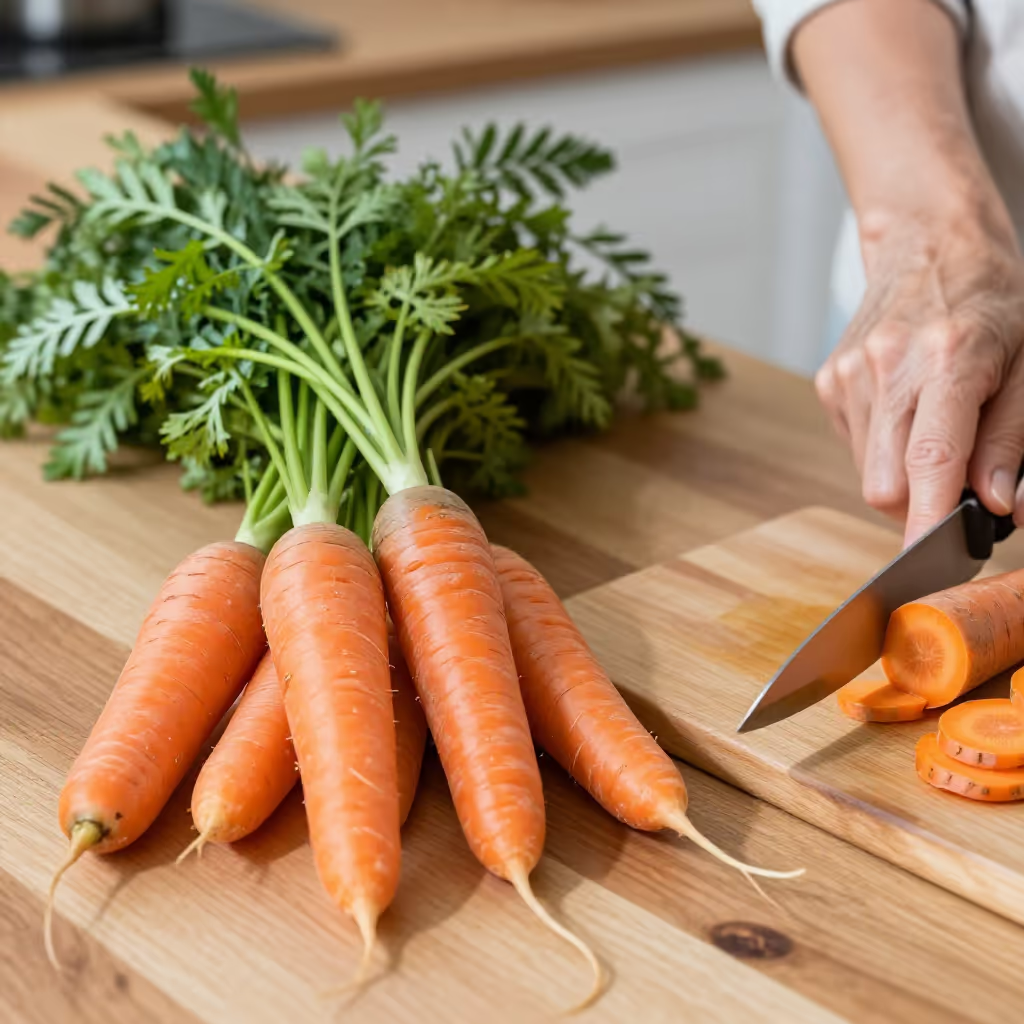
An orange, elongated root vegetable that is eaten raw or cooked. In many regions it is also known as 'Möhre' (carrot) or 'Mohrrübe' (carrot).
example
Für den Salat brauche ich noch eine Karotte und eine Gurke.
For the salad, I still need a carrot and a cucumber.
Usage tips
Typical collocations
In connection with cooking, 'Karotte' (carrot) is often used with verbs of preparation. Typical actions are 'Karotten schälen' (to peel carrots), 'schneiden' (to cut), 'raspeln' (to grate), or 'reiben' (to grate).
EXAMPLE
Zuerst musst du die Karotten für den Salat schälen und dann reiben.
First you have to peel the carrots for the salad and then grate them.
Word component
The word 'Karotte' (carrot) is often the first part of compound words for foods and drinks. This makes it easy to recognize words like 'der Karottensaft' (carrot juice), 'der Karottenkuchen' (carrot cake), or 'der Karottensalat' (carrot salad).
EXAMPLE
Ich trinke morgens gerne frisch gepressten Karottensaft.
I like drinking freshly squeezed carrot juice in the morning.
Use in recipes
In recipes or when shopping, the indefinite form 'eine Karotte' (a carrot) or the plural 'Karotten' (carrots) is often used. People rarely talk about a specific, single carrot.
EXAMPLE
Für die Suppe brauchst du noch zwei Zwiebeln und drei Karotten.
For the soup, you still need two onions and three carrots.
Compare with
synonym
Karotte vs Möhre
carrot / old banger
'die Karotte' and 'die Möhre' mean the same thing as vegetables: the orange root that can be eaten raw or cooked. The difference is mainly in regional usage. In some areas, people say 'Karotte' more often; in others, 'Möhre' is more common. Both words are understandable and correct in everyday language. When you are only talking about the vegetable, they can usually be used interchangeably.
Karotte
Im Supermarkt kauft du noch eine Karotte für die Suppe.
At the supermarket, you buy one more carrot for the soup.
Möhre
Ich schneide eine Möhre klein und gebe sie in den Salat.