

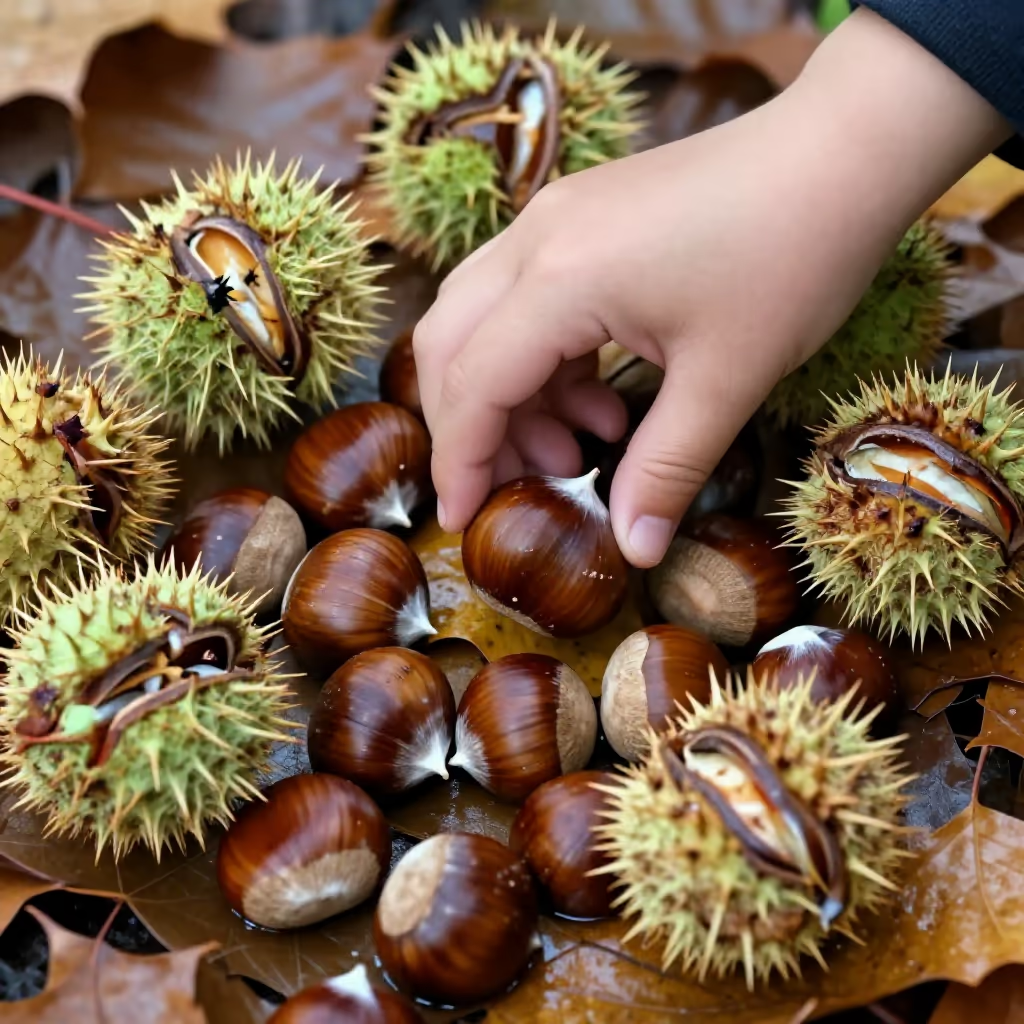
The shiny brown fruit of the chestnut tree. A distinction is made between the edible sweet chestnut and the inedible horse chestnut.
example
Im Herbst sammeln die Kinder Kastanien, um daraus kleine Männchen zu basteln.
In autumn, the children collect chestnuts to make little figures out of them.
Usage tips
Context clue
You can tell from the context whether the fruit or the tree is meant. Verbs like 'sammeln' (to collect), 'essen' (to eat), or 'basteln' (to make crafts) refer to the fruit. Prepositions like 'unter' (under) or adjectives like 'alt' (old) and 'groß' (large) point to the tree.
EXAMPLE
Die Kinder sammeln im Park bunte Kastanien.
The children are collecting colorful chestnuts in the park.
Cultural context
Collecting inedible horse chestnuts in autumn is a very popular activity for children in Germany. The fruits are often used with matches to make little figures and animals.
EXAMPLE
Wir haben heute Kastanien gesammelt und daraus eine ganze Familie gebastelt.
We collected chestnuts today and made a whole family out of them.
Edible chestnuts
Edible chestnuts are often called 'Maronen' (sweet chestnuts) or 'Esskastanien' (edible chestnuts). A typical winter specialty at Christmas markets is 'heiße Maronen' (hot roasted chestnuts).
EXAMPLE
Auf dem Weihnachtsmarkt duftet es herrlich nach heißen Kastanien.
At the Christmas market, there is a wonderful smell of hot roasted chestnuts.
Typical collocation
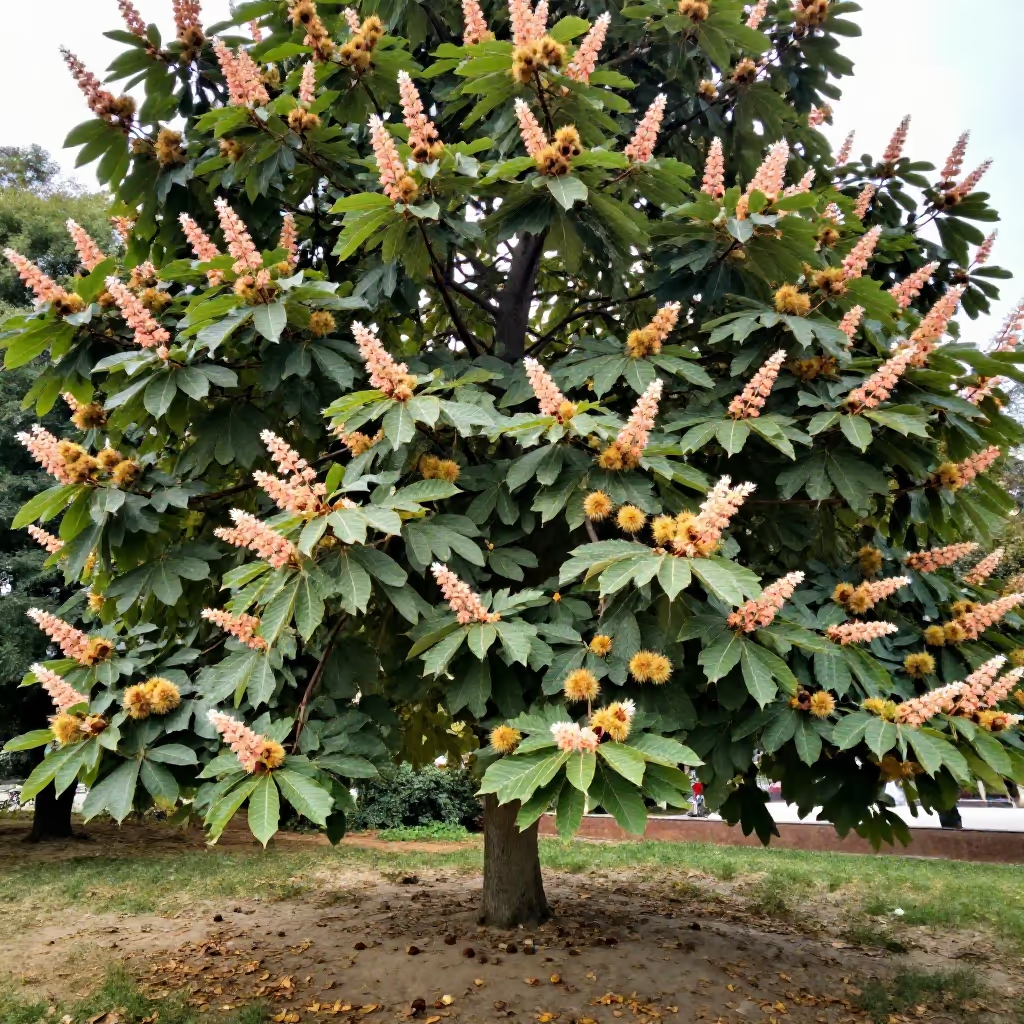
When referring to the tree, it often conveys the idea of a shady spot in summer. The phrase 'unter einer Kastanie sitzen' (to sit under a chestnut tree) is especially typical for beer gardens.
EXAMPLE
Im Biergarten saßen wir unter einer riesigen Kastanie.
In the beer garden, we sat under a huge chestnut tree.
Compare with
near_synonym · confusable
Kastanie vs Nuss
nut
'Nuss' and 'Kastanie' can both be fruits with a firm or hard shell. That is why they can be confused when talking about food or nature. However, 'Nuss' is a more general word for fruits with a hard shell and an edible kernel, for example hazelnuts or walnuts. 'Kastanie' means a specific brown fruit from the chestnut tree. Another important point: not every 'Kastanie' is eaten. Sweet chestnuts or 'Maronen' are edible; horse chestnuts are not meant for people to eat. If you are talking generally about such fruits, 'Nuss' fits; for the brown fruit from the tree, 'Kastanie' fits.
Kastanie
Im Herbst sammeln die Kinder glänzende Kastanien im Park.
In autumn, the children collect shiny chestnuts in the park.