

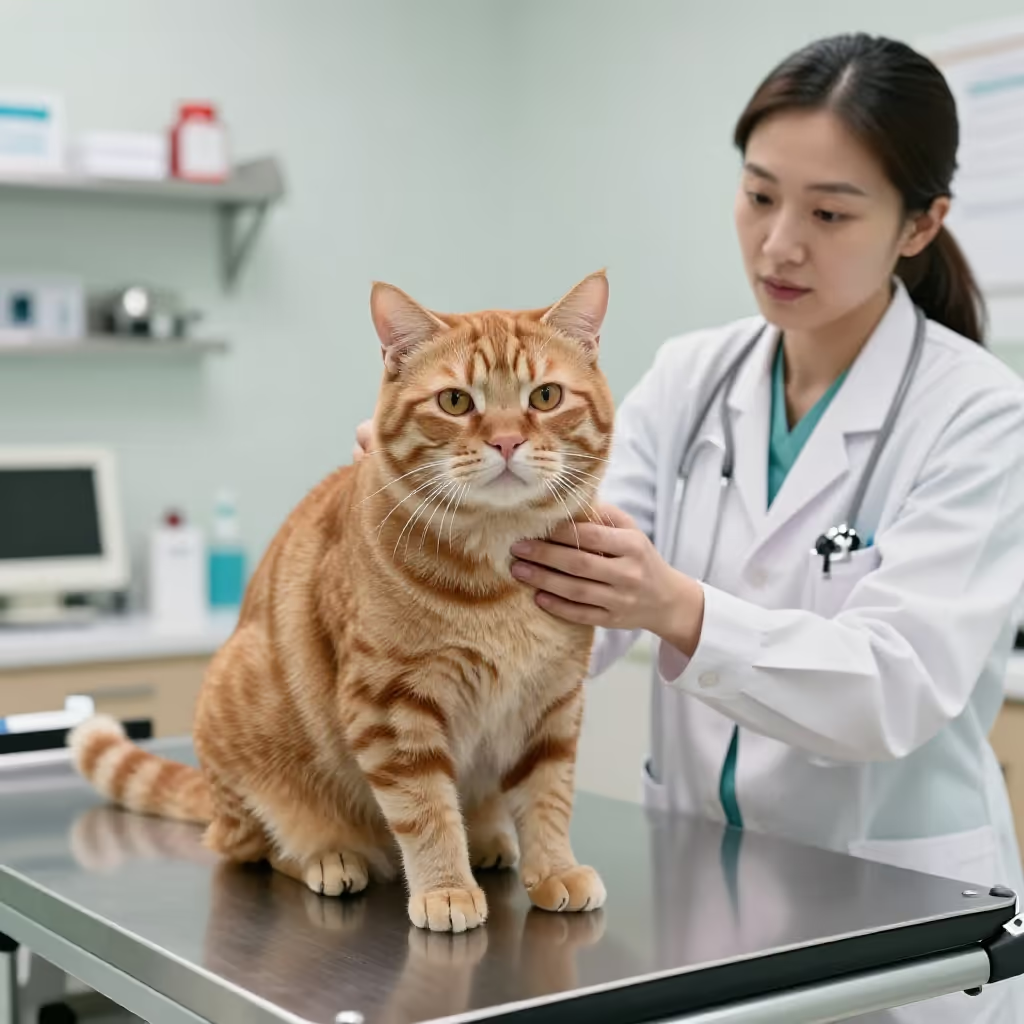
der Kater
tomcat
A male cat.
EXAMPLE
Unser Kater schläft am liebsten den ganzen Tag auf dem Sofa.
Our tomcat likes to sleep on the sofa all day.
tomcat / hangover
Loading your saved state.
tomcat
A male cat.
Unser Kater schläft am liebsten den ganzen Tag auf dem Sofa.
Our tomcat likes to sleep on the sofa all day.

hangover
Colloquial term for feeling unwell, especially with headaches and nausea, on the day after drinking too much alcohol.
Nach der Feier gestern habe ich heute einen schrecklichen Kater.
After the party yesterday, I have a terrible hangover today.
You can easily recognize the meaning from context. If people are talking about animals, meowing, or food, it means the male cat. If it is about alcohol, a party the day before, or headaches, it means feeling unwell.
Unser Kater fängt gerne Mäuse im Garten.
Our tomcat likes to catch mice in the garden.
To express that you feel bad after too much alcohol, you use the fixed expression 'einen Kater haben' (to have a hangover). The verb 'haben' (to have) is central here.
Ich gehe heute nicht aus, ich habe noch einen Kater von gestern.
I'm not going out today; I still have a hangover from yesterday.
The meaning 'feeling unwell after drinking alcohol' is colloquial. In a formal or medical context, other words would be used.
Er rief bei der Arbeit an und sagte, er habe einen schlimmen Kater.
He called work and said he had a bad hangover.
To describe the intensity of feeling unwell, 'Kater' (hangover) is often combined with adjectives like 'schlimm' (bad), 'schrecklich' (terrible), 'ordentlich' (serious), or 'gewaltig' (massive).
Nach der Hochzeitsparty hatten viele Gäste am nächsten Tag einen gewaltigen Kater.
After the wedding party, many guests had a massive hangover the next day.