

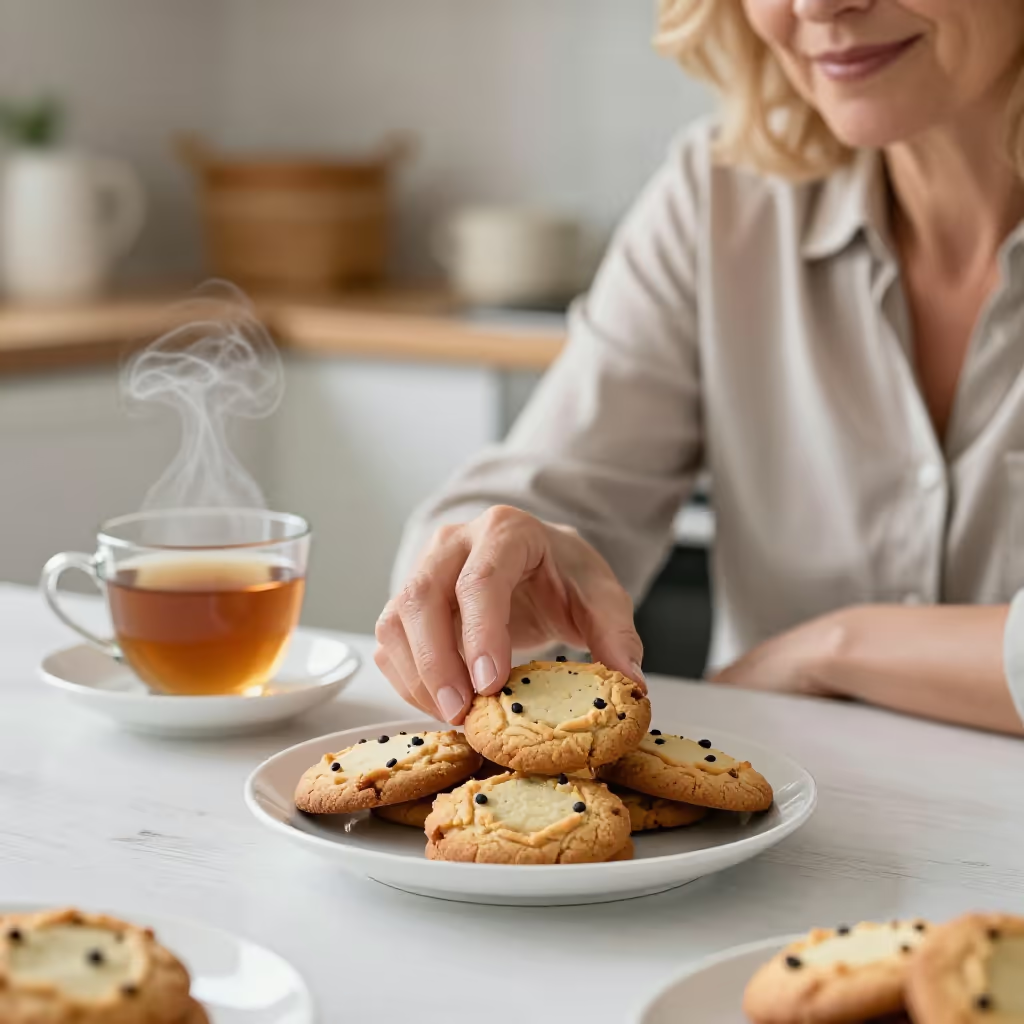
der Keks
cookie / biscuit
A small, flat, dry baked good that is usually sweet. It is often eaten with coffee or tea.
EXAMPLE
Zum Nachtisch gab es Kaffee und Kekse.
For dessert, there was coffee and cookies.
cookie / biscuit
Loading your saved state.
cookie / biscuit
A small, flat, dry baked good that is usually sweet. It is often eaten with coffee or tea.
Zum Nachtisch gab es Kaffee und Kekse.
For dessert, there was coffee and cookies.

to get on someone's nerves
A colloquial expression meaning to annoy or bother someone.
Mit seiner lauten Musik geht er den Nachbarn gehörig auf den Keks.
With his loud music, he is really getting on the neighbors' nerves.
Although 'der Keks' (the cookie/biscuit) comes from the English word 'cakes', it means 'biscuit' or 'cookie'. A soft, larger cake is called 'der Kuchen' (cake) in German.
Zum Kaffee esse ich gerne einen Keks.
I like eating a cookie with my coffee.
The expression 'jemandem auf den Keks gehen' (to get on someone's nerves) is a fixed unit and means to annoy someone. The person who is annoyed is always in the dative.
Deine laute Musik geht mir auf den Keks!
Your loud music is getting on my nerves!
The expression 'auf den Keks gehen' (to get on someone's nerves) is used almost exclusively in informal colloquial language. It would be inappropriate in a formal conversation or official text.
Hör bitte auf damit, du gehst mir langsam echt auf den Keks.
Please stop doing that; you're really starting to get on my nerves.
cookie / spot
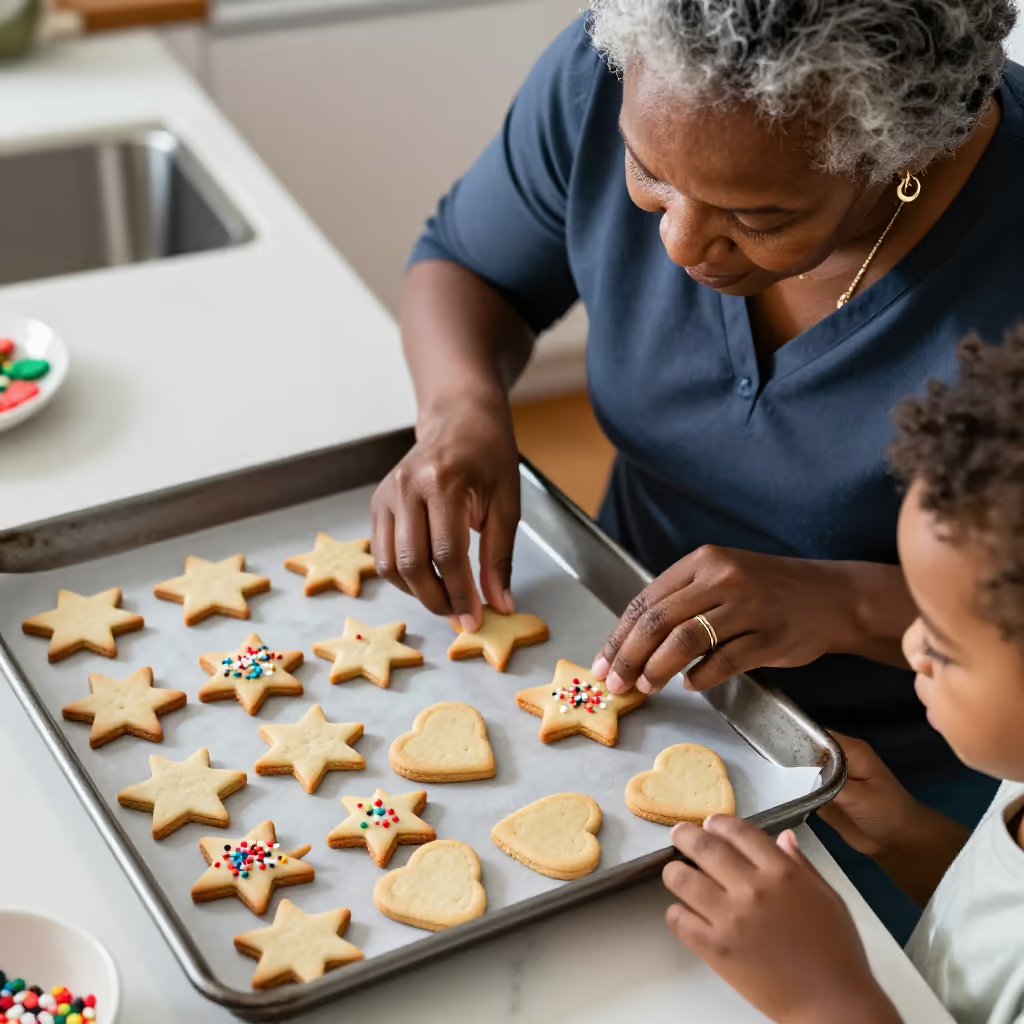
A Keks and a Plätzchen are both small, flat, sweet baked goods. Keks is the more general term for such items. Plätzchen is especially appropriate for homemade or Christmas baked goods. In many situations, both words are understandable and possible.
Zum Kaffee nahm ich mir einen Keks aus der geöffneten Packung.
I took a cookie from the opened package with my coffee.
In der Adventszeit nahm ich mir ein selbst gebackenes Plätzchen.
During Advent, I took a homemade cookie.